


Reusable Indicator Moisture-Control Canister for Care Storage
August 14, 2026
Remote Dual-Cup Nipple Suction and Vibration Massager
August 14, 2026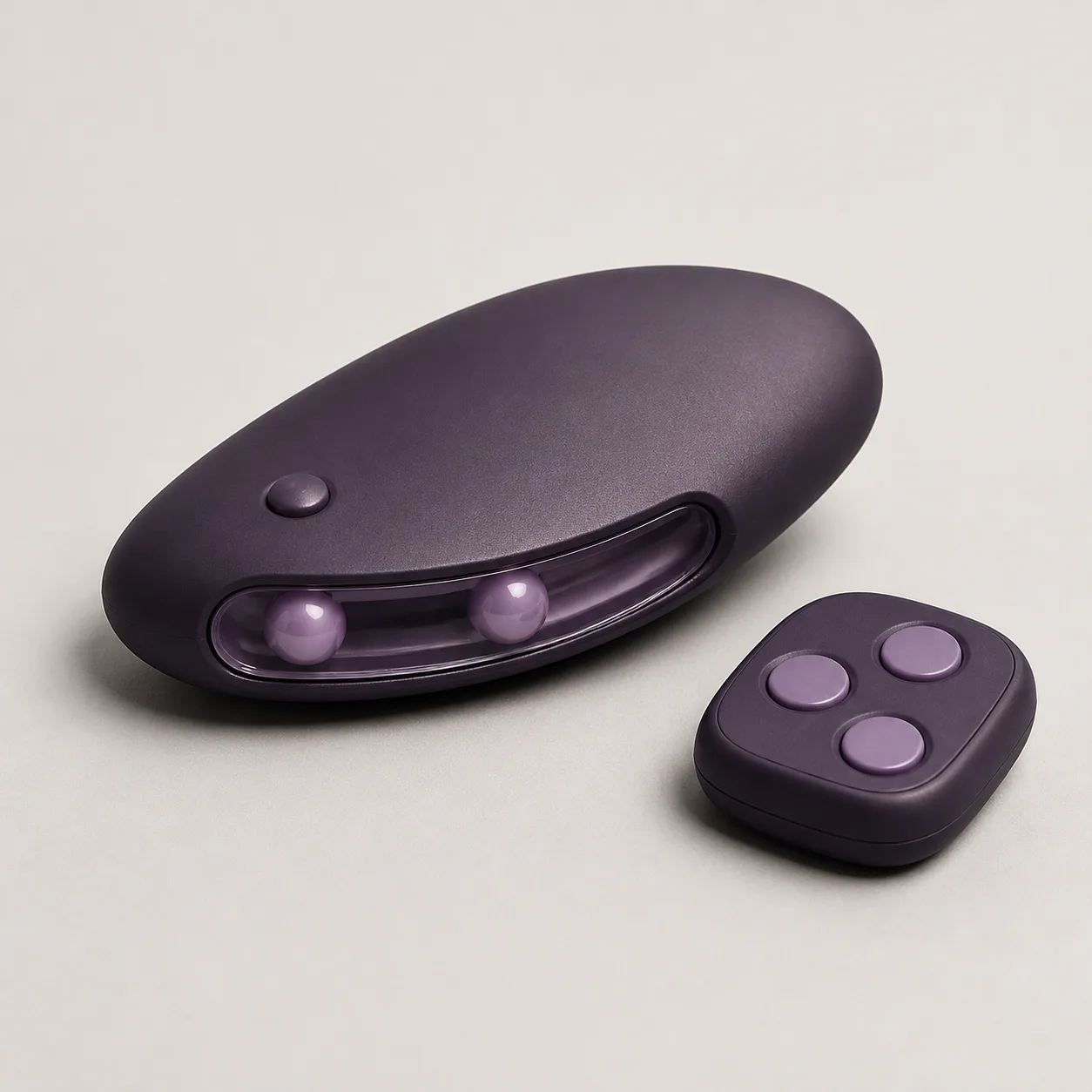
Dual-Roller App-Controlled Wearable Vibrator
A curved wearable vibrator concept with two rolling spheres, app and remote control, and evidence-led checks for mechanics, fit and privacy.
44,99 $
200 in stock
Rolling motion changes the wearable design problem
This dual roller wearable vibrator concept places two moving spheres in a curved low-profile body and adds both app and handheld remote control. The important questions are how the rollers move under clothing pressure, how securely they are retained and whether the device can stop instantly.

No therapeutic, menstrual, circulatory or other medical outcome is claimed.
The wearable curve must be measured as a three-dimensional profile
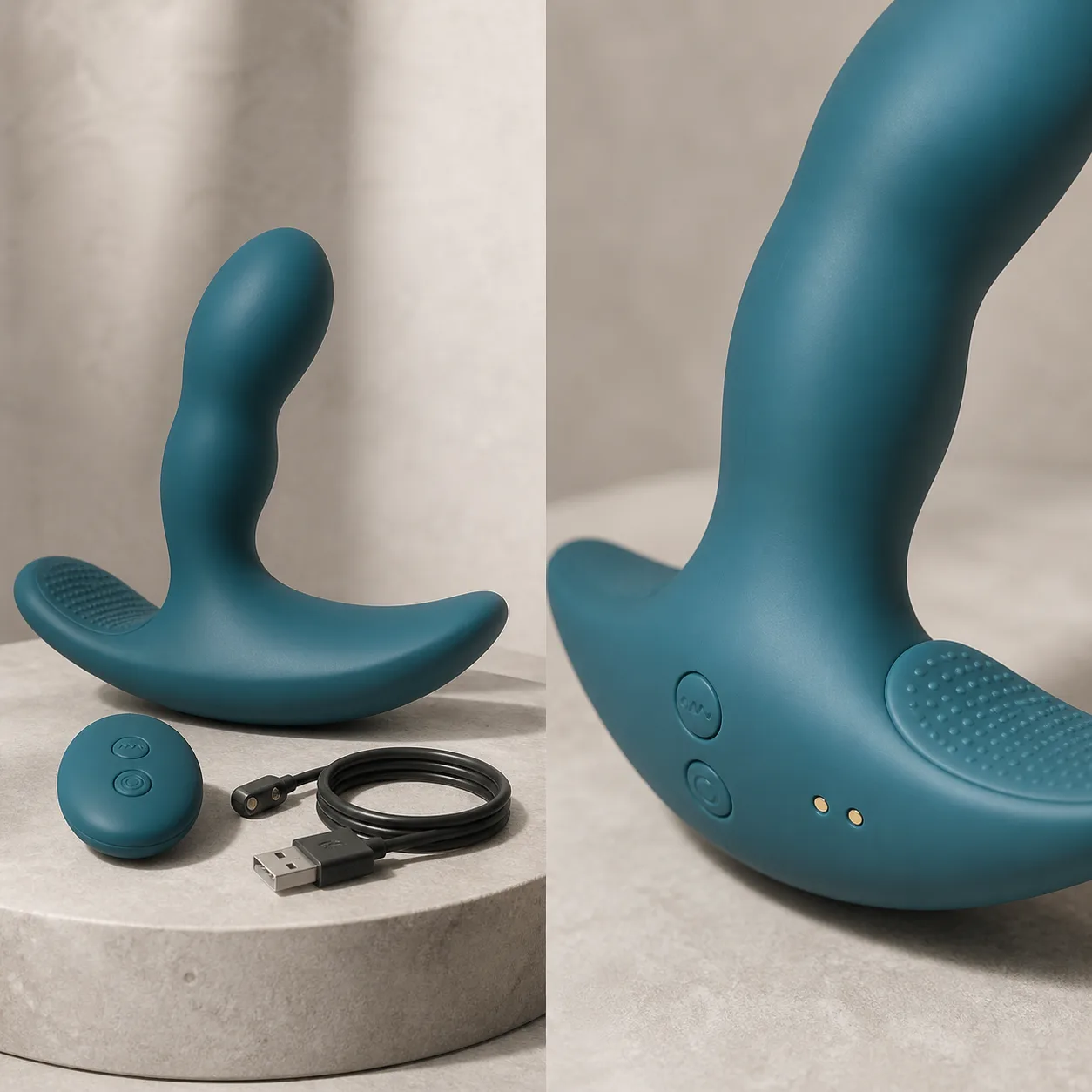
Record overall length, width, maximum thickness, edge radius, contact curvature and mass. Use a contour gauge or scan to document the surface that rests against fabric, because a top photograph cannot reveal pressure points.
Do not use tight clothing to force a poor-fitting device into position.
Each roller needs a defined path
Measure sphere diameter, exposed height, track length, direction of travel and clearance to the window or cover. The two rollers should move predictably without colliding, jumping the track or leaving a trapping gap.
Stop immediately if motion pinches, catches fabric or produces a sharp local pressure.
Retention is safety-critical for moving spheres
Inspect the track cover, axles, cages and any ultrasonic welds after impact, heat and flex conditioning. Apply a documented pull and torsion test to confirm that neither sphere nor a surrounding part can detach from the finished unit.
A cracked window, loose roller or changed gap is a rejection condition.
Motor torque must be checked under realistic compression
Run each roller and vibration channel against repeatable compliant loads that represent light, moderate and excessive garment pressure. Record speed, stall point, current draw and restart behavior without allowing the housing to exceed a conservative temperature limit.
Do not keep a stalled mechanism powered against the body.
Vibration and rolling modes should be separated in the controls
Map every direct-button, remote and app command for sphere movement, vibration intensity, patterns and shutdown. The final instruction sheet should distinguish mode count from intensity count and explain which functions can operate together.
A local physical stop must remain available when wireless control is lost.
The small remote needs range and pairing tests
Measure reliable range in open space, through clothing and around a nearby body, then test reconnection after sleep, low battery and power cycling. Confirm whether one remote can bind to only one device or may accidentally control another nearby unit.
Pairing identifiers and reset steps must be documented before launch.
App control introduces privacy and support obligations
Identify the app publisher, store listing, supported operating systems, account requirement, requested permissions, data collection, encryption, remote-routing method and deletion process. Verify that core controls remain usable without granting unnecessary location, contacts or media access.
No long-distance or privacy claim is approved without an end-to-end software review.
Firmware failure should leave the device in a safe state
Interrupt Bluetooth, close the app, lock the phone and exhaust the remote battery during every active mode. The wearable unit should either continue only a documented local pattern or stop, never accelerate or enter an unknown sequence.
Test the physical power-off action independently of firmware screens.
Battery capacity must support the mechanical load
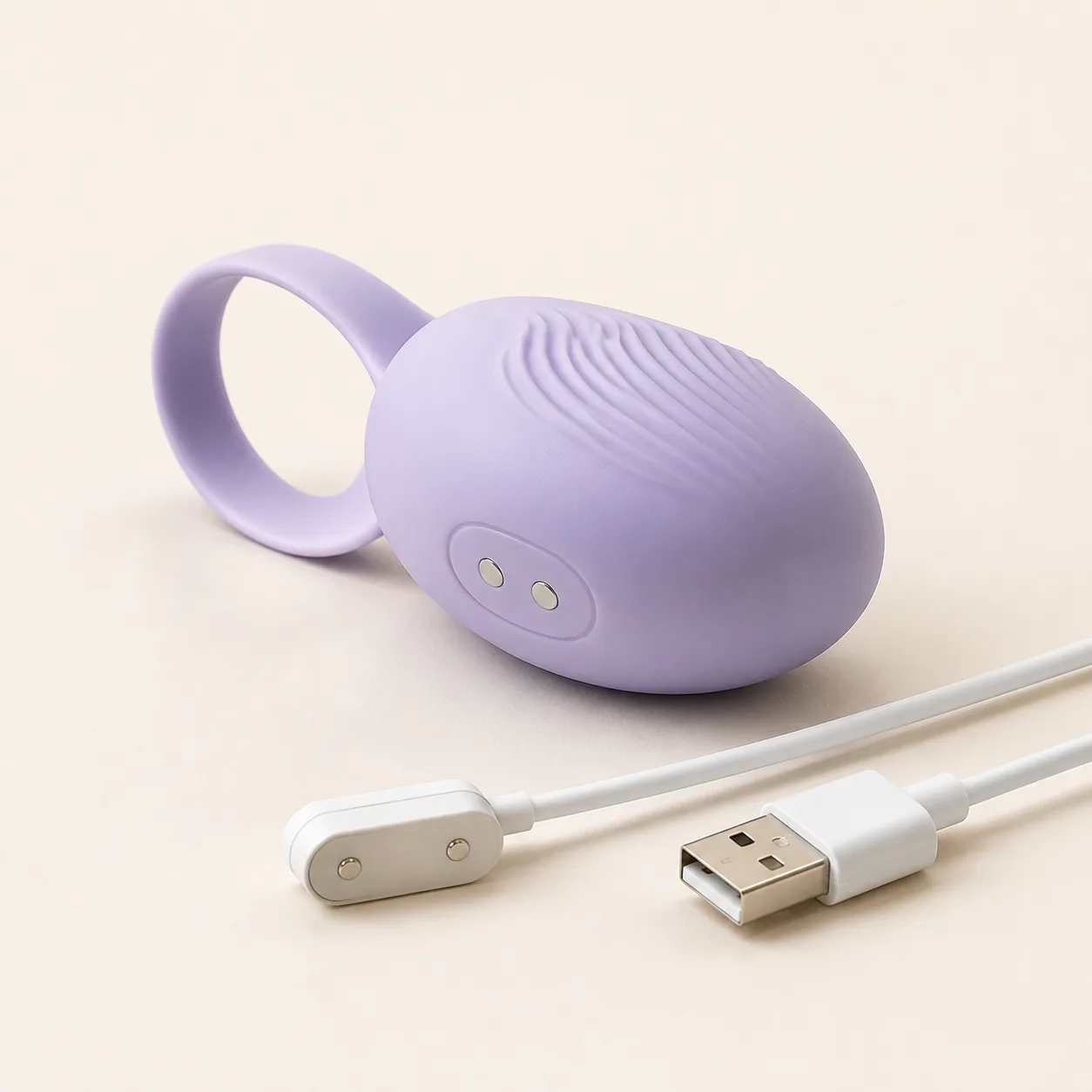
Request cell identity, nominal capacity, protection circuit, charge input, cable type, charge time and runtime for vibration-only, roller-only and combined use. Log shell temperature, voltage sag and controlled shutdown at the highest verified load.
Charge the clean dry unit only with the approved input on a non-flammable surface.
Sound should be measured while worn against fabric
Rollers can create a different noise signature from a simple vibration motor. Record A-weighted sound at a stated distance in a stated room, both in free air and against representative garments, and note any clicking during reversal or stall.
No discreet-use claim is accepted from an unloaded desktop test alone.
Ingress and seam claims require conditioned samples
Identify the charge-port seal, button membrane, roller-window joint and enclosure welds, then perform the claimed water test after garment flex, roller cycling and a controlled drop. An unlinked waterproof statement is not evidence for the complete model.
Until validation is complete, keep the unit out of water and keep charging contacts dry.
Material evidence must cover the moving window
Obtain component-level identities for the contact surface, housing, roller spheres, clear track window, buttons, seals, adhesives, colorants and remote enclosure. Confirm whether any lubricant is used inside the track and whether it can migrate to external seams.
No medical-grade or hypoallergenic wording is approved without traceable exact-model evidence.
Cleaning must not drive residue into the roller track
Validate a wipe or wash process that reaches the curved contact surface, track-window edge, button recesses and charging interface without flooding the mechanism. Inspect internal seams after cleaning cycles for trapped liquid, residue or clouding.
Store only after the device and remote are clean, dry and switched off.
Pricing includes hardware and software due diligence
The Alibaba lead displays USD 12.80 for 10 to 99 units, USD 12.50 for 100 to 999, USD 11.90 for 1,000 to 99,999 and USD 9.90 from 100,000. Supplier identity, rights to the unbranded model, mechanics, app, materials and packaging remain pending.
The procurement reference is a sourcing lead only. The EUR 44.99 plan allows for China-origin freight, a sample, dimensions, fit, roller retention, motor load, heat, sound, remote, app, battery, ingress, cleaning and packaging checks; freight, duty, tax, insurance, payment fees and destination terms remain pending.
Frequently asked questions
Do the two spheres roll or only vibrate?
Movement type, direction, speed range and independent vibration behavior remain pending direct sample measurement.
Can the device work without the app?
Local-button and handheld-remote functions must be verified before an offline-control claim is approved.
Which phones support the app?
App-store availability, operating-system versions, permissions and update policy remain pending software review.
How is the wearable held in place?
Final shape, garment placement, optional fixation parts and pressure limits remain pending fit testing.
Is it suitable for water use?
No ingress claim is approved until a conditioned completed assembly passes the stated test method.
What should be inspected before use?
Check the contact surface, roller window, gaps, buttons, seams and charge interface for cracks, loose parts, residue, moisture or deformation.
Reviews
There are no reviews yet.