


App-Controlled Heated Thrusting Suction-Base Vibrator
August 14, 2026
Dual-Roller App-Controlled Wearable Vibrator
August 14, 2026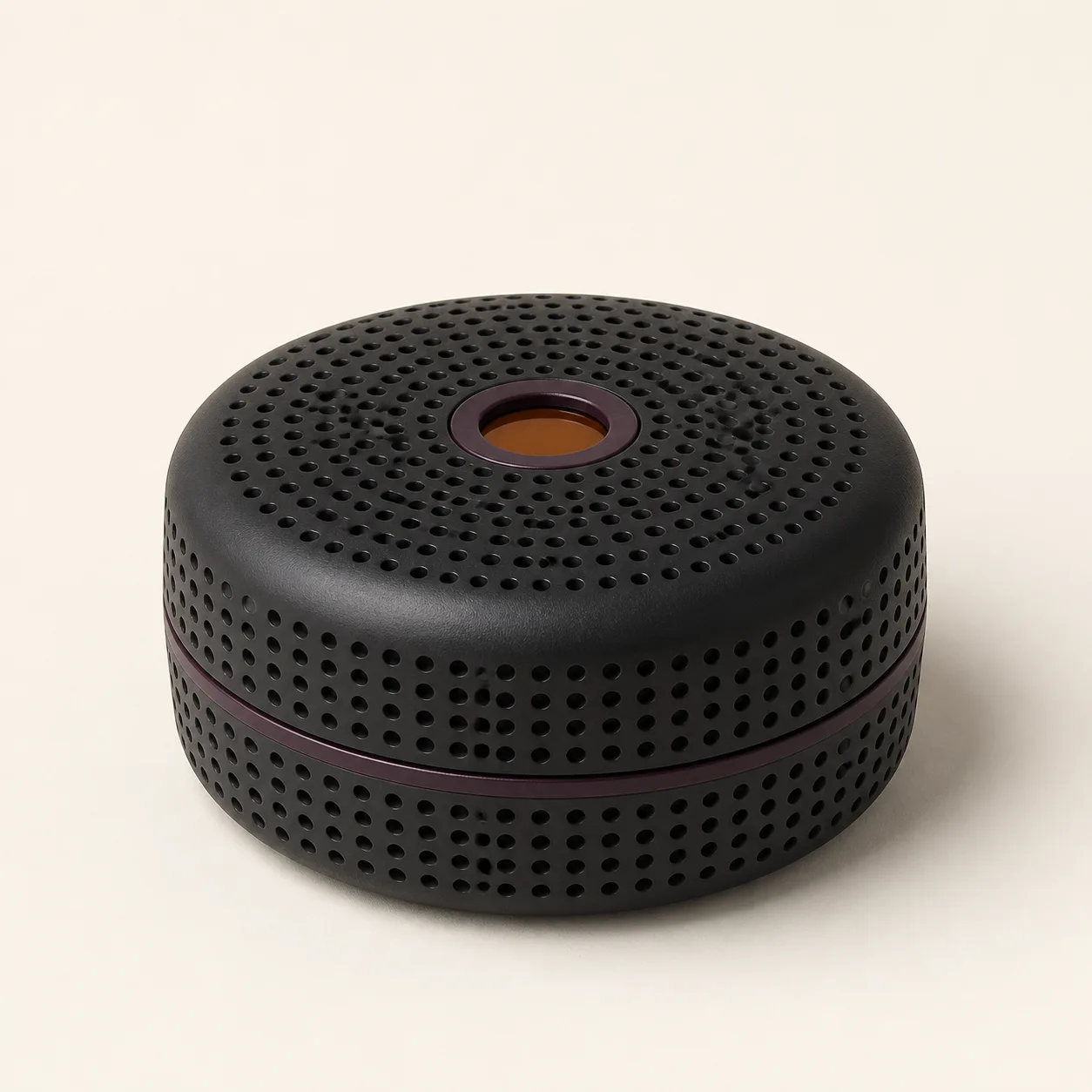
Reusable Indicator Moisture-Control Canister for Care Storage
A compact perforated moisture-control canister concept with a visual condition window for documented use inside adult-controlled care storage.
9,99 $
200 in stock
A passive canister can support a measured storage-humidity plan
The indicator moisture control canister concept is intended for placement inside a closed adult-controlled care-supply cabinet after its chemistry and capacity are qualified. Perforations expose the contained medium to cabinet air, while a small color window may signal when service is needed.

It does not measure relative humidity, correct leaks, sterilize contents or guarantee a safe storage environment.
Start with the enclosure volume and product requirements
Measure the cabinet’s internal volume and review the storage limits for every approved item inside it. Identify door-opening frequency, room humidity, air leakage and any moisture source before selecting a canister quantity.
No universal cabinet coverage or service interval is assumed.
Obtain the exact chemistry and safety data first
Require a current safety-data sheet for the production formulation, including indicator chemistry, cobalt and DMF status, hazard classification, dust controls, first-aid steps and disposal route. Match the document to the lot and packaging.
Do not rely on bead color or a generic silica-gel description.
Inspect the sealed shell without opening it
Check the perforations, seam, coating, window and base for dents, corrosion, cracks, sharp edges, loose particles or dust. Gently rotate the intact canister over a clean tray and listen for abnormal movement without dismantling it.
Quarantine any sample that leaks, rattles unexpectedly or has an unreadable indicator.
Place it where air can circulate and hands cannot confuse it
Use a stable dedicated shelf zone with clearance around the perforations. Keep the canister away from liquids, heating devices, product-contact surfaces, loose textiles and any location where it could roll or be mistaken for a care item.
Never place it inside product packaging or in direct contact with an intimate device.
Pair the color window with an independent humidity monitor
An indicator may show the medium’s condition rather than cabinet relative humidity. Use a qualified monitor at a representative location and record both readings before deciding that storage conditions are controlled.
Investigate disagreement instead of choosing the more convenient signal.
Read color under consistent neutral lighting
Compare the window with the supplier’s verified reference colors in the same light and viewing angle. Note the date, cabinet reading and lot rather than relying on memory.
Color vision, tinted bulbs, reflections and pigment aging can affect interpretation.
Reactivate only by the documented production-lot method
Confirm the permitted appliance, temperature, duration, ventilation, orientation and maximum cycle count. Prepare a clean dedicated area that keeps the chemical accessory separate from food-contact equipment and care supplies.
If the supplier does not provide a validated method, treat the unit as non-reactivatable.
Control heat, fumes and hot-surface exposure
Never improvise with a microwave, oven, heater, open flame or direct sun. Unknown coatings, windows, seams and indicator chemicals may overheat, deform or release hazardous material.
Follow the safety-data sheet, appliance rules and local fire precautions during any approved process.
Cool in isolation before the canister goes back into storage
Use a heat-safe non-food surface in the specified ventilated area and prevent access by children or pets. Do not handle, close into a cabinet or place near supplies until the verified cooling period has passed.
Check the shell, window and color again after cooling.
Treat dust or loose granules as a chemical-release event
Do not touch, sweep or vacuum unknown material until the safety-data sheet has been reviewed. Isolate the cabinet, protect people from exposure and follow the documented cleanup, ventilation and disposal steps.
Inspect stored items separately and do not use them until compatibility is resolved.
Keep the canister away from ingestion and direct contact routes
This is not a food, medicine, toy or body-contact product. Store it in adult-controlled furniture where a child, visitor or pet cannot remove it, lick it or dismantle the shell.
No non-toxicity, food-safety or child-resistance claim is made.
Clean only the exterior with the approved method
Remove the canister from the cabinet and use a dry or barely damp wipe only if supplier instructions permit it. Keep cleaner and water out of the perforations, seam and indicator window.
Do not immerse, spray, scrub open or coat the shell.
Record cycles and retire the unit at a defined limit
Track lot, placement date, indicator changes, independent humidity readings, approved reactivation cycles and physical inspections. Replace the canister when it reaches the confirmed cycle limit or no longer responds predictably.
Corrosion, deformation, window damage, dust or persistent odor requires immediate removal.
The procurement price excludes chemistry and capacity qualification
An Alibaba 40g orange self-indicating silica-gel tin-canister listing from Yixuan Packing Products (Lianyungang) Co., Ltd. shows USD 0.90-1.00 per piece with MOQ 3000. Chemistry, safety data, capacity, indicator colors, reactivation method, cycle life and cabinet compatibility require written confirmation and independent testing.
The procurement reference supports inquiry only. The EUR 9.99 plan allows for China-origin freight, lot documentation, leakage and indicator checks, protective packing and discreet fulfillment; packed size, mass, freight, duty, tax, insurance, payment fees and destination terms remain pending.
Frequently asked questions
Does this display cabinet humidity?
No. The window may indicate medium condition; use an independently qualified humidity monitor.
Can the canister touch stored products?
No direct product or packaging contact is intended without written compatibility evidence.
Is the medium non-toxic?
No such claim is made. Obtain and follow the exact production-lot safety-data sheet.
Can it be heated in a kitchen appliance?
Only if the verified instructions explicitly permit the exact appliance and method; otherwise do not heat it.
How long does one cycle last?
Service time depends on enclosure volume, leakage, humidity and capacity, all of which require testing.
When must it be removed?
Remove after leakage, dust, corrosion, deformation, window damage, abnormal odor, failed indicator response or the confirmed cycle limit.
Reviews
There are no reviews yet.