


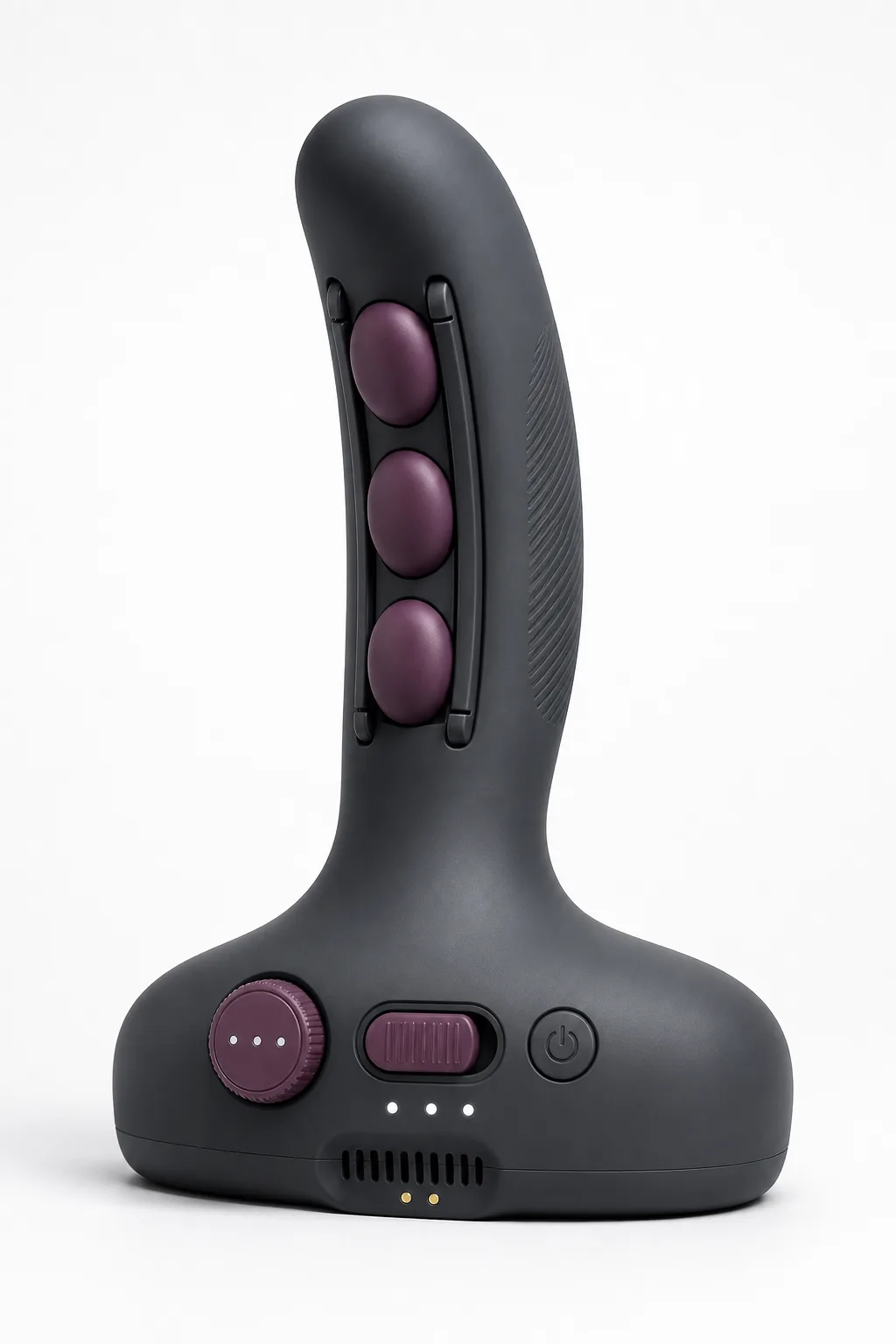
Model 20251228-1014 Black Dual-Loop Thrusting Prostate Massager
August 14, 2026
MS272 Green LCD 12-Mode G-Spot Vibrator
August 14, 2026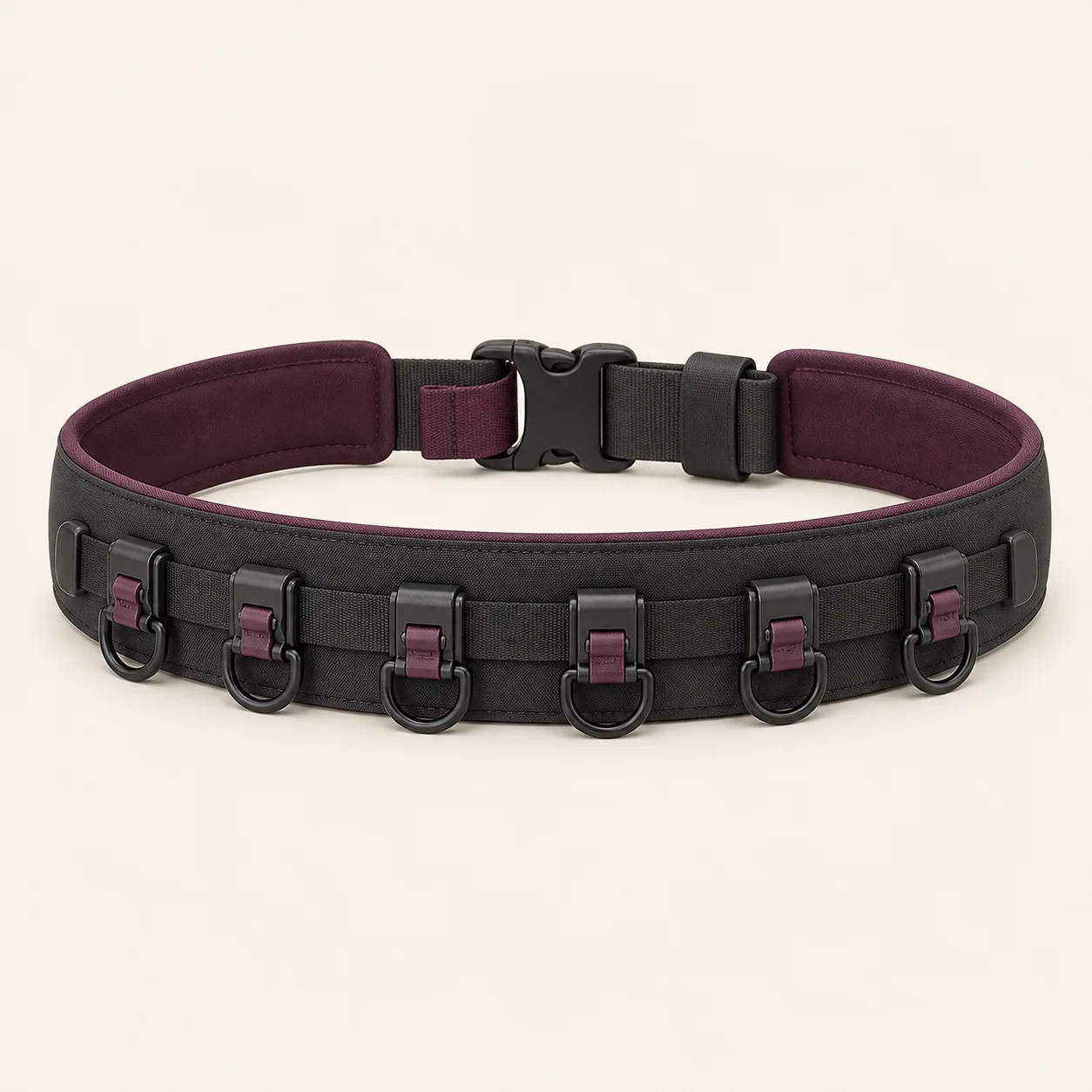
Flip-Lock Six-Anchor Bondage Waist Belt with Sliding D-Ring Carriages
A padded bondage waist belt concept with six repositionable D-ring carriages, individual flip locks, reinforced guide stops and a separate quick-release buckle.
31,99 $
200 in stock
Six movable anchors create a configurable belt without loose add-ons
This six-anchor bondage waist belt concept places six compact D-ring carriages on one reinforced outer guide band. Each carriage can be repositioned while unloaded and secured by its own deep-plum flip lock, while the broad charcoal belt uses a separate side-release waist buckle.

The modular layout is for controlled positioning only. It has no suspension, lifting or body-weight support rating.
Inventory every load-path component
Confirm belt shell, lining, padding, adjustment tail, tail keeper, main buckle, pull tab, guide band, two end stops, six carriage shells, six flip locks and six D-rings. Request disclosure of hidden pins, springs, clamp plates, rivets, reinforcement tapes, stitching and adhesives.
All six carriages should share a traceable specification and lot record.
Measure circumference without counting the anchor band
Record belt height, padding thickness, shortest and longest internal circumference, buckle overlap, adjustment-tail reserve, total mass and the distance from each guide-band end to the buckle. Measure on a calibrated form without compressing the padding beyond normal fit tension.
The outer guide band is not part of the fit range and must not be used to cinch the belt.
Map carriage positions around the full guide
Open one flip lock at a time while the belt is unloaded, slide the carriage through its permitted path and mark its center relative to the buckle. Record minimum carriage spacing, travel resistance, accessible zones and any area blocked by seams or belt curvature.
Keep adjacent carriages far enough apart that rings, locks and attached connectors cannot collide.
Prove each flip lock closes positively
Measure opening force, closing force, lever travel, tactile engagement, accidental lift resistance and holding performance for every carriage. Test dry, then under the approved damp-hand condition, without placing fingers between lock and guide band.
A lever that sits partly raised, rebounds open or can be knocked loose fails qualification.
Challenge both guide-band end stops
Move the outermost empty carriages against each stop and apply a low axial load below written limits. Inspect stop stitching, rivets, edge reinforcement, guide-band distortion and carriage escape clearance.
An end stop is a containment feature, not an approved pulling anchor.
Inspect D-rings for rotation and trapped edges
Record ring internal width, wire diameter, weld position, coating thickness, free rotation angle and clearance from the carriage and flip lock. Cycle compatible rounded connectors while watching for binding, side loading and coating damage.
Reject open seams, burrs, sharp coating chips or a ring that jams against the lever.
Map load distribution on a padded form
Fit the belt over thin clothing on an instrumented form, then apply small controlled loads to one anchor, mirrored pairs and selected three-point combinations below documented limits. Record belt rotation, buckle migration, padding compression, guide-band bow and local pressure.
Adding anchors does not multiply the safe total load; the weakest verified assembly limit governs every configuration.
Keep the main buckle independent and reachable
Test squeeze force, release time and strap rebound with the belt unloaded and under the exact low fit tension approved by the supplier. The plum pull tab should help locate the buckle but must not carry anchor load.
Every planned position must preserve direct access to the buckle and adjustment tail.
Fit for breathing, circulation and movement
Use a flat hand check around the belt, then sit, stand and make controlled torso movements on a safe surface before connecting anything. Monitor skin color, temperature, sensation, breathing comfort, belt roll and buckle position.
Loosen or remove for pain, numbness, tingling, coldness, swelling, dizziness, shortness of breath, chafing, folded padding or pressure from any carriage edge.
Qualify every separate connector as its own system
No cuffs, clips, rope or leash are included. Measure connector gate clearance and confirm that each selected item rotates without prying a D-ring sideways, opening a flip lock or hiding the main buckle.
Use only locally releasable connectors and keep an agreed immediate-stop procedure available.
Build a release sequence before loading anchors
Agree on communication, maximum session time, local release order and who controls the main buckle. Start with one unloaded connector, verify access, then add only the minimum configuration needed while keeping monitoring continuous.
Never use the belt for suspension, dragging, lifting, unattended wear, sleep, transport, punishment without active consent or any situation where release depends on a key or tool.
Verify textiles, padding and hardware lots
Obtain composition for shell, lining, padding, webbing, thread, buckle, keeper, guide band, carriage, lock, spring, pin, ring, coating, pigments, rivets and adhesives. Review abrasion, colorfastness, corrosion, restricted-substance and skin-contact evidence for the exact production revision.
Leather content, hardware alloy, static limit and sweat resistance remain unconfirmed until documented.
Clean around carriages without flooding the padding
Detach all separate connectors, open the belt and wipe only by the confirmed method. With each flip lock closed, move the empty carriage through approved positions to access guide-band edges, then dry the lever recesses, ring welds, buckle gate, seams and adjustment folds.
Soaking, machine washing, bleach, alcohol, heat drying and carriage disassembly are not approved without exact evidence.
Price the six locking modules above a plain harness belt
An Alibaba bondage-waist-belt showroom lists a chest-and-waist harness reference at USD 3.99-4.09 with a two-piece minimum. It is a category benchmark only and does not establish this six-carriage layout, a legal supplier or a production quotation.
The procurement reference supports an EUR 31.99 planning price after allowing for China-origin freight, exact-model quotation, component and fit measurement, carriage travel and spacing maps, individual flip-lock tests, end-stop checks, D-ring inspection, padded-form load-distribution trials, buckle release, textile and hardware review, cleaning validation, protective packing and discreet fulfillment. Packed size, weight, freight, duty, tax, insurance, payment fees and destination terms require confirmation.
Frequently asked questions
Are cuffs or clips included?
No. This listing describes one waist belt with six attached D-ring carriages only.
Can a carriage be moved while loaded?
No. Remove all load, open one lock, reposition the empty carriage, close it fully and verify engagement.
Do six anchors provide six times the capacity?
No. The weakest verified belt, guide, carriage, ring or seam limit governs the complete configuration.
Can the belt support body weight?
No. It is not rated for suspension, lifting, dragging or fall arrest.
Why do the guide ends need stops?
They help contain empty carriages during adjustment, but they are not load anchors.
Which faults require retirement?
A cracked buckle, slipping carriage, raised lock, torn stop, stretched guide band, open ring seam, sharp coating, compressed padding, color transfer or residue beyond cleaning access.
Reviews
There are no reviews yet.