



Twin-Wheel Three-Stop Depth Sensory Pinwheel with Triple Rolling Guards
August 14, 2026
Twin-Rail Three-Stroke Halo Wand Massager
August 14, 2026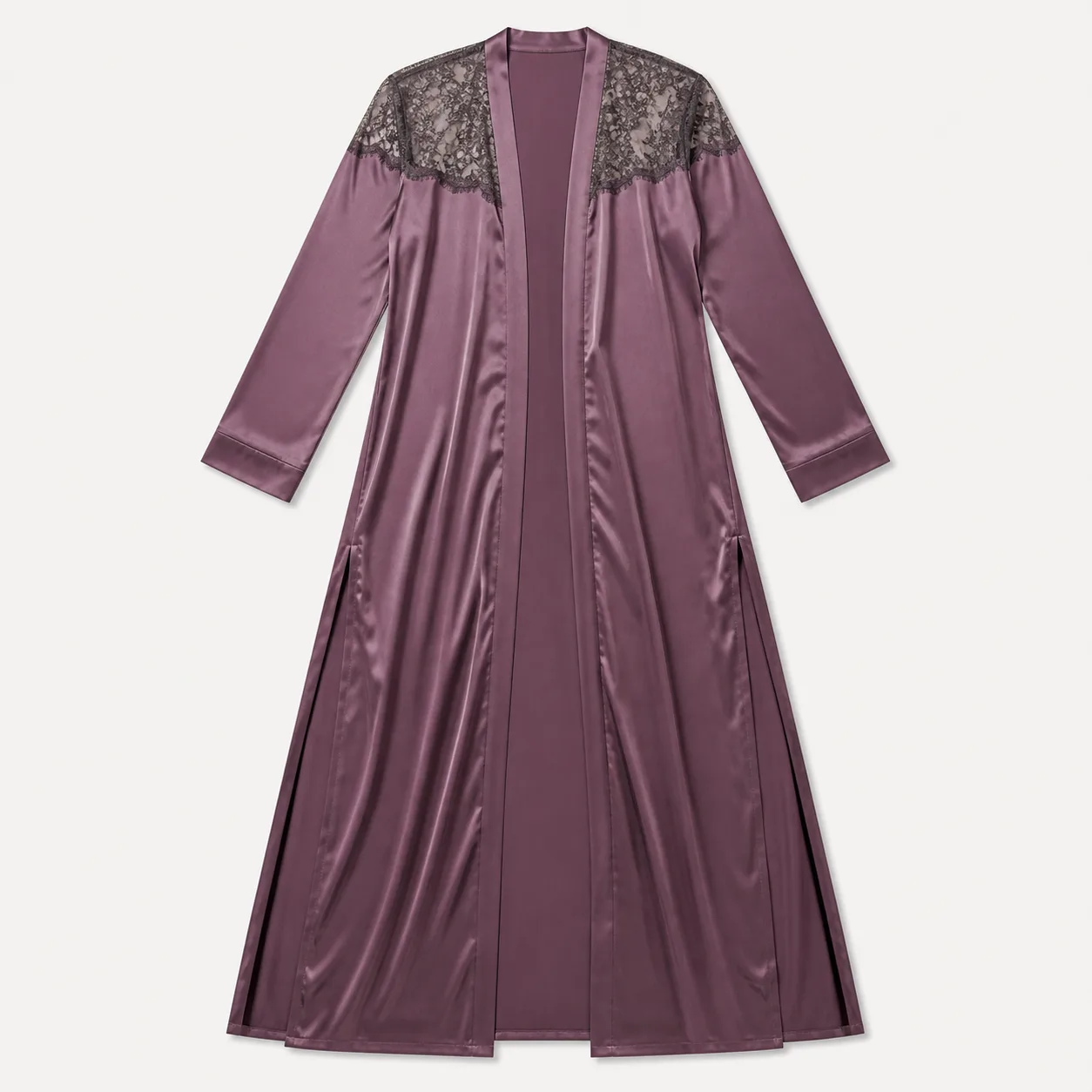
Floor-Length Satin Duster Robe with Floral-Lace Shoulder Yoke and Twin Side Slits
A single smoky-plum floor-length satin duster robe concept with a charcoal floral-lace shoulder yoke, straight long sleeves, open front and exactly two side slits.
54,99 $
200 in stock
Let the floor-length satin duster robe fall from a lace shoulder yoke
This floor-length satin duster robe concept uses a smoky-plum open-front body suspended from one charcoal floral-lace shoulder yoke. Straight long sleeves and exactly two high side slits create a long vertical silhouette without a belt, closure or matching undergarment.

The rendering defines design direction only. Sizes, fibres, weight, opacity, stretch, seam strength, care and production readiness remain pending.
Confirm a one-piece robe inventory
The planned pack contains exactly one duster robe. A sash, belt loop, inner tie, hook, bra, brief, thong, slip, stockings, hanger or storage bag is excluded unless the approved sample and packing list add it.
Because no closure is proposed, the product page must not imply wrap coverage or a secured front.
Draft the floral-lace shoulder yoke as one balanced panel
Measure shoulder width, front yoke depth, back yoke depth, neckline curve, armhole intersection and the scalloped lower boundary on both sides. Match motif placement at the centre back and across left-right shoulder seams.
The yoke should be sampled over contrasting underlayers to evaluate transparency, motif drift, seam allowance show-through and thread tension.
Stabilize the open-front bands from neckline to hem
Record finished band width, grain direction, turn-back depth, topstitch distance and total front-edge length. Hang the robe for a defined period and compare the two bands for spiralling, rippling or unequal extension.
A deep open front is part of the design; magnets, snaps and hidden closures are not promised.
Keep both sleeves straight through a simple cuff
Measure sleeve cap, upper-arm width, elbow width, cuff opening, sleeve length and cuff depth. Check arm lift, forward reach and cross-body movement on approved graded samples without borrowing ease from an unintended shoulder drop.
The sleeves are not bell, bishop or split styles, which distinguishes this duster from the recent mesh bell-sleeve robe.
Mirror the two side slits
Measure each slit from the finished hem to the bartack, then compare front and back overlap, seam allowance, top reinforcement and opening angle during walking. The left and right slit heights should follow the same grading rule.
Exactly two side slits are proposed. Their final height and coverage require wear trials across the size range.
Set floor length without creating a trip hazard
Publish centre-back length, front length and side length from a defined high-shoulder point, together with the intended body-height reference. Check the robe with flat footwear and common indoor steps before selecting a production hem allowance.
Floor length is a style description, not a promise that every size reaches the same point on every wearer.
Balance vertical drape with torso and hip ease
Record garment chest, waist, hip and sweep circumferences while laid flat and after hanging. Compare those values with body measurements to specify wearing ease rather than relying on a single generic size label.
The open front changes apparent coverage as the wearer moves, so both static and walking views belong in sample approval.
Grade yoke sleeves slits and hem as linked dimensions
Build a grading table for shoulder span, yoke depth, armhole, sleeve width, cuff opening, chest, hip, sweep, slit start and total length. Test that enlarging the body does not leave the lace motif, cuff or slit reinforcement underscaled.
Available sizes and tolerances remain pending the chosen factory pattern and physical fit session.
Verify satin and lace rather than naming a fibre
Request fibre content, fabric construction, mass per square metre, stretch, recovery, opacity, abrasion, snag resistance and restricted-substance reports for the plum satin and charcoal lace. Match every document to the exact dye lot and trim lot.
Polyester, nylon, silk, elastane, recycled, hypoallergenic and skin-friendly claims remain withheld without component-level evidence.
Test yoke-to-satin seams against slippage and distortion
Inspect the curved seam where lightweight lace meets the shinier body fabric. Measure seam slippage, puckering, thread breakage and lace tearing under shoulder, sleeve and hanging loads, then repeat after the validated wash cycle.
Reinforcement tape, stay stitching and thread type must be confirmed by the construction specification, not inferred from the front view.
Check shade depth opacity and colour transfer
Evaluate the robe over light and dark backgrounds under daylight and warm indoor light. Test dry rubbing, damp rubbing, perspiration simulation and wash exposure separately for plum satin, charcoal lace, thread and labels.
Deep colours can transfer or change appearance; claims of colourfastness require measured acceptance criteria across lots.
Build care instructions from the weaker component
Validate water temperature, cycle, detergent, drying position, ironing temperature and storage method on the assembled garment. Give the more delicate lace, yoke seam, slit bartacks and long hem priority when satin and lace tolerances differ.
Bleach, tumble drying, high heat and aggressive wringing remain excluded unless the exact sample passes those processes.
Control snag fire and movement risks
Keep the long open panels and slit edges away from flames, heaters, moving equipment, rough hardware and sharp jewellery. Check that the hem clears stairs and wheels, and stop wearing the robe if a torn yoke, loose seam or dragging length creates a hazard.
Flammability, chemical and apparel-label compliance for each target market remain pending supplier testing and professional review.
Price from long-robe benchmarks with landed-cost reserves
An Alibaba satin-robe page displayed a long solid belted robe reference at USD 13.89 to 17.78 with MOQ 100. A satin sleepwear page displayed a long lace-sleeve robe reference at USD 2.50 to 3.31 with MOQ 3, while a lace-robe page displayed a satin lace maxi robe at USD 10.75 to 13.75 with MOQ 50. These are broad category examples, not quotations for this open duster with lace yoke and twin slits or approved suppliers.
The public procurement benchmark supports an EUR 54.99 planning price after provisional allowance for China-origin freight, graded long-body samples, yoke motif and seam validation, straight-sleeve, open-front, twin-slit, hem, fibre, opacity, colourfastness and care checks, discreet fulfilment and expected apparel handling loss. Exact supplier, quote, MOQ, sizes, colours, fibres, packed weight, freight, duty, tax, certification, payment terms, lead time and production availability remain pending.
Frequently asked questions about this long duster robe
Does the robe include a belt?
No. The concept is an open-front duster and the planned sales unit contains no sash or closure.
How many side slits are included?
Exactly two are proposed, one at each side seam; final height depends on the approved graded pattern.
Is the robe made from silk?
No fibre claim has been confirmed. Satin describes the proposed surface and weave appearance, while exact fibre content remains pending.
Is the floral yoke opaque?
No. Its transparency, motif density and coverage require testing over different underlayers and sizes.
Will the hem reach the floor?
Length depends on garment size, body height and proportions, so verified measurements will be published before sale.
Can it be machine washed?
Only if the assembled satin, lace, seams, bartacks, labels and dye lots pass a validated machine-care cycle.
Related products
-
CLASSIC LINGERIE BRA
119,00 $ -
EVERYDAY COMFORT UNDERWEAR
279,00 $
Reviews
There are no reviews yet.