



Rose Air-Pulse Massager – 10 Modes, USB Rechargeable
August 14, 2026
Twin-Dome Rack-Shift Wand with Three-Stop Spacing Wheel
August 14, 2026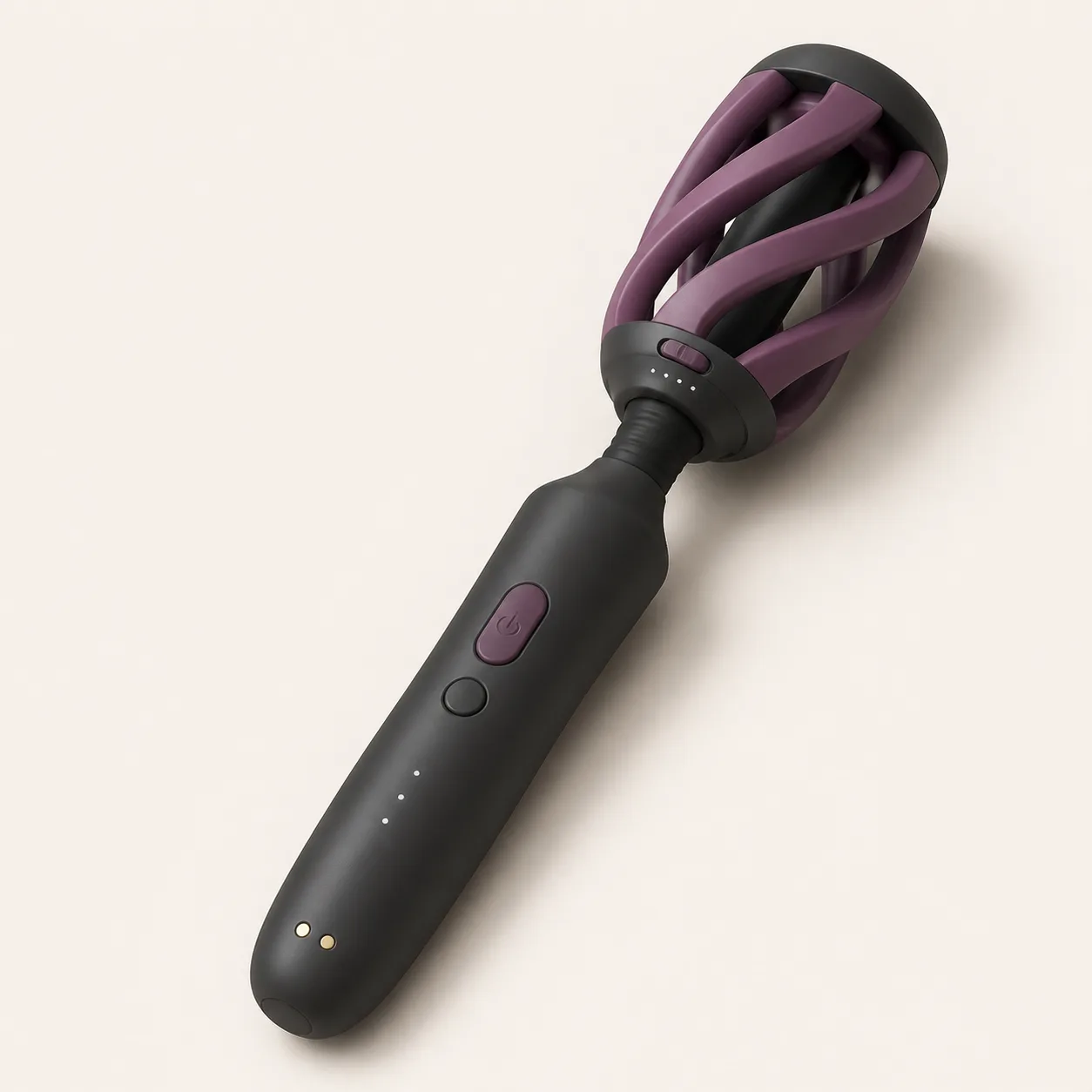
Helix-Cage Wand Massager with Torsion-Index Collar
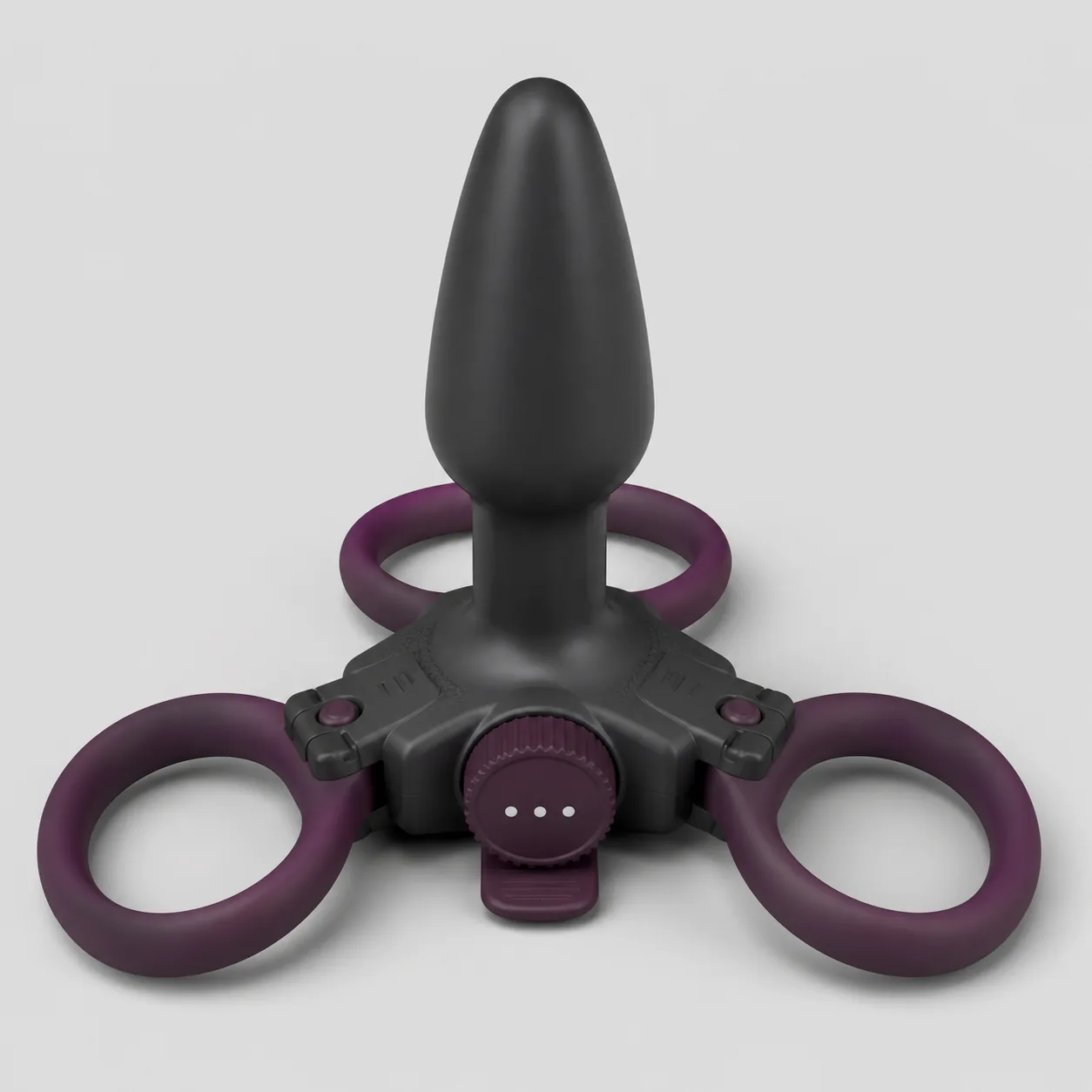
A rechargeable wand concept with helical contact ribs surrounding a recessed center spindle, an indexed geometry collar and a flexible-looking neck.
46,99 $
200 in stock
Wrap contact ribs around a recessed center core
This helix cage wand massager concept replaces a solid dome with an oval cage of broad twisted ribs surrounding one recessed center spindle. An indexed collar appears to alter the cage geometry, while a short neck separates the head from a tapered rechargeable handle.

The image does not prove rib count in a supplied sample, collar motion, torsion range, independent output, contact softness, ingress protection, runtime, materials or supplier approval.
Inventory the complete head mechanism
Request an exploded drawing and bill of materials for the top cap, every helical rib, rib cores, skins, upper and lower anchors, recessed spindle, cage carrier, collar, slide tab, detents, stops, bushings, neck core, handle shell, actuator, controller, buttons, indicators, cell, charging contacts, conductors, pigments, seals, lubricants and adhesives.
Trace structural and electrical paths through any moving collar or rib anchor and identify which surfaces are independently molded.
Measure the helix geometry at every index
Record head length, maximum width, rib width, thickness, twist angle, pitch, edge radius, gap width, core clearance, anchor span and mass. Map each rib against a consistent clockwise datum.
Repeat at every verified collar position and compare left-right and circumferential symmetry across production samples.
Calibrate the torsion-index collar
Measure tab force, collar travel, rotation, detent depth, free play, rebound, stop compression and accidental movement resistance. Record how each rib angle, gap and head width changes.
Do not describe the visible references as spread or intensity levels until direct geometry and compliant-load testing support those meanings.
Inspect all gaps and moving clearances
Measure the narrowest spaces between neighboring ribs, rib and center spindle, rib and cap, collar and neck, and tab and shell. Move the collar slowly under magnification.
Use soft witness film to detect pinch, shear or snag paths and reject exposed cores, crossed ribs, rough anchor edges or gaps that collapse unpredictably.
Load each rib separately
Apply controlled compliant loads at the root, middle and tip of every rib. Record displacement, contact area, restoring force, lateral roll, anchor movement and permanent set.
Compare paired and opposing ribs so one unusually stiff element is not hidden by a visually balanced cage.
Map the combined cage contact footprint
Press the complete head into a compliant pressure fixture at centered and edge-biased angles. Record total contact area, pressure under every rib, core engagement, gap collapse, collar drift and head tilt.
Stop for a sudden hard point, rib inversion, core contact beyond the approved boundary, anchor lift, collar movement or incomplete recovery.
Measure vibration along the helix
Map amplitude, frequency, startup, decay, sound and surface temperature at multiple points along every rib, both anchors, center spindle, collar and neck. Repeat across verified programs and charge states.
Compare unloaded and compliant-load readings to distinguish useful contact output from cage resonance or handle transfer.
Collar-position load test.
Repeat the contact and vibration maps at every approved index while monitoring current, sound, heat, rib phase, gap width and collar creep. Include centered and asymmetric loads.
Confirm whether geometry changes alter actuator load or create rib-to-core contact during startup, pattern changes or shutdown.
Evaluate neck bending and torsion
Measure neck bend force, lateral deflection, torsional rotation, rebound, conductor strain and head-angle drift with the cage unloaded and compliantly loaded. Inspect collar-to-neck clearances throughout.
Stop before wrinkles, sharp kinks, exposed reinforcement, continuity loss, seal separation or permanent angular offset.
Map grip, balance and control access
Record center of gravity, grip circumference, pressure distribution, dry and damp slip, button force and accidental input during neutral and angled head loading. Check both common hand orientations.
Confirm the collar tab cannot be mistaken for a power control and remains outside normal gripping pressure.
Document programs, battery and charging
Record startup hold, output order, transitions, memory, indicators, lockout, immediate shutdown and behavior after charge interruption. Confirm cell chemistry, rated capacity, charger input, contact polarity, charge time, runtime method and protection circuits.
Verify whether the device is blocked during charging and document low-voltage and storage-charge guidance from the exact supplier.
Check heat, obstruction and restart
Log current and temperature during long verified programs, high compliant loads, partial rib obstruction and several collar positions. Define conservative time limits only from measured evidence.
After a protective stop, record cool-down, reset and restart behavior without repeatedly energizing a stalled, rubbing or overheated head.
Cycle the cage, collar and neck together
Run repeated collar adjustment, detent selection, rib loading, powered compliant contact, neck bending, program changes, charging, cleaning and storage cycles. At checkpoints measure collar force, rib geometry, gap clearance, anchor play, neck recovery, output, sound, heat and battery behavior.
Retire a sample after cracked ribs, exposed core, anchor lift, collar creep, lost detent, spindle rubbing, neck damage, conductor fault, seal separation or abnormal heat.
Validate cleaning through the open cage
Obtain exact material and cleaner compatibility data before testing. Clean every rib face and edge, gaps, inner surfaces, center spindle, cap underside, anchor recesses, collar channel, slide tab, neck folds, controls and charging contacts.
Measure drying by mass and inspect hidden anchor, collar and core cavities for retained moisture or residue before charging or closed storage.
Price after rib mechanics are proven
An Alibaba rechargeable mini-wand listing currently shows USD 5.88-6.18 with an MOQ of one. It is a category benchmark only and does not confirm this helical cage, indexed collar, recessed spindle or approved supplier.
The procurement reference supports an EUR 46.99 planning price after allowing for China-origin freight, complete teardown, helix and collar metrology, gap inspection, per-rib deflection, compliant pressure maps, loaded vibration, neck and grip evaluation, control, battery and thermal review, full cycling, material evidence, cleaning validation, protective packing and discreet fulfillment. Exact quotation, packed dimensions, weight, freight, duty, tax, insurance, payment fees and delivery terms remain pending.
Frequently asked questions
Does the collar twist the ribs?
The visible mechanism suggests adjustment, but exact travel and rib response require sample measurement.
Can the center spindle contact a surface?
Its recess and engagement boundary must be mapped under centered and edge-biased compliant loads.
Do all ribs vibrate equally?
No equality is assumed; output must be measured along every rib and at both anchors.
Are the reference dots intensity levels?
No. They remain unlabeled geometry references until testing supports a defined scale.
Can the open head be immersed?
Only after exact ingress evidence and a compatible cleaning method are supplied.
Which faults require immediate retirement?
A split rib, exposed core, lifted anchor, creeping collar, collapsed gap, spindle rubbing, damaged neck, faulty contact, cracked seal or abnormal heat.
Reviews
There are no reviews yet.