


Tri-Zone Remote Wearable Bead-and-Pad Vibrator
August 14, 2026
Modular Wall-Mount Care-Supply Pegboard with 3 Opaque Bins
August 14, 2026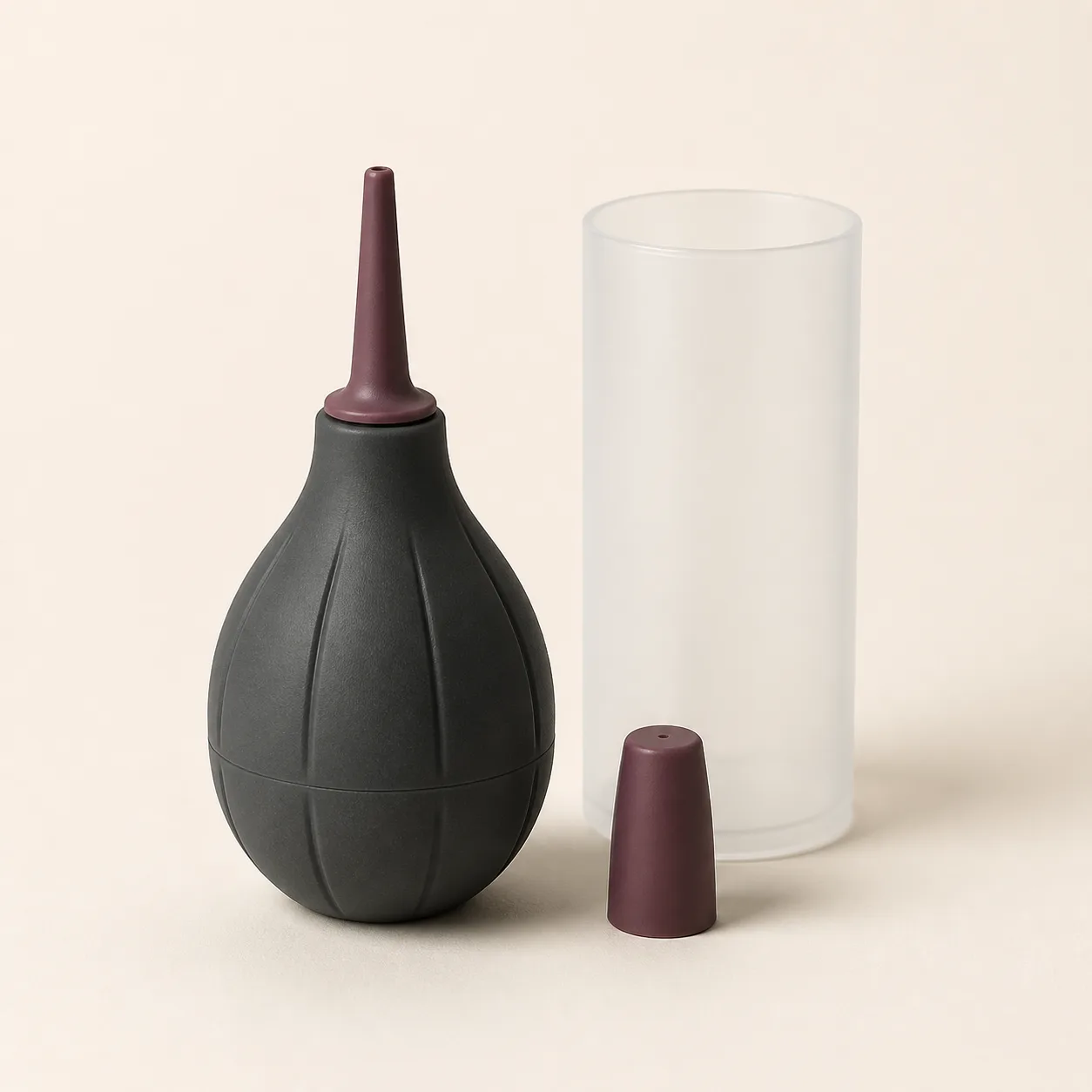
Manual Dust-Blower Bulb with Soft Nozzle and Cap
A hand-powered dry-care blower concept with soft exterior nozzle, protective cap and controlled-pulse guidance for accessible product recesses.
12,99 $
200 in stock
Loose dry dust sometimes needs movement before a care cloth can help
The manual dust blower bulb concept creates small hand-powered air pulses for dislodging visible loose particles from the outside of a storage case or an accessible charging recess. It works without a propellant can, battery or brush contact, so the user can control direction one squeeze at a time.

This is a dry preliminary step only. It does not sanitize, dissolve residue or replace the product maker’s care instructions.
Start with the device switched off and disconnected
Power down the item, unplug every cable and move it to a dry, stable surface with good lighting. Consult its manual before directing air near a port, seam, vent or charging contact because some constructions can be damaged by forced particles.
Never work beside an open cleaner bottle, sink, flame, heater or charging power supply.
Inspect the bulb before every care session
Look across the bulb body, nozzle joint and outlet under bright light. Set the tool aside if the body is tacky, cracked or slow to recover, or if the nozzle is split, loose, blocked, sharp or shedding particles.
Check that the cap is clean before it is placed over the outlet.
Clear the nozzle away from the product first
Point the outlet into open space and squeeze several times before approaching the target. This confirms that the bulb rebounds normally and helps expel any loose speck that may have entered during storage.
Do not test it against a face, skin, fabric, powder or another person’s belongings.
Keep the tip outside every opening
Hold the rounded nozzle above the surface rather than inserting it into a port or recess. A visible gap protects delicate contacts from impact and lets displaced dust escape instead of trapping it deeper inside.
If the opening cannot be seen clearly, stop and use the manufacturer’s approved service route.
Use short angled pulses rather than continuous pressure
Aim across the edge of the recess so particles travel toward an open exit. Begin farther away with one gentle squeeze, inspect the result and reduce distance only if the manual permits it.
Repeated hard pumping can move debris into joints, so more pressure is not automatically better.
Airflow must not push moisture or residue inward
Use the blower only when the target is visibly dry. Sticky lubricant, cleaner film, condensation and body residue need the maker’s approved cleaning method; air can spread them across contacts or behind seals.
When the particle does not move easily, pause instead of escalating force.
The tool is not intended for use on the body
Keep the nozzle away from ears, eyes, nose, mouth, genitals, wounds and every other body opening. It is a product-care accessory, not an irrigation bulb, medical instrument or personal cleansing device.
Store it where children and pets cannot mistake it for a play item.
Manual air is not the same as compressed gas
A squeeze bulb offers limited hand-driven pulses and contains no refill cartridge. That distinction does not prove a safe pressure level, filtered airflow or antistatic performance; those properties require measured supplier evidence and sample testing.
Do not connect the bulb to a compressor, vacuum line or powered pump.
Static-sensitive parts need their own manufacturer guidance
No electrostatic-discharge claim is made for this concept. If the item contains exposed electronics or the maker warns against ungrounded cleaning tools, do not use the blower there.
Visual similarity to camera-cleaning accessories is not proof of electronics suitability.
Cap the outlet only after the tool is dry and clean
Wipe the exterior using a method confirmed for the final materials, allow all parts to air-dry separately, then fit the protective cap without forcing it. A trapped damp film can hold dust at the nozzle opening.
The cap is a storage shield, not a sterile seal or liquid barrier.
Store the bulb without crushing its shape
Place the capped tool in its clean sleeve or a ventilated private drawer away from sharp objects, oils, solvents, direct sun, ozone sources and heat. Do not fold the nozzle or leave a heavy device pressing on the bulb.
A separate compartment prevents lint from a cloth or pouch lining from reaching the outlet.
Exterior cleaning needs confirmed compatibility
Bulb, nozzle, cap and sleeve may use different polymers. Until the supplier confirms them, avoid alcohol, bleach, fragrance, oil, boiling water, dishwashers and UV boxes because any of these may harden, swell, discolor or crack an unknown component.
Never draw liquid into the bulb or rinse through the nozzle.
Incoming inspection should measure the airflow pathway
Check sample dimensions, mass, bulb recovery, nozzle retention, cap fit and outlet finish. Run repeated squeeze cycles while monitoring odor, shedding, valve behavior and any material transfer onto a clean white card.
Quarantine units with blocked outlets, detached parts, weak rebound, sharp flash, oily film, strong odor or inconsistent airflow.
The sourcing figure is a reference rather than a finished specification
An Alibaba listing from Zhongshan MX Silicone Rubber Model Factory shows a manual silicone camera-cleaning blower at USD 0.95-1.20 with MOQ 100 pieces. Inclusion of the pictured cap and sleeve, all component materials, filtration, pressure and adult-wellness suitability remain pending.
The procurement reference supports sample inquiry only. The EUR 12.99 plan allows for China-origin freight, protective components, outlet inspection, squeeze-cycle checks and discreet packing; packed mass, freight, duty, tax, insurance, payment fees and delivery terms remain pending.
Frequently asked questions
Can this blower sanitize a toy?
No. It moves some loose dry dust but does not disinfect, wash or remove films.
May I place the nozzle inside a charging port?
No. Keep the tip outside and follow the device maker’s port-care guidance.
Can it be used after applying cleaner?
Only after the product is fully dry and only where its manual permits airflow; never use it to push liquid from a recess.
Is the air filtered or antistatic?
Neither property is confirmed. Both require supplier documents and sample testing.
Can the bulb be washed internally?
No internal wash method is approved yet. Do not draw water or chemicals through the outlet.
When should the tool be discarded?
Stop using it after cracks, tackiness, weak rebound, loose joints, shedding, odor, outlet damage or a cap that no longer fits cleanly.
Reviews
There are no reviews yet.