


Care-Accessory Air-Drying Rack with Removable Drip Tray
August 14, 2026
Manual Dust-Blower Bulb with Soft Nozzle and Cap
August 14, 2026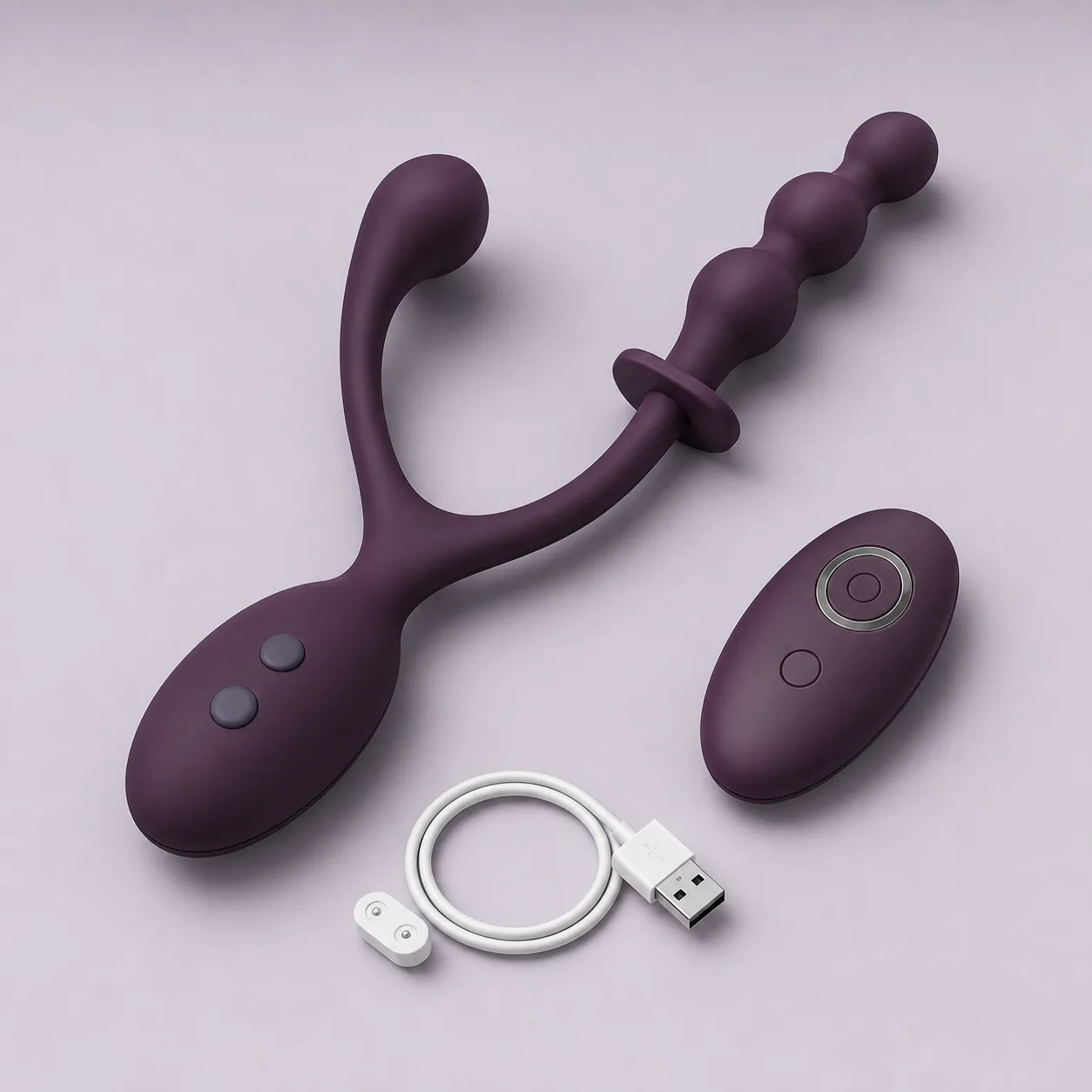
Tri-Zone Remote Wearable Bead-and-Pad Vibrator
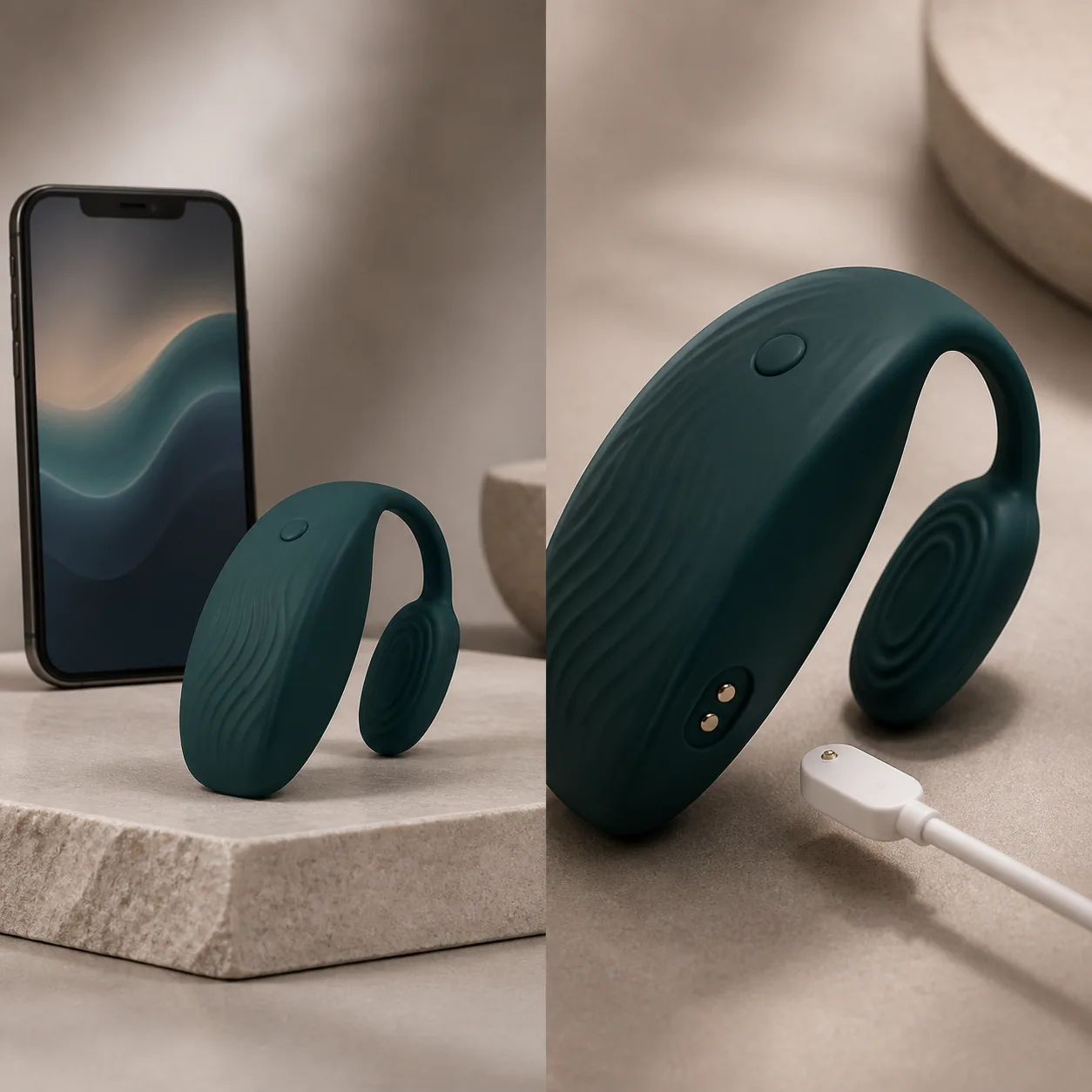
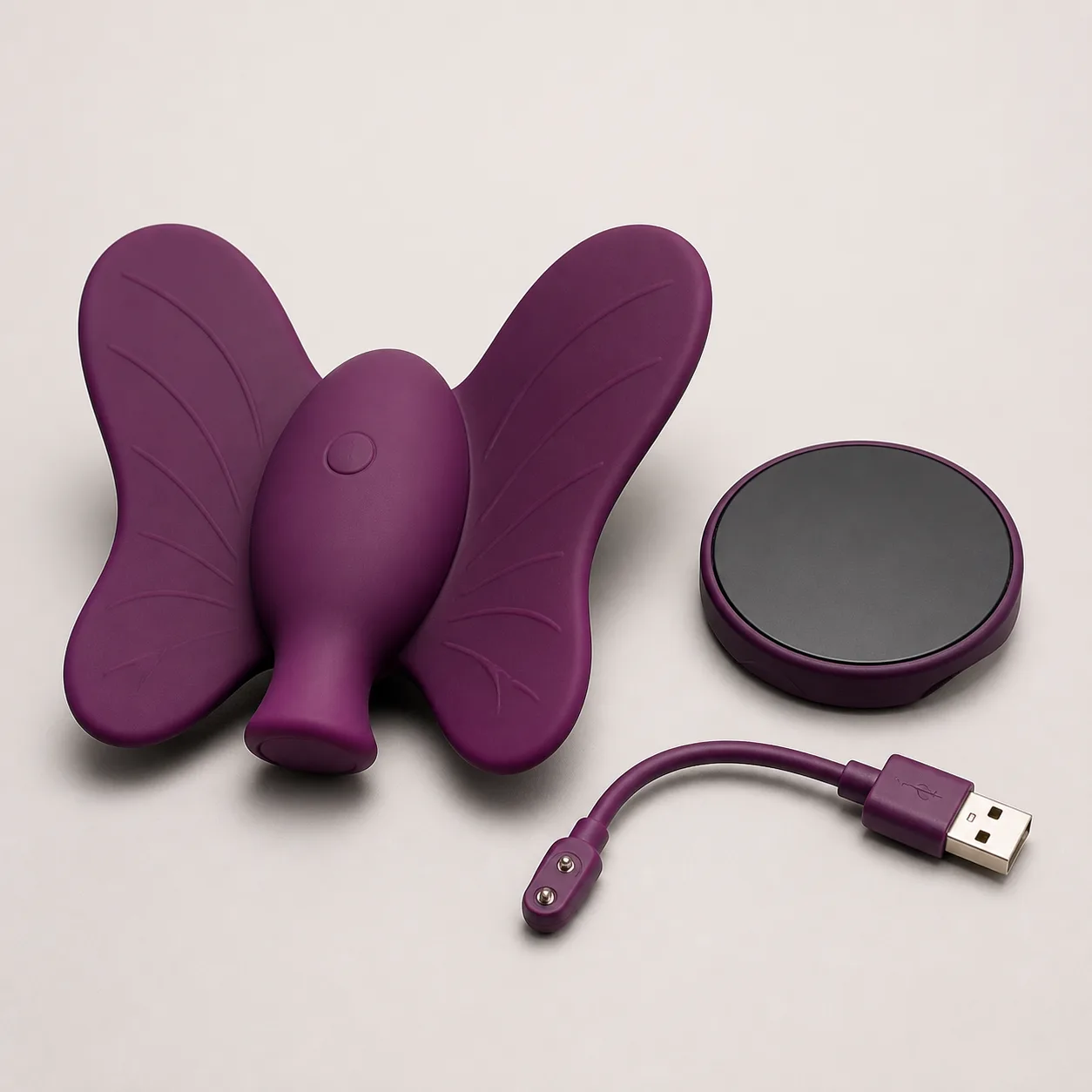
A dark-plum tri-zone wearable concept combining an external control pad, curved rounded arm, graduated three-bead tail, broad stop, wireless remote and magnetic charging.
59,99 $
200 in stock
Three contact zones demand three separate acceptance tests
The tri-zone remote wearable bead-and-pad vibrator concept branches from a low-profile dark-plum external pad into a curved rounded arm and a three-bead flexible tail. A broad stop, pebble remote and white magnetic lead complete the system.

The image shows functional zones, not approved dimensions, placement, retention or vibration output.
The external pad establishes the wearable reference point
Record pad length, width, edge radius, thickness, button height and the angles at which both arms leave the housing. The pad must remain accessible and prevent the assembly from migrating when either flexible branch moves.
Test fit with all motors off before evaluating any program or remote command.
The curved bulb needs its own insertion boundary
Measure usable length, maximum diameter, tip radius, curvature and distance to the central junction. Mark the validated body-contact boundary in instructions so the external housing and control area are never treated as insertable.
Use only as the confirmed production manual specifies, with compatible lubricant and slow, low-force placement.
The bead tail requires a true external retrieval stop
Document bead diameters, neck diameters, spacing, tail flexibility and the stop’s width, thickness, stiffness and orientation. Any anal use requires a stop that remains outside, is substantially broader than the largest insertable section and can be grasped immediately.
If the production geometry does not meet that requirement, anal placement is not approved regardless of supplier wording.
Both internal branches should not be positioned by default
Evaluate one branch at a time until fit, cleaning and stop behavior are validated. The unused branch stays external and clear of clothing or bedding so it cannot be pulled, folded under the body or introduced unintentionally.
Pause all channels before moving from the curved arm to the bead tail or changing body position.
Zone mapping must be obvious on both controls
Map each product button and remote button to the external pad, curved arm and bead tail. Record long-press power, short-press stepping, combined modes, startup state, memory and complete stop.
A single deliberate local command should stop every active motor even if the remote is lost, sleeping or out of range.
Remote failures need deterministic behavior
Measure pairing time, range, latency and reconnection after interference, depleted remote power and product sleep. Confirm that repeated packets or stuck buttons cannot create uncommanded mode changes.
Use the remote only where the wearer and supervising partner can communicate continuously and reach the product-side controls.
Junction fatigue can change the angle of all three zones
Cycle both arms through the supplier-approved bend envelope while holding the pad in a wearable position fixture. Inspect the Y-junction for whitening, thinning, crack initiation, exposed core material and permanent twist.
A branch that no longer centers can increase local pressure or reduce the effectiveness of the broad stop.
Compounds need zone-by-zone traceability
Obtain formulations, hardness, pigments, cure methods and bonding systems for the pad, buttons, curved bulb, bead surfaces, narrow necks, retrieval stop, junction and charge insert. A single generic material label cannot describe every contact zone.
Condition samples with compatible lubricant and cleanser, then inspect tack, odor, dye transfer, swelling, cracking, oil bleed and bond separation.
Cleaning a branched device needs an ordered routine
Switch off and disconnect the dry charging lead. Clean from each rounded tip toward the external pad, paying special attention to bead necks, both sides of the stop, the Y-junction, button edges and charging recess.
Do not share between body areas without complete cleaning, and use separate products when the validated hygiene protocol cannot prevent cross-contamination.
Ingress testing must flex both branch roots
Test the complete assembled unit at the Y-junction, branch surfaces, stop junction, pad seam, buttons and magnetic contact insert after bend, pull and drop cycles. A flexible coating can hide a liquid path that opens only during movement.
Until model-matched evidence is accepted, keep the device out of baths and showers and never charge near water.
Charging checks should include an awkward folded position
Verify input rating, connector polarity, charge time, termination, runtime and low-battery shutdown with the arms stored in the approved shape. Confirm that the lead cannot pull one branch into a tight crease or place the contacts against damp body-contact surfaces.
Stop charging for unstable alignment, corrosion, unusual heat, odor, swelling or cable damage.
Heat and sound need a three-zone map
Measure temperature and vibration at the pad face, curved tip, each bead, narrow necks, junction and charging insert while channels run separately and in all verified combinations. Record sound at a fixed distance for the highest-load program.
Quarantine rattling, uneven bead output, falling amplitude, hot spots or modes that continue after the stop command.
Incoming inspection should use two anatomy-neutral fixtures
Use a curved profile gauge for the bulb arm and a compliant channel with an external-stop plate for the bead tail. Sample pad stability, zone mapping, remote latency, local stop, flex recovery, charge termination, seams and surface finish.
Dimensional tolerances, stop minimum, flex-cycle target, motor bands, drop height and carton testing remain pending supplier agreement.
The three-in-one quote excludes multi-zone validation
An Alibaba wearable vibrator page lists a three-in-one remote bead and pad product from Beijing Xing Yuan Da S&T Co., Ltd. at USD 9.56-12.00 with MOQ 1 piece. Exact model, manufacturing role, geometry, compounds, electronics and compliance evidence remain pending.
The procurement reference supports sample inquiry only. The EUR 59.99 plan includes a China-origin freight allowance plus pad, bulb, bead, stop, control, junction, material, ingress, charging and thermal review; actual freight, duty, tax, insurance, payment fees and destination terms remain pending.
Frequently asked questions
Can all three zones vibrate together?
Combined-channel behavior, intensity and runtime require verification on the approved sample.
Is the bead tail approved for anal use?
Only if the production stop is demonstrably broad, external, reachable and backed by model-specific instructions; approval is currently pending.
Should both internal branches be positioned at once?
No. The default evaluation uses one internal branch at a time with the other kept external.
Will the remote work through clothing?
Range, interference, latency and garment effects require measured testing; local controls must remain reachable.
Can the device be submerged?
No immersion guidance is approved without complete-unit evidence after flex and drop cycling.
What should be checked before use?
Inspect the pad, both tips, every bead and neck, the stop, junction, buttons and contacts, then confirm low modes and complete local stop away from the body.
Reviews
There are no reviews yet.