


Seven-Fall Twin-Texture Sensory Flogger
August 14, 2026
Keychain Mini Massager – Compact External Wellness Accessory
August 14, 2026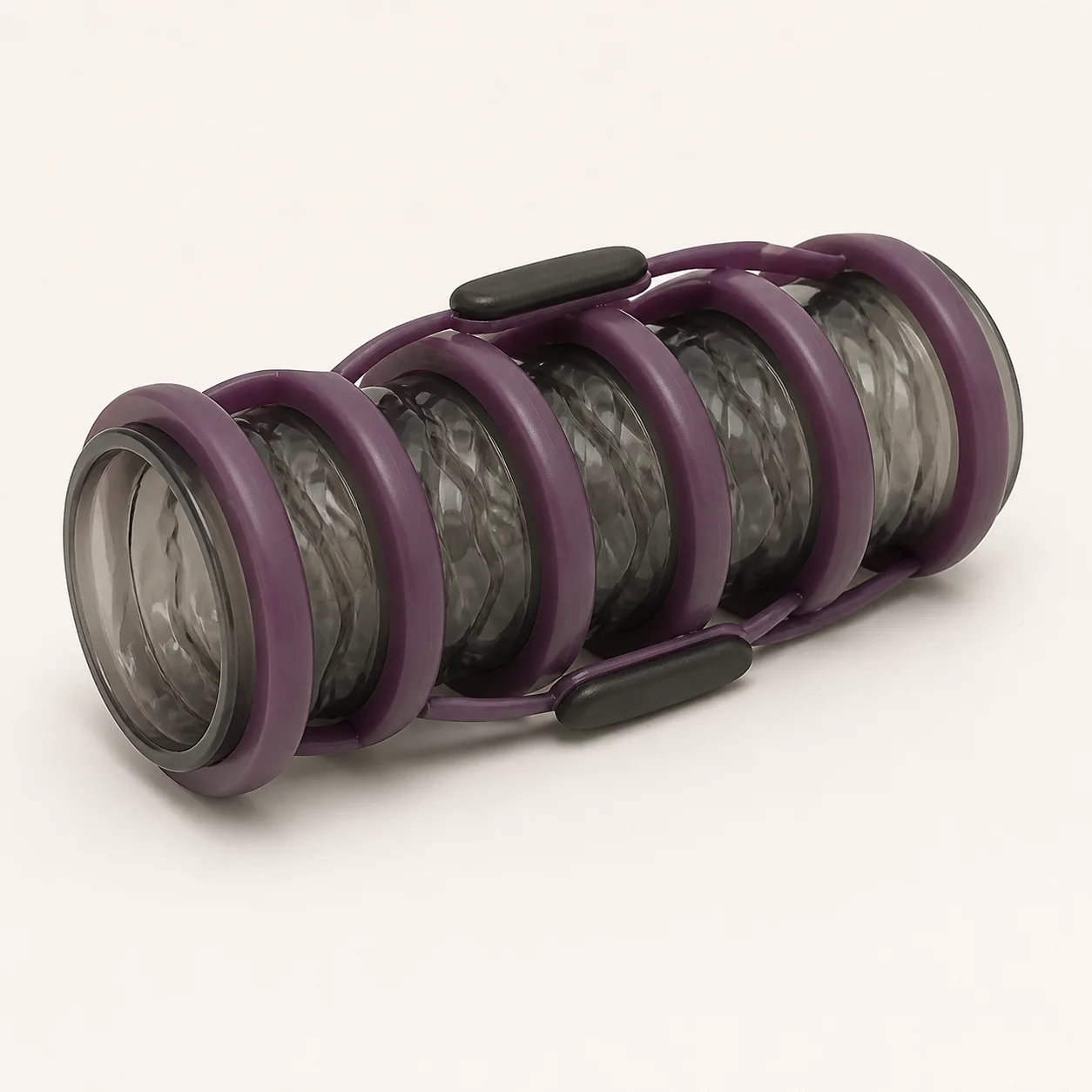
Six-Ring Accordion-Grip Manual Stroker with Removable Open-End Ripple Liner
A non-anatomical manual stroker concept with one removable smoke open-end ripple liner, exactly six smoky-plum squeeze rings, two longitudinal rails and twin thumb pads.
42,99 $
200 in stock
Wrap a removable ripple liner with six flexible grip rings
This six-ring accordion-grip manual stroker combines one smoke-charcoal open-ended liner with exactly six smoky-plum circular squeeze rings. Two slim longitudinal rails connect the outer frame, and one charcoal oval thumb pad sits on each rail for indexed pressure control.

The image records design intent only. Dimensions, materials, hardness, compression, texture, compatibility, cleaning method and production readiness remain pending.
Audit the single-device pack and removable components
The proposed sellable unit contains one outer accordion frame and one removable open-ended liner assembled as a single manual device. Any storage case, drying stand, cleaning tool, lubricant sample or spare liner must be listed separately if later approved.
Final pack count, disassembly method, labels, packaging and replacement-part policy require supplier confirmation.
Number the circular grip rings R1 through R6
Starting at the front opening, record each ring’s outside diameter, inside clearance, section width, thickness, spacing and position along the axis. Compare all six with a fixture so perspective or hand deformation does not hide a moulding error.
Exactly six rings are proposed. Their final flexibility and dimensional tolerances require approved engineering samples.
Measure both longitudinal rails under combined bending
Label the two smoky-plum rails A and B, then capture width, thickness, neutral curvature, attachment footprint at every ring and clearance to the liner. Apply bending and torsion loads while monitoring stress at the twelve ring-to-rail junctions.
Frame material, fatigue life and safe deflection remain unverified until cycle testing is complete.
Position the twin thumb pads for balanced hand pressure
Record each charcoal pad’s length, width, height, texture, rail position and bond or mould interface. Check the opposing pads under dry, damp and lubricant-simulant handling for slip, rotation, delamination or trapped residue.
The pads are grip references, not calibrated force controls. Applied pressure varies with hand size and technique.
Map squeeze pressure across all six ring zones
Insert a compliant instrumented mandrel and measure radial pressure at every ring under defined thumb forces. Compare single-pad, opposed-pad and whole-hand loading to identify local peaks, uneven collapse or contact loss between rings.
Do not force the frame closed or continue use with pain, numbness, colour change, swelling or damaged material.
Define the liner removal path without overstretching
Document which opening releases first, the maximum approved stretch during removal and the alignment marks used for reassembly. Repeat extraction and insertion cycles while checking rim tears, rail interference, ring distortion and incomplete seating.
Removal instructions must follow sample testing; the illustration alone does not establish a safe pull direction.
Profile the internal ripple texture from end to end
Create an axial map of ridge height, spacing, angle, transition radius and channel depth along the smoke liner. Use section samples or scanning methods to compare production pieces with the approved texture master.
The visual suggests a rippled tunnel but does not prove exact geometry or a particular sensation.
Measure both openings and the usable channel
Record relaxed opening diameter, maximum approved extension, rim thickness, total liner length, usable channel length and minimum internal clearance. Check both ends for symmetry, sharp flash, thin spots, tackiness and permanent stretch after cycling.
Fit varies by anatomy. Customers should not use a device that cannot be entered or removed without excessive force.
Separate frame, pad and liner material specifications
Request traceable composition, hardness, restricted-substance and migration data for the six rings, two rails, two pads, liner, pigments, adhesives and any surface coating. Verify that manufacturing substitutions cannot be made without change approval.
Silicone, TPE, body-safe, hypoallergenic and medical-grade claims are withheld unless evidence supports the exact production components.
Set finished dimensions from the assembled device
Measure overall length, maximum outside diameter, ring spacing, rail separation, pad-to-pad width, liner overhang and both opening positions in the assembled state. Add tolerances for parts before and after conditioning.
Packed size and weight remain pending final tooling, labels and packaging.
Cycle compression, torsion, impact and liner retention
Run repeated opposed squeezing, whole-frame bending, rail torsion, liner extraction and reassembly, then perform controlled drops onto relevant faces. Inspect every ring junction, pad, opening and liner surface after each stage.
Reject samples showing cracks, sharp edges, loose pads, permanent collapse, exposed rigid parts or liner migration.
Screen lubricant compatibility and residue pathways
Expose each confirmed material to proposed lubricant types for defined times and temperatures, then measure swelling, mass change, softness, tack, colour transfer and loss of fit. Examine gaps beneath rails, pads and rings where residue may collect.
Only tested lubricant categories should appear in customer guidance. Oil, silicone and water compatibility cannot be assumed.
Validate cleaning, disassembly and complete drying
Use a soil marker to confirm that the liner channel, ripples, rims, rings, rails and pad edges can be reached by the proposed cleaning method. Measure drying time separately for the removed liner and frame before reassembly and storage.
Boiling, dishwasher use, bleach, alcohol, immersion and heat drying are not advised without material and process evidence. Stop using the product if odour, cracking, tackiness or residue persists.
Set a landed-price plan from manual-sleeve references
An Alibaba public category page displayed a reusable textured sleeve at USD 1.24 to 1.41 with MOQ 1, a portable manual sleeve at USD 3.55 to 3.97 with MOQ 1 and an open-ended sleeve reference at USD 2.00 to 2.20 with MOQ 100. These are broad benchmarks, not quotations for this six-ring accordion frame or approved suppliers.
The public procurement benchmark supports an EUR 42.99 planning price after provisional allowance for China-origin freight, custom six-ring tooling, rail and pad moulding, liner texture inspection, pressure mapping, frame and removal cycling, compatibility and cleaning validation, discreet fulfilment and quality-loss provisions. Exact supplier, quote, MOQ, dimensions, materials, packed weight, freight, duty, tax, certification, payment terms, lead time and production availability remain pending.
Frequently asked questions
How many grip rings surround the liner?
Exactly six smoky-plum circular rings are proposed along the outer frame.
Is the internal liner removable?
Yes in the concept, but the approved removal path and stretch limit require cycle-tested samples.
Is this an automatic device?
No. The proposal is a manual stroker with no motor, battery, buttons or charging system.
Are both ends open?
Yes, the smoke-charcoal liner is shown with a simple rounded opening at each end.
Which lubricants are compatible?
The final guidance awaits material identification and swelling, tack and fit tests.
How should it be cleaned?
The validated disassembly, washing and drying method remains pending material and soil-removal testing.
Reviews
There are no reviews yet.