


Disposable Absorbent Care Work Pads, 10-Pack
August 14, 2026
Zippered Care-Surface Pillow Protectors, 2-Pack
August 14, 2026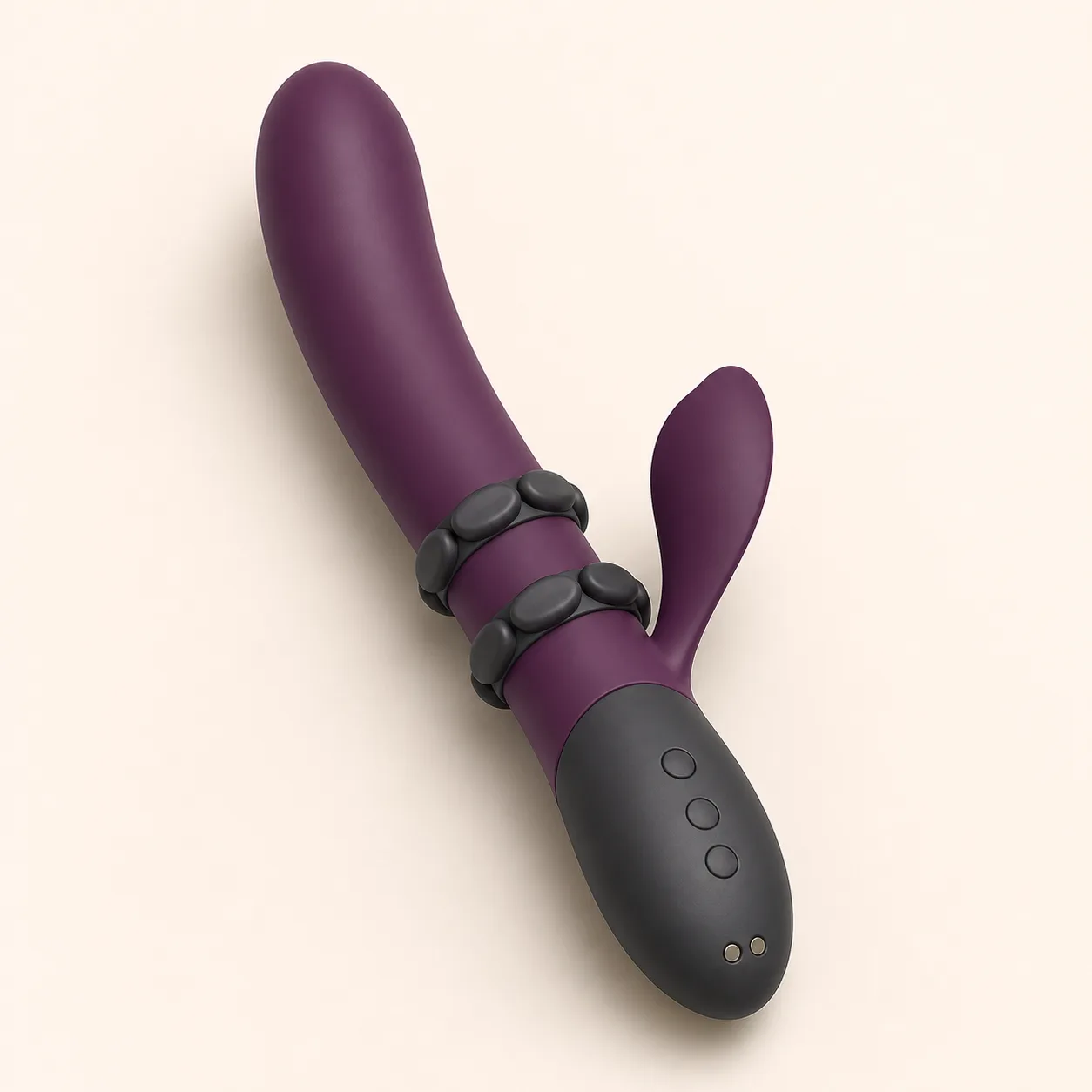
Twin-Roller Collar Rabbit Vibrator with Offset Flex Pad
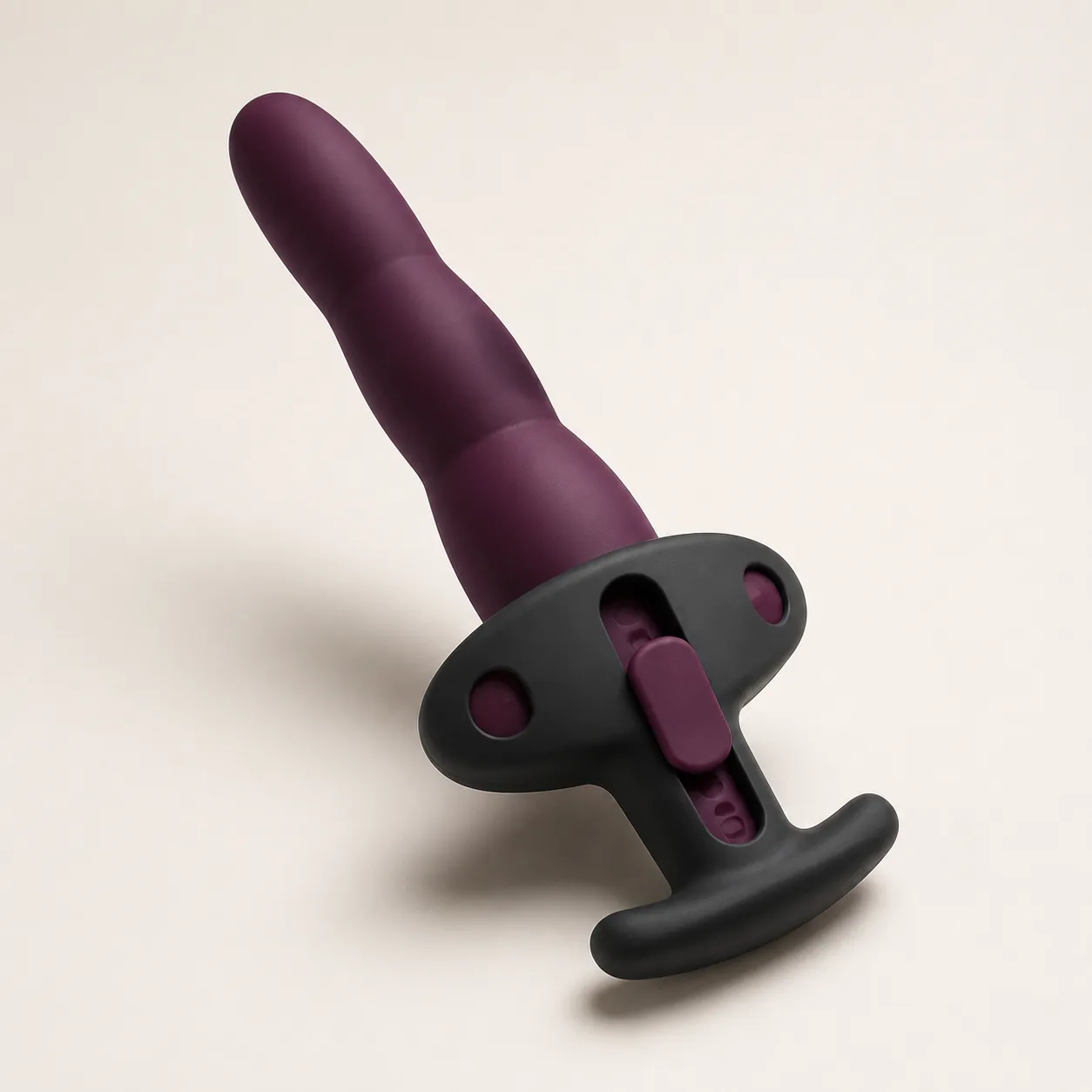
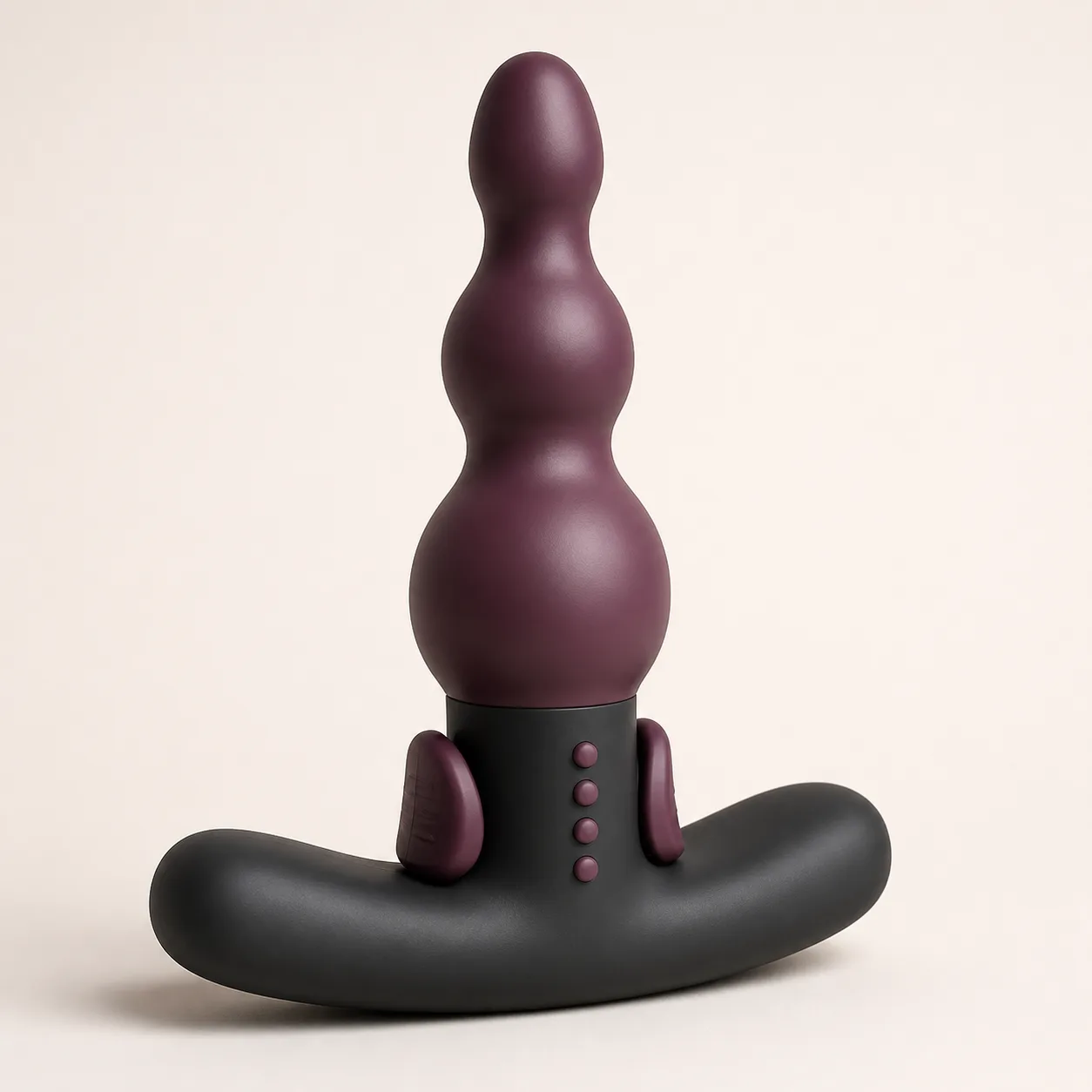
A rechargeable rabbit vibrator concept with two visible podded roller collars, a curved main body, offset flexible external contact pad and three local controls.
49,99 $
200 in stock
Two roller collars replace a hidden bead chamber
This twin-roller collar rabbit vibrator concept places two visible podded rings around the lower section of a curved plum body and pairs them with an offset flexible external contact pad. A charcoal handle separates three local controls from the moving collars and includes a magnetic-charge concept.

The image establishes component layout only; it does not prove rotation, insertable measurements, materials, motor count, waterproofing or safety limits.
Measure the body around both collar zones
Record overall length, planned insertable length, maximum body diameter, collar diameter, spacing between collars, distance to the handle and mass. Measure each roller pod’s height, width and edge radius separately.
The broadest moving collar controls fit and cannot be represented by the smooth upper-body diameter.
Inspect every roller pod and retention seam
Examine all pods with magnification before and after operation for lifting edges, wobble, gaps, surface flash or particles. Apply a documented pull and lateral load to detect a loose pod without damaging a conforming sample.
Any detached, cracked or irregular roller disqualifies the unit.
Map collar direction and speed independently
Mark one roller on each collar with removable test ink and record direction, revolutions per minute, start delay and stop time at every control setting. Repeat under a soft representative load.
If both collars share a motor, the page must not imply independent control; if they differ, the mapping needs clear documentation.
Test stall behavior without exceeding safe load
Use an instrumented soft fixture to increase resistance gradually and record current, speed loss, shutdown and restart behavior. Inspect the pod seams and body surface after each trial.
A safe design needs a documented response to obstruction rather than continued heating or sudden high-torque recovery.
The offset flex pad needs a reach envelope
Measure relaxed length, width, thickness, tip radius, gap from the main body and low-force deflection. Plot where the pad can contact across the approved collar and body positions without being trapped by a moving pod.
Do not bend the pad beyond its tested range or use it as a handle.
Confirm insertable limits from the exact sample
Measure from the rounded tip to a clearly defined external stop before publishing any usable length. The handle and flexible pad must remain outside the body, and the rotating collars need a conservative diameter and motion assessment.
Begin at the lowest setting with ample compatible lubricant and stop after pain, numbness, bleeding, excessive pressure or unexpected resistance.
Map three buttons without relying on icons
Document short press, long press and multi-button actions from off, active, locked and low-battery states. Identify which control operates body vibration, pad output and collar motion.
The main power-off action must remain reachable and must stop every moving component promptly.
Separate rotation from vibration during testing
Run the smooth body, external pad and roller collars one subsystem at a time, then in every permitted combination. Log vibration amplitude, frequency, rotation speed, noise and control latency on a repeatable fixture.
Mode and motor counts are pending until the sample proves them.
Track battery load under combined operation
Measure runtime with rotation alone, each vibration zone alone and the highest approved combined state. Record low-battery indication, output reduction and shutdown behavior over repeated charge cycles.
Battery chemistry, capacity and protection circuitry require supplier documents and sample inspection.
Qualify magnetic charging on a dry surface
Verify input rating, polarity, contact alignment, cable retention, charge indication and completion time. Test gentle misalignment without forcing the connector and inspect the recessed contacts for debris.
Disconnect charging equipment before operation or cleaning and keep loose metal away from the contact points.
Log heat at rollers, motors and battery
Measure temperature at each collar, upper body, flex-pad base, handle, battery region and charge contacts at fixed intervals. Repeat after partial battery depletion and after controlled stall trials.
Stop after abnormal odor, swelling, unstable controls, surface change, unexpected noise or temperature beyond the documented limit.
Treat ingress evidence as model-specific
Moving collars, pod seams, buttons and magnetic contacts create multiple sealing boundaries. Review laboratory evidence for the exact revision and reinspect seals after rotation and flex cycling.
No immersion or shower use is planned until the complete assembled unit passes verification.
Clean around every moving collar
Power off and disconnect the charger, then follow the confirmed mild-cleaning method. Rotate each collar by the documented unpowered procedure so all pod shoulders and gaps can be reached without forcing the mechanism.
Rinse only within the verified ingress boundary, dry every recess and inspect for trapped residue before storage; boiling, bleach, alcohol, abrasives and dishwashers need explicit approval.
Price two moving collars as a validation burden
An Alibaba rotating-rabbit showroom lists a rechargeable rotating rabbit vibrator at USD 5.50-6.50 with MOQ 10. Supplier identity and an exact match to this exposed twin-collar, offset-pad design remain pending, so the price is a mechanism benchmark only.
The procurement reference supports an EUR 49.99 plan after allowing for China-origin freight, collar and pod measurement, retention and cycle checks, direction, speed and stall mapping, pad deflection, control, output, battery, charging, heat and ingress review, cleaning validation, protective packing and discreet fulfillment. Packed size, weight, freight, duty, tax, insurance, payment fees and destination terms require confirmation.
Frequently asked questions
Do the two collars rotate separately?
Independent motion is not assumed; control mapping must be proven on the production sample.
Can the roller pods detach?
They must pass retention and repeated-cycle checks; any loose pod disqualifies the unit.
Is the flexible pad an external contact arm?
Yes, it is planned to remain external and must not be used as a grip or lever.
Can the product be used in water?
Not until exact-revision evidence covers collars, seams, buttons and charge contacts.
How are the collar gaps cleaned?
Use the verified unpowered rotation procedure and compatible mild cleaning method, then dry every recess.
Which faults mean immediate discontinuation?
Loose pods, collar binding, unsafe stall recovery, cracked flex pad, delayed stop, battery swelling, excessive heat, seal damage, residue or abnormal noise.
Reviews
There are no reviews yet.