



Three-Position Sliding-Fin Curved Vibrator with Dual Channels
August 14, 2026
Clip-On Care-Shelf Dividers with Rounded Tops, 4-Pack
August 14, 2026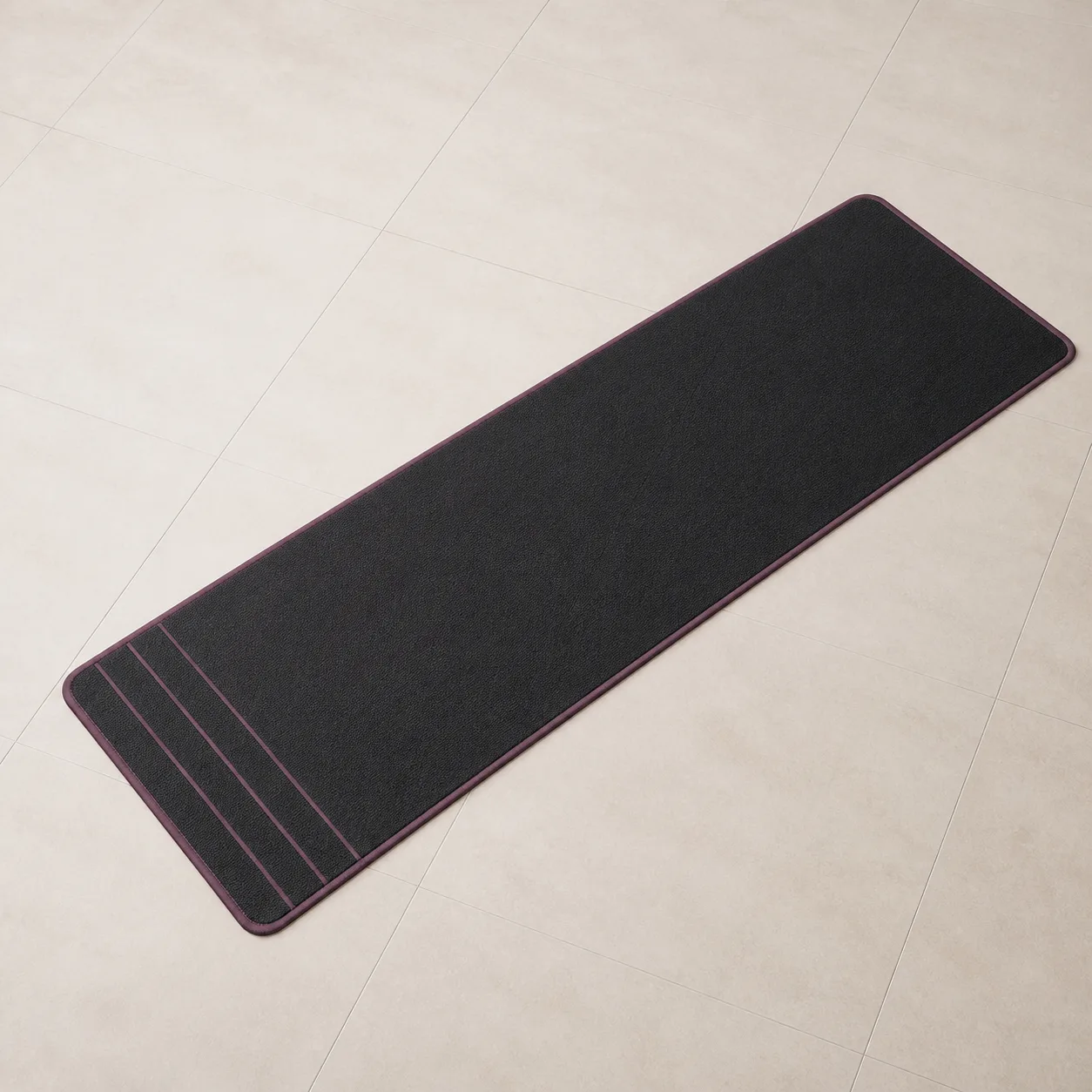
Low-Profile Care-Washing Floor Runner
A low-profile floor-runner concept for defining a dry approach outside the direct splash boundary of an adult-controlled care-washing station.
24,99 $
200 in stock
A runner can define a dry approach beside the care-washing zone
This care washing floor runner concept marks a planned standing and walking area outside the direct basin splash boundary. Its low rectangular profile is intended to help an adult organize the route between dry storage, washing and drying stations.

The runner is not a certified safety surface and cannot make a wet floor non-slip.
Draw the entire walking route before selecting a size
Measure the clear floor between doorway, washing counter, drain, drying area and storage. Include door swing, cabinet openings, floor transitions, mobility aids and the space needed to step around the runner without crossing water.
Final length, width and thickness require production-sample measurement.
Use the image only to assess visual direction
The rendering shows a flat charcoal rectangle with plum binding and three guide lines on tile. It does not establish fiber, backing, pile, absorbency, edge height, grip, colorfastness or suitability for the illustrated floor.
Approve the final sample on the exact intended surface.
Inspect face, border and underside in bright light
Lay the dry sample upside down and then face up, checking corners, seams, backing, guide lines and edge profile. Look for curls, thin areas, exposed adhesive, loose fibers, sharp debris, stains, cracking, odor or pigment transfer.
Do not use a runner that fails to lie flat while unloaded.
Patch-test the dry floor finish first
Clean the floor according to its manufacturer instructions and place a corner of the runner on an inconspicuous dry area for the defined trial. Inspect for coating change, pressure marks, discoloration, residue or backing transfer.
Compatibility can differ across tile, sealed wood, laminate, stone and resilient flooring.
Place it beyond the direct splash and drain path
Keep the nearest edge outside the zone where water normally falls from the basin, faucet, item or hands. Do not bridge a floor drain, grout defect, threshold, heating vent or uneven tile.
A runner should not hide water that needs immediate removal.
Run a dry walk test before the washing session
With the area clear and well lit, approach from each intended direction using normal footwear. Observe edge lift, bunching, sliding, toe catch and whether the guide lines cause any texture change.
Stop the trial if the runner moves or changes the natural walking path.
Treat every slip claim as unproven until tested
Do not assume that a rubber-like backing or textured face provides grip. Dry and wet slip performance must be evaluated through an appropriate method on the intended floor, with the exact production materials and cleaning residues.
Household observation alone is not certification.
Respond to visible water before taking another step
Pause the washing task, keep people out of the route and remove water from the floor using the established spill procedure. If the runner is wet, approach only through a confirmed safe path and handle it without spreading water.
Never rely on the face to absorb an unknown volume.
Keep equipment and cleaned items off the floor runner
Do not place chargers, cables, basins, drying racks, bottles or care items on the runner. Weight can change its grip, trap moisture and turn an organized walkway into an equipment zone.
The runner is planned for route management only.
Lift from the dry end and inspect the concealed floor
After the session, confirm the route is clear and start at the end farthest from any water. Fold only enough to view the underside, then inspect the full floor area for moisture, residue, color transfer and surface damage.
Clean the floor separately before reinstalling any textile product.
Follow the verified wash process without improvising
Record the approved water temperature, detergent, machine setting, load size and drying method for the finished construction. Wash the runner apart from care items and low-lint cloths so floor soil does not enter the care-cleaning workflow.
Do not bleach, scrub, wring or heat it without written approval.
Dry until face, core, border and backing are all clear
Use the confirmed flat or hanging method with airflow reaching both sides. Check border seams and backing texture for retained moisture, odor, stiffness or distortion before the runner enters storage.
A dry-feeling surface does not prove the internal layers are dry.
Store flat enough to prevent edge memory
Keep the clean dry runner in its approved orientation away from heavy boxes, sharp edges, heat and direct sunlight. Before each use, unroll or unfold it fully and repeat the flatness and dry-walk checks.
Withdraw it after permanent curl, backing cracks, seam opening, shedding, staining, odor or repeated movement.
Sourcing needs a floor-specific sample and freight check
An Alibaba modern bath-mat listing from Ningbo Senyao Imp. & Exp. Co., Ltd. shows USD 0.98-2.20 per piece with MOQ 50. Its white cotton, quick-dry and anti-slip listing language does not confirm this planned charcoal runner’s composition, thickness, backing, absorption, wash life or dry and wet slip performance.
The procurement reference supports inquiry only. The EUR 24.99 plan allows for China-origin volumetric freight, floor-finish trials, dimensional and edge checks, wash and drying trials, protective packing and discreet fulfillment; packed size, mass, freight, duty, tax, insurance, payment fees and destination terms remain pending.
Frequently asked questions
Is the runner non-slip?
No slip-performance claim is approved until the production sample is tested on the intended floor in relevant conditions.
Can it sit directly beside a basin?
Place it beyond the planned splash and drain path so it does not hide water.
Will it fit under a door?
Door clearance, edge height and movement must be measured with the final sample.
Can care items dry on it?
No. Keep equipment and items on separately qualified counters, trays or racks.
Is it machine washable?
Only if the finished construction and written care instructions approve the exact process.
When should the runner be removed?
Remove after edge curl, sliding, cracked backing, open seams, shedding, color transfer, persistent odor or incomplete drying.
Reviews
There are no reviews yet.