


Four-Leaf Overlap-Shear Wand Massager with Three-Stop Travel Collar
August 14, 2026
Mock-Neck Long-Sleeve Diamond-Net Bodystocking with Twin Chevron Waist Panels
August 14, 2026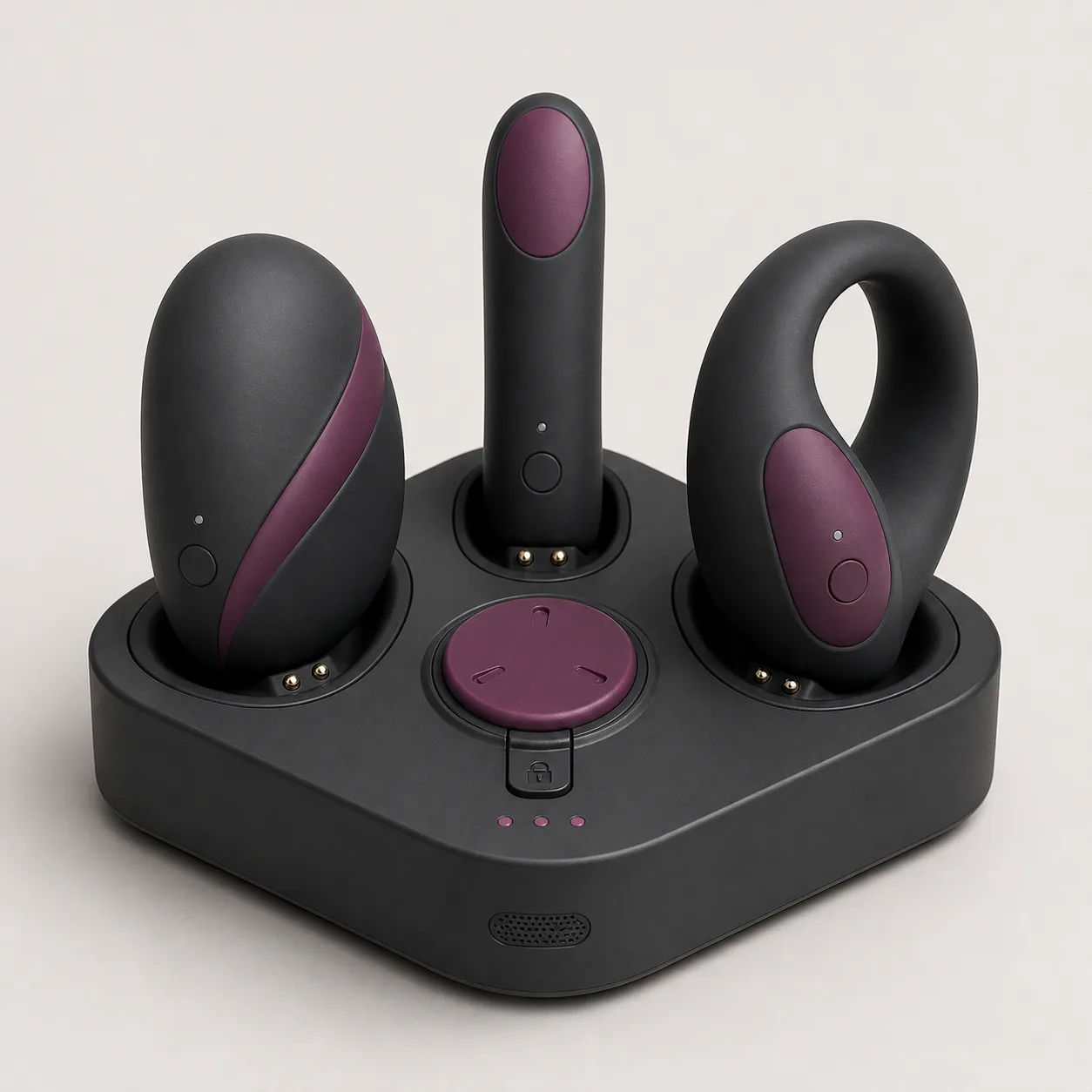
Three-Node Phase-Lock Couples Vibrator Set with Triangular Charging Dock
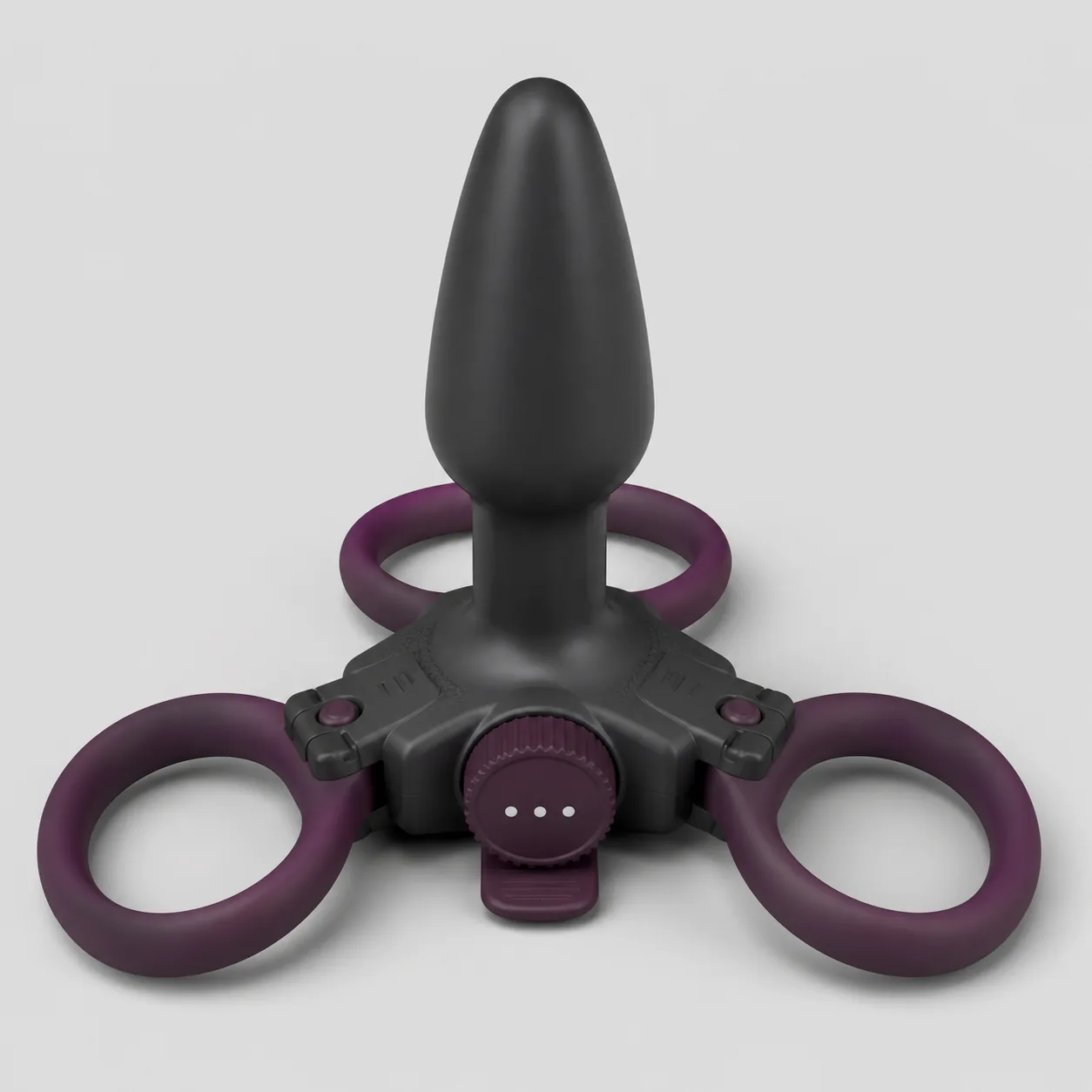
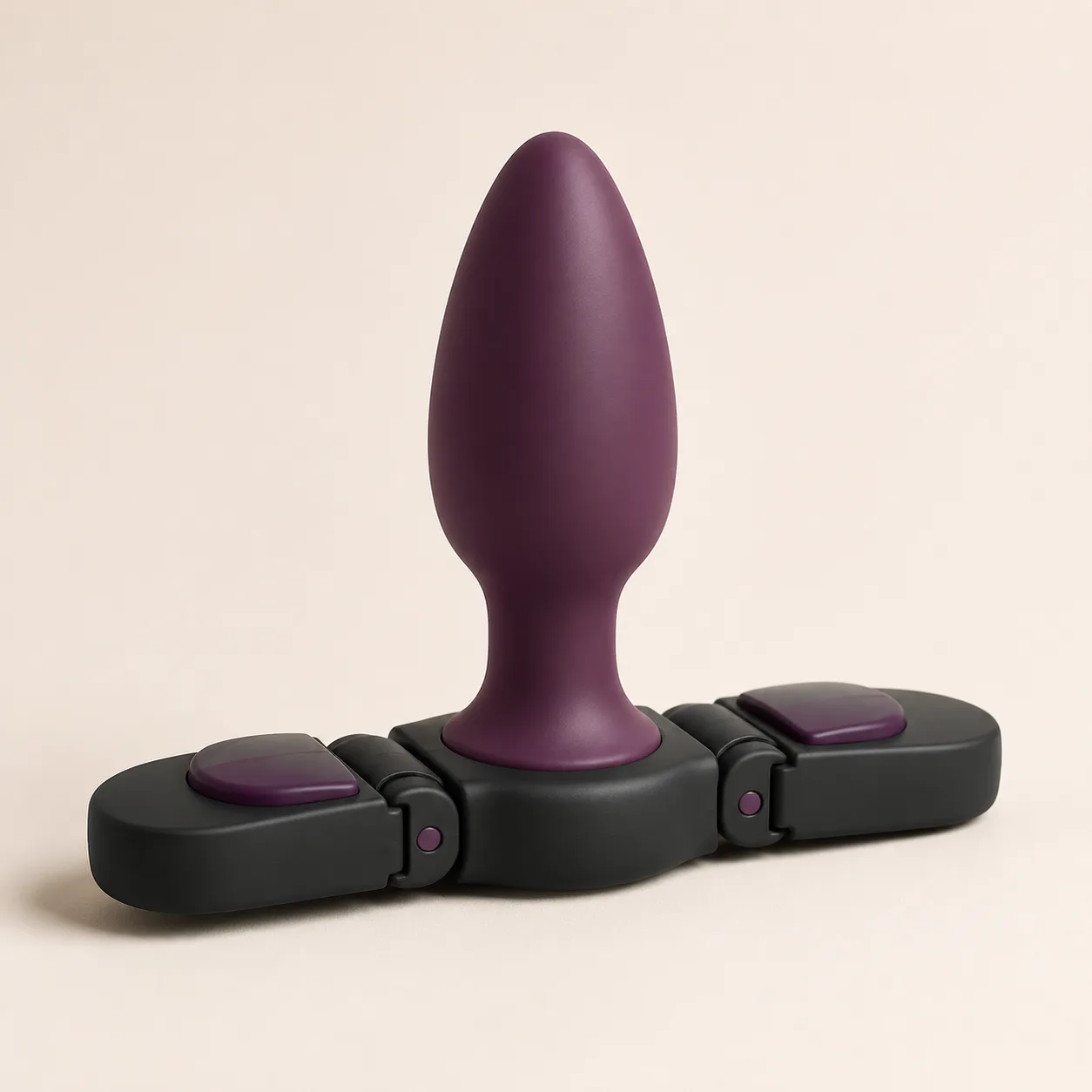
A coordinated three-device couples vibrator concept with pebble, capsule and open-loop nodes seated in a triangular charging and synchronization dock.
89,99 $
200 in stock
Coordinate three different devices from one dock
This three-node phase-lock couples vibrator set combines a rounded pebble, slim capsule and open C loop in one triangular charging dock. A central three-position sync dial is intended to select timing relationships across the three nodes while each device keeps its own button and indicator.

The image does not prove phase locking, wireless range, output, charging compatibility, dimensions, materials, fit, sealing, software support or production availability.
Inventory nodes A B and C plus the dock
Request separate bills of materials for pebble A, capsule B, loop C and dock D, including shells, contact surfaces, motors, eccentric masses, boards, cells, buttons, indicators, antennas if fitted, charging receivers or contacts, keyed bay inserts, magnets, center dial, detents, lock tab, dock controller, power input, vent, seals, pigments, fasteners and adhesives.
Every component needs a drawing revision, batch record and approved-sample reference.
Establish the identity of all three nodes
Record serial or electronic identity, mass, center of gravity, dimensions, control position, charging polarity, cell rating and device-specific operating states for A, B and C. Confirm that the dock cannot confuse two bays after a node is removed and reseated.
Identifiers must remain unique after reset, low-cell shutdown and firmware update if firmware exists.
Measure triangular dock and bay geometry
Measure dock footprint, height, bay centers, insertion angles, contact recesses, magnet positions, key features, dial clearances, anti-slip area and cable routing. For each bay, record seating depth, rocking play, extraction force and contact alignment.
A node should not appear fully seated while its contacts remain misaligned.
Verify magnetic and mechanical keying
Challenge every node in all three bays and at several rotations. Measure attraction, rejection, false seating and the force required to defeat an incorrect orientation without damage.
Magnets and keys must remain captive, inaccessible and separated from charging conductors by verified construction.
Characterize charging for A B and C
Log contact resistance, charging current, cell voltage, time, termination, temperature and indicator sequence for each node alone, every pair and all three together. Repeat with one node offset, fully charged, depleted and absent.
The dock should identify faults without overcharging another bay or heating a recessed contact.
Calibrate the three-position sync dial
Measure dial angle, detent torque, hysteresis, repeatability and command mapping at all three marks. Approach each stop from both directions and test the lock tab against accidental movement.
Each position needs a documented timing relationship; an intermediate setting must not produce an undefined command.
Measure phase latency and drift
Use independent accelerometers and a shared timestamp to record command latency, phase offset, jitter, drift and resynchronization for A, B and C. Test startup, mode change, range limit, radio interruption if applicable and low-cell conditions.
A phase-lock claim requires repeatable measured timing rather than simultaneous indicator flashes.
Map each node output independently
For every mode, measure tri-axial acceleration, dominant frequency, harmonics, startup delay, shutdown time and repeatability at the primary contact surface of each node. Repeat with controlled preload appropriate to its geometry.
Do not infer equal output from matching controls; the pebble, capsule and loop have different masses and support conditions.
Inspect all three contact geometries
Measure the pebble ridge, capsule face and loop pod for contour, hardness, compliance, edge radii, seams and pressure distribution on calibrated fixtures. Inspect the loop opening, flex recovery and pod-to-loop bond separately.
Material and body-contact claims remain pending until batch-linked evidence is available.
Verify local controls and safe shutdown
Map each button press, indicator pattern, lock sequence, pairing action and power-off response. Interrupt the dock and every node during synchronized operation and verify a predictable off or documented standalone state without unexpected restart.
A lost connection must not leave an inaccessible device in an uncontrolled mode.
Measure range interference and reconnection
If wireless coordination is fitted, test line-of-sight and obstructed range, crowded spectrum, nearby phones, multiple sets and reconnection order. Record packets or event timestamps without collecting unnecessary personal data.
App requirements, supported platforms, account use, updates and privacy behavior remain pending.
Log current runtime sound and heat
For A, B, C and dock D, log operating or charging current, runtime, accessible temperature, internal hot spots and A-weighted sound at defined distance. Repeat during synchronization, independent operation, low-cell state and one blocked motor fault simulation.
Investigate rising current, phase noise, bay heating, intermittent contacts or inconsistent indicators.
Challenge one missing node and cycle the set
Remove, stall or deplete one protected node while monitoring the other two, dock commands, phase behavior, temperatures and fault indication. Stop before damage and verify that the set enters a documented safe state.
Run repeated docking, charging, sync changes, local controls, operation, cleaning, measured drying and storage. Recheck identity, contacts, magnets, bay fit, outputs, latency, indicators, seams and surface condition.
Build landed price after synchronization proof
An Alibaba smart-vibrator page currently shows a wireless couples vibrator category example at USD 2.85-3.56 with MOQ one. It is a single-device benchmark only and does not confirm this three-node set, triangular dock, phase control or an approved supplier.
The procurement reference supports an EUR 89.99 planning price after allowing for China-origin freight, exact-set sourcing, three-node and dock inspection, bay and keying metrology, simultaneous charging tests, phase and latency measurement, individual output mapping, range and privacy review, electrical, heat and sound checks, fault and cycle testing, protective packing and discreet fulfillment. Exact quotation, MOQ, materials, batteries, software, packed size, weight, freight, duty, tax, insurance, payment fees, certifications and delivery terms remain pending.
Frequently asked questions
Do all three devices have the same shape?
No; the concept includes a pebble, a slim capsule and an open C loop with different contact geometry.
What does phase lock mean?
It requires measured timing relationships, latency and drift across all three nodes.
Can each node work independently?
Standalone behavior remains pending and must be documented for every button, disconnect and low-cell state.
Will a node fit the wrong bay?
Mechanical and magnetic keying must reject incorrect nodes or orientations without false charging.
Is an app required?
No app claim is confirmed; platform, account, update and privacy requirements remain pending.
Which faults require retirement?
Swollen shells, loose magnets, damaged contacts, hot bays, cracked loop, torn seams, failed shutdown, unstable pairing or persistent residue.
Reviews
There are no reviews yet.