


Honey MTY-27 Blue Compact Automatic Stroker
August 14, 2026
Four-Quadrant Differential-Flex Wand Massager with Cross-Bridge Head
August 14, 2026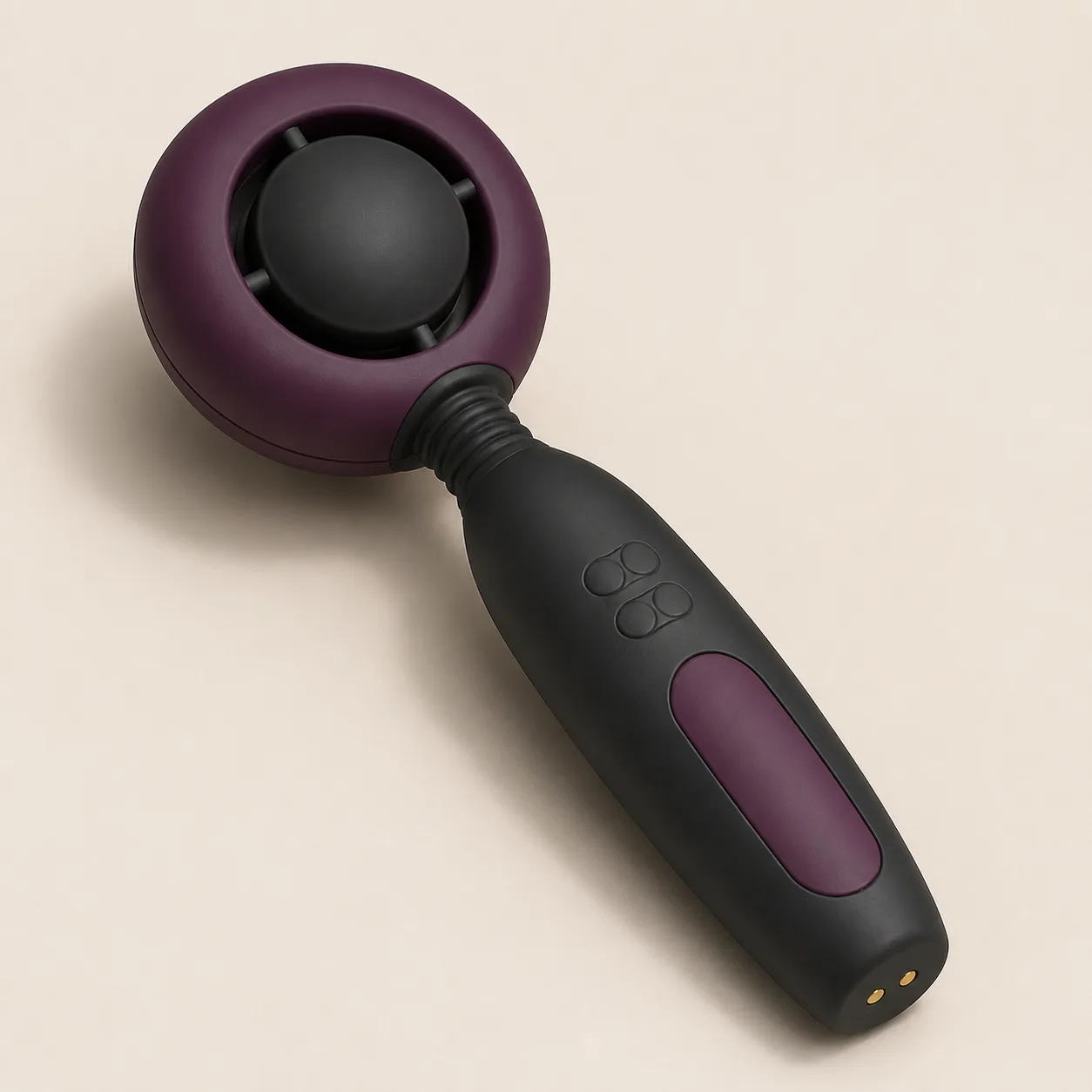
Concentric Dual-Zone Wand Massager with Independent Center Dome and Outer Ring
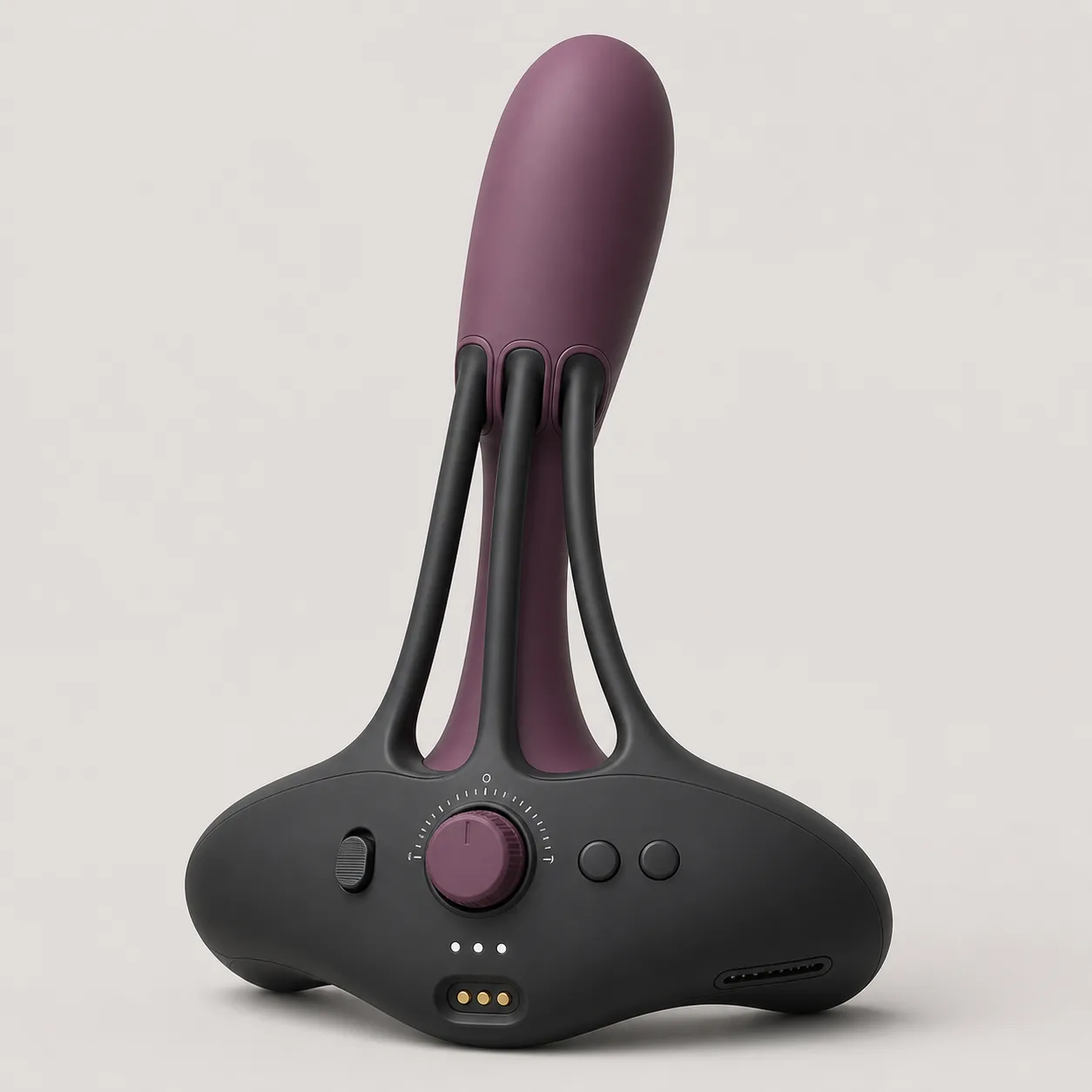
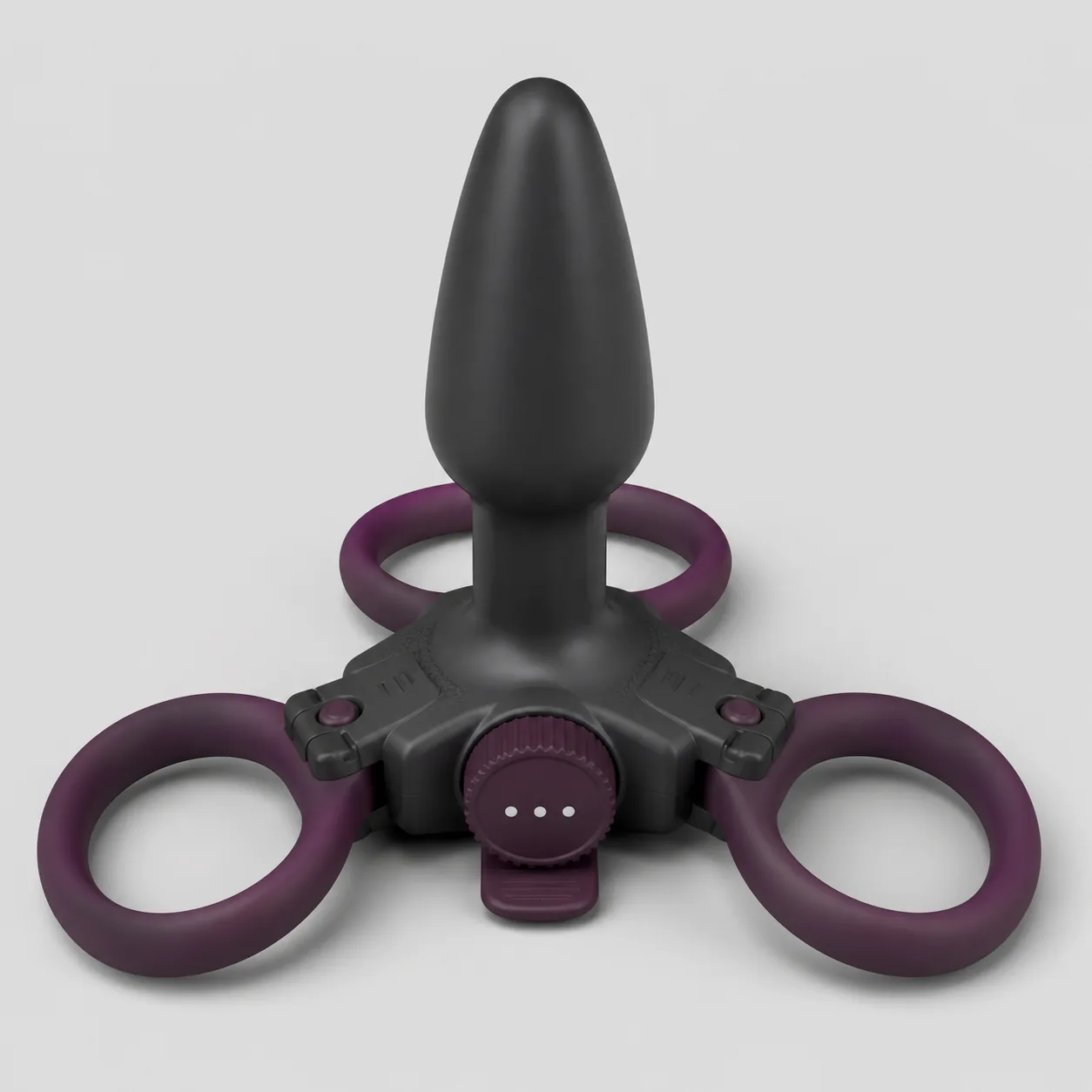
A rechargeable external wand concept with independently controlled central dome and outer ring zones, an open annular relief gap and four recessed supports.
45,99 $
200 in stock
Two concentric contact zones create a measurable split-head wand
This concentric dual-zone wand massager concept combines a raised central dome with a broad surrounding ring. Each zone is intended to have its own drive and local controls, while a visible annular relief gap separates their motion instead of disguising one conventional head beneath a cap.

The image defines a testable design concept and does not establish exact dimensions, materials, output or ingress protection.
Inventory both drive paths from button to contact face
Request separate component maps for the center motor and ring motor, including eccentric weights, mounts, housings, supports, wiring, drivers and control buttons. Add the head skin, ring frame, four bridges, flexible neck, handle shell, cell, protection board, seals, charge contacts, fasteners and adhesives.
The supplier must identify any shared driver, ground, current limit or thermal sensor that can couple the two channels.
Measure the head as concentric geometry
Record outer diameter, ring width, ring crown height, center-dome diameter, dome projection, annular gap width and depth, bridge position, head thickness, neck length, handle size, total mass and center of gravity. Measure radial variation at several angles rather than taking one gap reading.
An off-center dome can change both pressure and collision clearance.
Map the center dome on its own
Run only the central zone on a calibrated compliant fixture. Record amplitude, dominant frequency, pattern timing, loaded drop, contact-pressure footprint, sound, handle transfer and temperature at the dome, supports, neck and battery.
Repeat at the lowest and highest verified settings without forcing the dome against an internal stop.
Map the outer ring without energizing the center
Support the full annular face evenly and measure output around at least eight radial positions. Compare amplitude, frequency, temperature and deformation to reveal motor offset, ring-frame flex or weak sectors near the neck.
A broad ring should not be described as uniform until the full circumference is measured.
Test both zones for phase interaction
Operate approved center and ring combinations on the same fixture while logging amplitude over time. Look for beating, cancellation, amplification, audible pulsing, control lag and current spikes that do not appear during single-zone operation.
Two motors do not guarantee two independent sensations; their phase and structural coupling need evidence.
Challenge the four recessed support bridges
Measure bridge width, thickness, free length, radius and symmetry, then apply low controlled dome displacement in axial, lateral and twisting directions. Record deflection, recovery, whitening, permanent set and contact with hidden stops before repeated loaded-vibration cycling.
Unequal bridges can tilt the dome into the ring or expose an edge inside the gap.
Inspect the annular gap for pinch and entrapment
Measure minimum clearance while each zone is off, running alone, running together and pressed against graded fixtures. Use standardized hair, fabric and soft-film probes to assess entrapment without placing skin in the mechanism.
Reject narrowing gaps, sharp inner rims, exposed hardware or a cavity that cannot be reached for inspection.
Compare broad, center and edge pressure maps
Use pressure film or an instrumented compliant pad to document flat ring contact, isolated dome contact, combined face contact and gentle edge presentation. Repeat at several handle angles and loads below the written limit.
Stop if the head bottoms out, the dome leans, the ring folds or a hard frame becomes detectable.
Keep each zone locally controllable
Document which button pair controls the dome and which controls the ring. Test power, intensity, patterns, lockout, memory, pause and full-off behavior for each zone, including low-battery, stall and thermal-fault states.
Either channel must be capable of stopping locally without an app, remote or functioning second motor.
Evaluate flexible-neck motion under asymmetric output
Measure neck bend, torsion, recovery and heat with the center alone, ring alone and both zones active. Map handle vibration and wrist torque at several orientations while the head carries a controlled compliant load.
A neck that twists toward one motor, creases, rattles or develops a hot hinge line fails qualification.
Establish conservative external-use limits
Begin on a low setting, keep the handle and local controls accessible, use only gentle contact and move between areas rather than holding sustained pressure. Check comfort and surface temperature frequently.
Stop for pain, numbness, tingling, unusual heat, color change, swelling, dizziness, bruising, loss of sensation, a narrowing gap or any irregular sound.
Verify all materials around the open relief cavity
Obtain exact compositions for the dome, ring skin, bridge material, inner frame, neck, handle, seals, pigments, wire insulation, lubricants and adhesives. Review hardness, tear, fatigue, porosity, odor, restricted-substance and skin-contact evidence for the production revision.
Silicone, body-safe, medical-grade, waterproof and hypoallergenic claims remain unconfirmed until exact-model documents are reviewed.
Clean the gap without pushing moisture toward electronics
Power both zones off and wipe the center, ring, gap, bridge faces, neck, controls and charge contacts by the confirmed method. Use only an approved soft tool that cannot pry a bridge or scratch an inner rim, then dry the cavity completely in an open position.
Immersion, boiling, strong solvents, high-pressure rinsing and head disassembly require exact ingress and compatibility evidence.
Price independent head zones above a standard wand
Alibaba currently lists a rechargeable wand with two motors at USD 9.50-9.99 and an MOQ of three. That listing is a dual-motor category benchmark only and does not establish this concentric split-head design, the legal supplier or a production quotation.
The procurement reference supports an EUR 45.99 planning price after allowing for China-origin freight, exact component and geometry checks, independent and combined output maps, phase-interaction logging, bridge fatigue and gap-entrapment tests, pressure mapping, local controls, neck, battery and thermal validation, material review, cavity cleaning trials, protective packing and discreet fulfillment. Packed dimensions, weight, freight, duty, tax, insurance, payment fees and delivery terms remain pending.
Frequently asked questions
Are the center and ring driven separately?
That is the intended design, but exact motor, driver and control independence must be confirmed on the ordered sample.
Can the dome be removed?
No user removal is assumed. The four bridges and relief cavity should be inspected and cleaned without dismantling the head.
Why test both zones together?
Motor phase and shared structures can create beating, cancellation, extra heat or unexpected handle transfer.
May the gap touch skin or hair?
The approved contact envelope must keep entrapment risks controlled; testing uses standardized probes and minimum-clearance measurements.
Can the wand be immersed for cleaning?
Not unless exact ingress evidence covers the open head cavity, neck, buttons, seams and charge contacts.
Which faults require retirement?
A torn bridge, leaning dome, narrowing gap, cracked ring, exposed frame, irregular beating, delayed shutdown, abnormal heat, corrosion or residue beyond cleaning access.
Reviews
There are no reviews yet.