


Fine-Mist Rinse-Off Toy Surface Cleaner 100ml
August 14, 2026
Four-Point Floating-Plate Palm Vibrator with Corner Dampers
August 14, 2026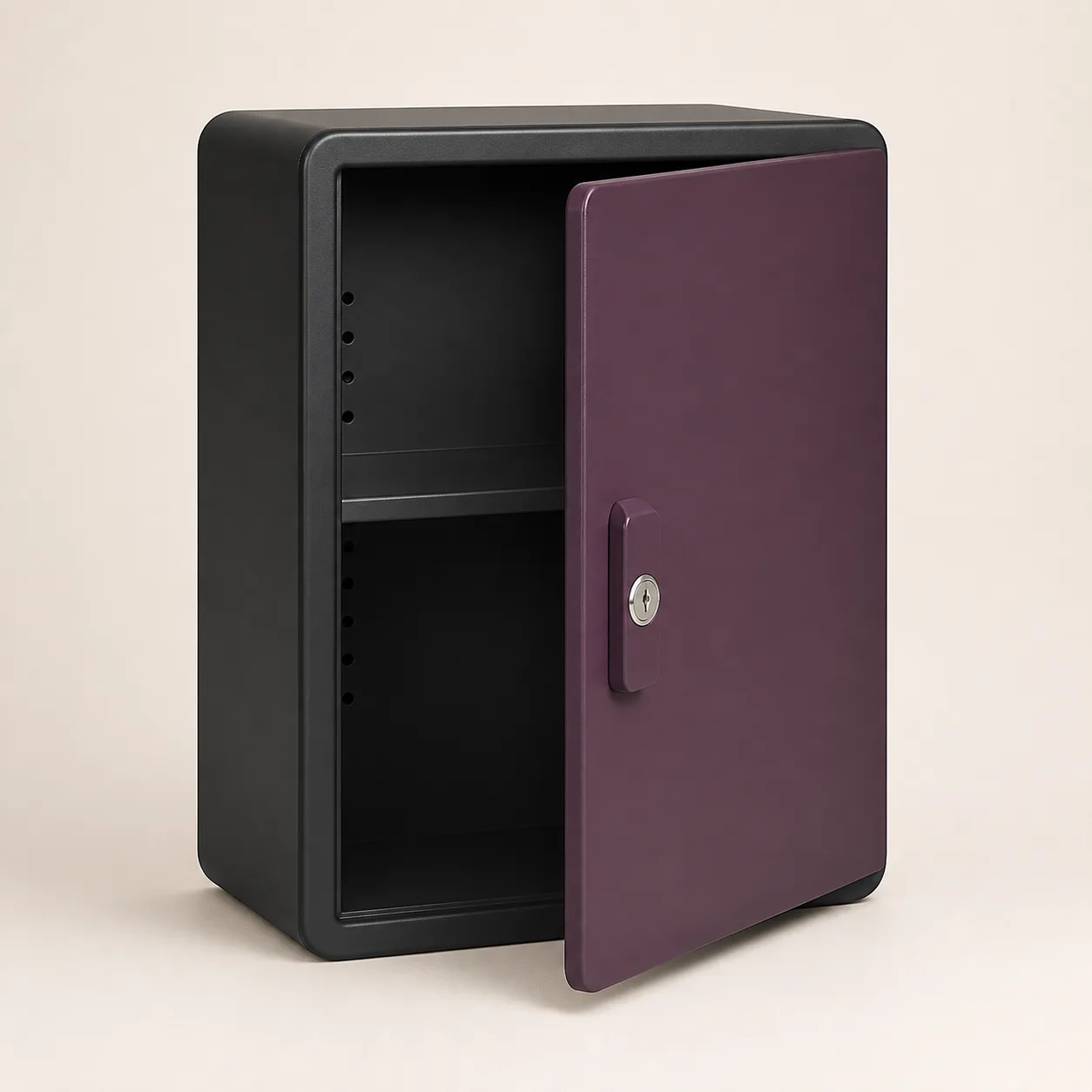
Lockable Wall-Mount Care-Supply Cabinet
A compact keyed wall cabinet concept with an adjustable shelf for organizing selected closed care supplies in an adult-controlled location.
79,99 $
200 in stock
A raised cabinet creates a deliberate boundary around care supplies
The lockable wall mount care cabinet concept gives selected routine supplies a defined adult-controlled location away from an open shelf or shared drawer. Its single door, mechanical key cylinder and adjustable interior shelf support a simple access routine without adding electronics.

A keyed door is an access deterrent, not proof of child resistance, forced-entry resistance, fire protection or waterproofing.
Define exactly what the cabinet may hold
Create a written contents list before purchase. Limit the cabinet to closed, compatible, room-temperature care supplies whose labels permit this storage environment.
Keep medicines, sharps, batteries, aerosols, flammables, oxidizers, leaking containers, hot tools and substances requiring a certified cabinet in their approved storage.
Choose a private position that remains easy to inspect
Select an adult-accessible location away from direct sun, steam, sinks, heaters, floor splash, moving doors and bedside traffic. The user should be able to see the lock, hinge line and cabinet base without climbing or reaching blindly.
Wall mounting does not by itself make contents inaccessible to children, visitors or pets.
Qualify the wall, substrate and fixing plan first
Identify the wall construction, concealed services and safe fixing points before drilling. A competent installer should match the final cabinet mass, packed contents and lever forces to rated anchors and the actual substrate.
No fasteners or universal mounting method are assumed to be included.
Inspect the empty cabinet before installation
Check the body, door edges, hinge, shelf supports, lock cylinder and coating for sharp burrs, dents, cracks, loose parts, corrosion or persistent odor. Operate the empty door and lock while the unit is supported safely.
Reject a sample that binds, rocks, sheds coating or exposes pinch points.
Set the shelf around the approved container list
Measure the tallest closed container and leave clearance for lifting it without scraping the shelf above. Seat the adjustable shelf evenly on every support and confirm that it cannot shift during normal door movement.
Shelf spacing, shelf load and total cabinet load need sample testing; do not estimate them from appearance.
Give every zone a single clean-storage purpose
Use the upper and lower areas for categories that can safely share the same environment. Keep labels facing forward and leave enough open space to see caps, expiry information and leaks.
Do not mix clean supplies with used cloths, waste, unclean product parts or unrelated household chemicals.
Protect containers from impact and hidden pressure
Place stable containers upright on the shelf surface rather than against the door. Heavy approved items belong low and close to the wall, with space around pumps and closures.
Never force the door shut against a tall bottle, cable or projecting cap.
Control every key as part of the privacy routine
Count keys when the cabinet is received and assign custody to named adults. Store any spare separately from the cabinet and avoid labels that disclose the cabinet’s contents.
Key quantity, duplication control and replacement procedure remain supplier questions.
Open the door with one hand free for control
Stand on a stable floor, support the door by its pull and turn the key without twisting the cylinder. Scan the shelf for movement or liquid before reaching inside.
Stop if the door drops, the hinge shifts or a container leans toward the opening.
Close, check and lock in a fixed sequence
Confirm that every cap is closed, nothing crosses the door path and the shelf is seated. Bring the door home gently, operate the lock, remove the key and pull the handle lightly to verify closure.
Never slam the door or leave a key in the cylinder.
Isolate any leak without using the cabinet as containment
Do not touch an unknown spill. Follow the container label, ventilate or isolate the area as directed and wear the specified protection before moving unaffected items.
No liquid-tight or chemical-containment performance is claimed. A damaged coating or swollen seal requires immediate assessment.
Clean surfaces without flooding the lock or hinge
Empty the cabinet and use only a method confirmed for the final coating, shelf and cylinder. Apply cleaner to a cloth rather than spraying into seams, then wipe shelf supports, corners, pull and key area.
Do not immerse, steam, pressure-wash or lubricate the lock with an unapproved product.
Run a scheduled access and mounting audit
At an interval based on use, check key count, door alignment, anchor movement, wall marks, shelf seating, coating condition and contents. Remove expired, damaged or unauthorized items according to their labels.
Take the cabinet out of service if it loosens, corrodes, develops a sharp edge or no longer locks predictably.
The procurement plan includes a bulky-freight allowance
An Alibaba listing from Luoyang Sodorsteelart Imp. & Exp. Trading Co., Ltd. shows an adjustable steel lockable wall-mounted cabinet at USD 32-39 per piece with MOQ 100. Exact size, construction, lock, shelf system, mounting hardware and load ratings require written confirmation and sample tests.
The procurement reference is an inquiry starting point only. The EUR 79.99 plan allows for China-origin volumetric freight, lock and hinge checks, mounting trials, protective packing and discreet fulfillment; packed dimensions, mass, freight, duty, tax, insurance, payment fees and destination terms remain pending.
Frequently asked questions
Is this cabinet certified as child-resistant?
No. The keyed door is only an adult-controlled access feature; no child-resistance certification is claimed.
Are wall anchors included?
Inclusion and specification remain pending. The installer must match rated fixings to the actual wall and loaded cabinet.
Can liquids be stored inside?
Only closed, label-compatible care supplies after material and environment checks. The cabinet is not secondary containment.
How much can the shelf carry?
The shelf and total load limits require supplier documentation and sample verification.
Does the lock protect against forced entry?
No burglary or tamper rating is stated. It should not hold valuables or items requiring certified secure storage.
When should use stop?
Stop after loose mounting, a damaged hinge or cylinder, corrosion, sharp edges, coating failure, liquid ingress or unreliable closure.
Reviews
There are no reviews yet.