


Three-Ring Concentric Palm Vibrator with Adjustable Hand Strap
August 14, 2026
M728 Waterproof Rotating Suction Automatic Male Stroker
August 14, 2026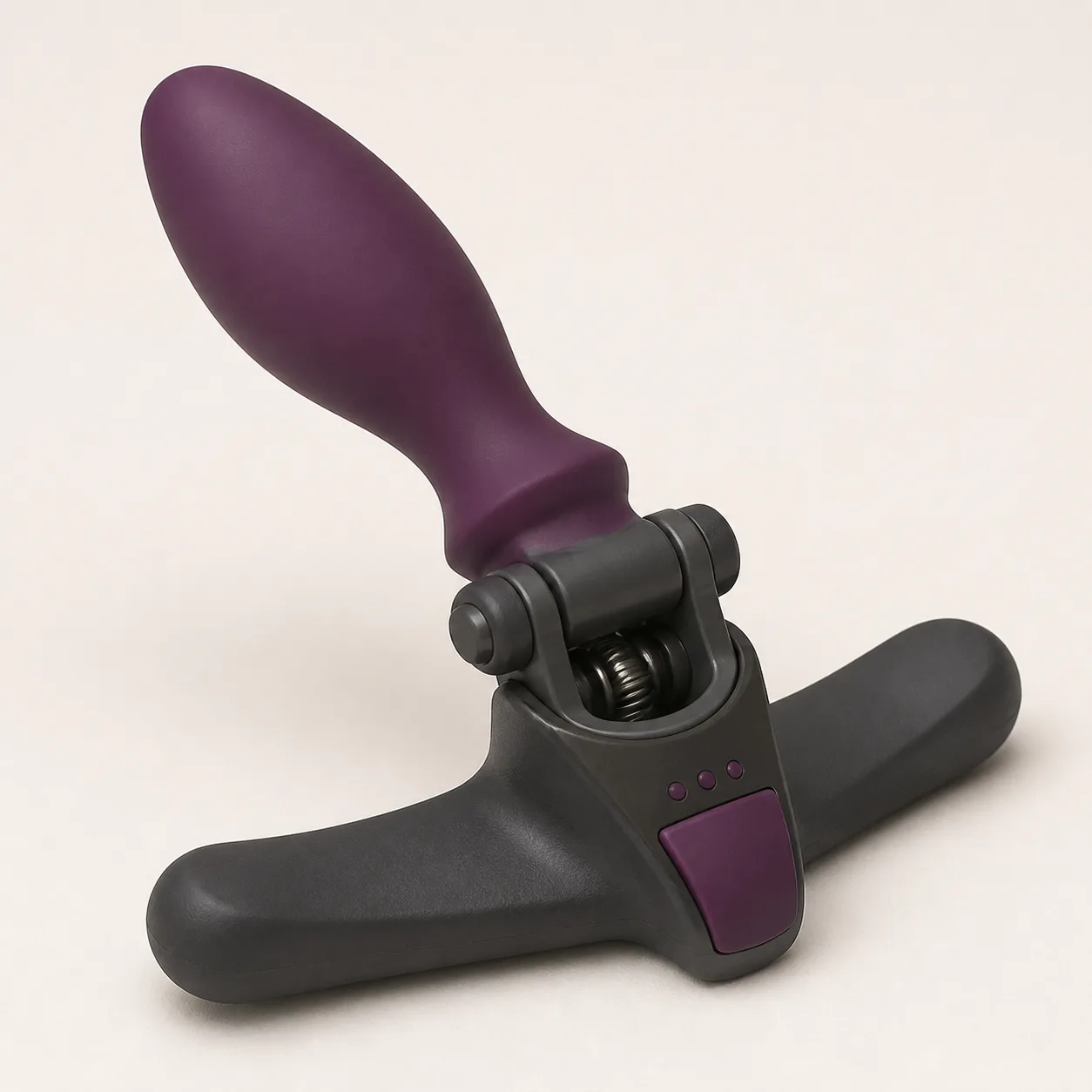
Three-Stop Torsion-Hinge Prostate Trainer with Oversized Cross Yoke
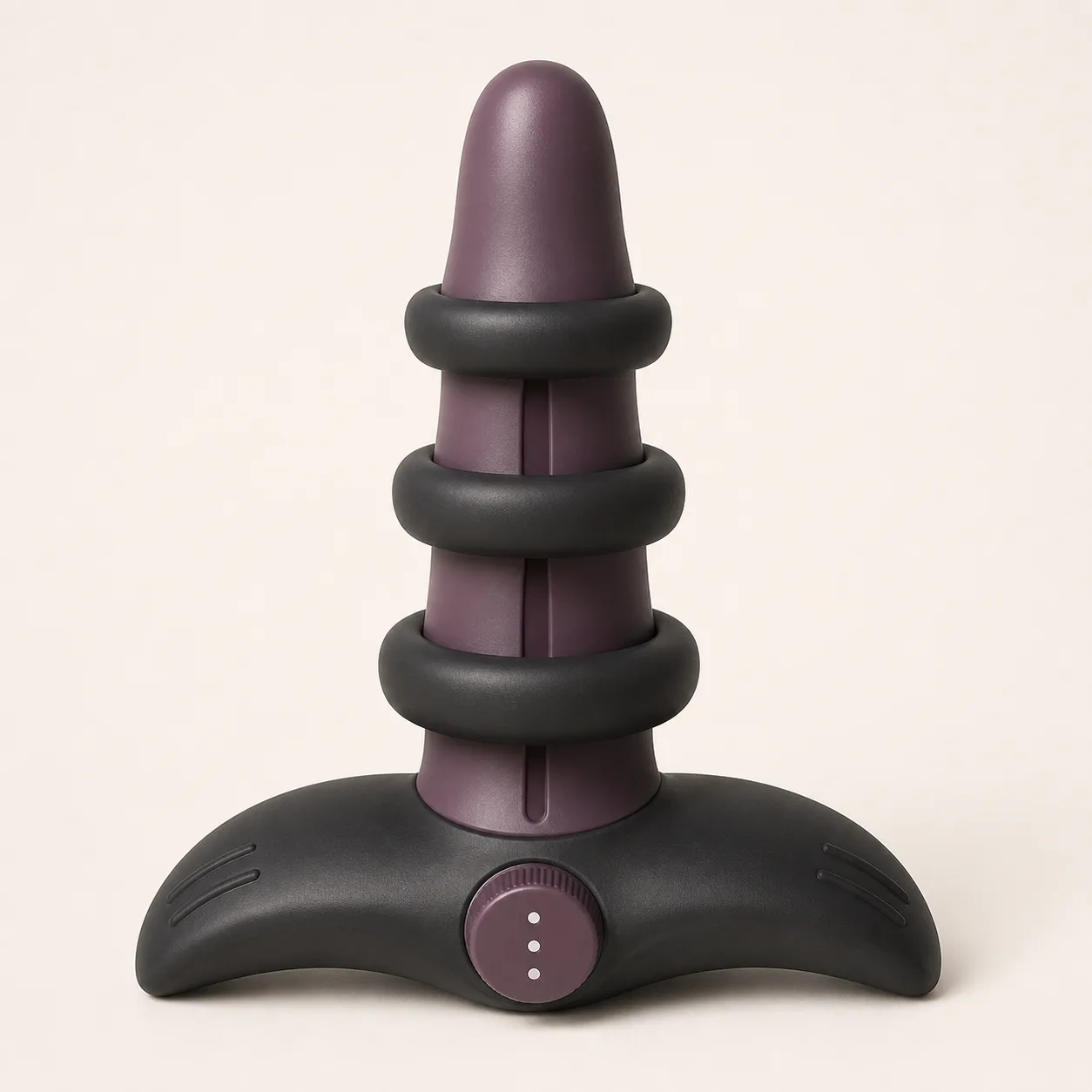
A non-powered curved prostate trainer concept with a guarded torsion-spring hinge, three proposed angle positions and an oversized external cross yoke.
34,99 $
200 in stock
Articulate a curved trainer above a guarded torsion hinge
This torsion hinge prostate trainer concept joins a smooth curved insert to an oversized external cross yoke through one rounded pitch hinge. A recessed torsion spring is proposed to manage angular resistance while a plum release tab and three visible index dots communicate controlled adjustment.

The image does not prove angle range, three functional stops, spring torque, fit, insertion dimensions, material composition, cleanability or supplier approval.
Inventory every structural component
Request an exploded drawing and bill of materials for the tip skin, insert body, core, neck, hinge barrel, pin, bushings, yoke cheeks, torsion spring, spring legs, guards, stop plate, detents, release tab, cross-yoke wings, central shield, reinforcement, pigments, lubricants and adhesives.
Identify which parts are one piece, overmolded, bonded, press-fitted or mechanically captured.
Measure the insert independently of the base
Record total and usable length, tip radii, maximum width and thickness, asymmetry, curvature, taper, neck width and thickness, junction fillets, surface seams, mass and center of gravity. Compare geometry at each proposed hinge stop.
Use minimum and maximum production samples rather than nominal drawings alone.
Validate the oversized cross yoke
Measure wing span, front-to-rear reach, central shield width, wing thickness, radii, flatness and bending stiffness. Test stopping margins on standardized flat and curved openings at low axial and asymmetric loads.
The yoke must remain visibly and mechanically external; no dimension is accepted until fixture tests establish conservative margins.
Map hinge rotation and side play
Measure pitch travel, pin runout, bushing clearance, axial play, yaw, roll, friction, backlash and hard-stop contact. Apply controlled loads at the tip, mid-body and neck.
Reject a hinge that binds diagonally, exposes a sharp pin end or shifts load onto only one yoke cheek.
Characterize torsion-spring torque
Record torque versus angle in both directions, preload, hysteresis, spring-leg seating, relaxation and permanent set at relevant temperatures. Repeat after dwell at each proposed stop.
Spring force must never substitute for an actual indexed position or a mechanically verified external base.
Calibrate the three angle positions
Measure stop angle, engagement depth, release force, false-seating resistance and repeatability for every indexed state. Approach each stop from both directions under no load and standardized tip load.
The three visible dots are reference marks only until all three states are proven by inspection and metrology.
Map pressure as the hinge angle changes
Use a compliant curved-path fixture with distributed sensors to record contact area, peak and edge pressure, shear and migration at each verified angle. Repeat with small axial, lateral and rotational offsets.
Set limits from the highest local value and neck bending, not average pressure across the insert.
Measure migration and extraction behavior
Record entry, dwell and extraction force, hinge movement, spring deflection, base rotation and stick-slip using standardized lubrication and fixture protocols. Stop if the yoke lifts, the hinge changes stops or the neck takes permanent set.
Evaluate both slow axial movement and modest torsional disturbance without relying on the spring to maintain position.
Probe the joint for pinch and debris gaps
Inspect barrel ends, yoke cheeks, spring housing, stop plate, release-tab slot, neck junction and shield perimeter through full hinge travel. Use articulated probes rather than fingers during mechanism tests.
Guards must prevent access without concealing cracks, trapping residue or blocking the release tab.
Test the release tab under realistic loads
Measure deliberate actuation force, accidental movement resistance, required grip, travel and reset with dry, damp and gloved hands. Repeat under tip load, side load and spring preload.
Reject a tab that can indicate release while the detent remains partly engaged.
Verify materials and the neck junction
Obtain exact material declarations and restricted-substance evidence for all contact surfaces, core, base, pigments, lubricants and adhesives. Inspect the neck for voids, reinforcement proximity, hard spots, seam opening and color transfer.
Silicone, latex-free, body-safe, medical, hypoallergenic and certification claims remain pending exact-model evidence.
Cycle angle changes and yoke loading
Run repeated hinge travel, stop engagement, tab release, tip bending, axial extraction, yoke bending, cleaner exposure, measured drying and storage. At checkpoints repeat geometry, torque, play, stop accuracy, pressure, margins and junction inspection.
Retire a sample with spring relaxation, rising play, a bent pin, cracked guard, weak detent, damaged skin or permanent neck deformation.
Clean and dry the guarded mechanism
Validate a method that reaches the insert, neck fillets, barrel ends, yoke cheeks, spring guard, stop plate, release slot, central shield and all wing junctions. Measure drying inside the recessed housing before storage.
Do not immerse or apply heat unless the exact material and mechanism instructions explicitly permit it.
Price after retention and fatigue tests
An Alibaba prostate-massage-toys showroom currently displays a manual anal-toy category example at USD 2.99-3.50 with MOQ three. It is a category benchmark only and does not confirm this torsion hinge, three-stop indexing or oversized cross yoke.
The procurement reference supports an EUR 34.99 planning price after allowing for China-origin freight, exact-model sourcing, teardown, insert metrology, yoke-margin tests, hinge mapping, spring-torque curves, stop calibration, pressure and extraction fixtures, gap inspection, release-tab testing, junction evidence, combined fatigue, cleaning validation, protective packing and discreet fulfillment. Exact quotation, MOQ, packed size, weight, freight, duty, tax, insurance, payment fees and delivery terms remain pending.
Frequently asked questions
Are the three dots verified angle settings?
No. Stop angle, engagement, release force and repeatability require sample measurement.
Does the spring move the insert automatically?
No powered motion is claimed; the spring is proposed only as controlled angular resistance.
Can the yoke enter the body?
It is designed as an oversized external stop, but exact margins need standardized fixture tests.
Will the hinge flex sideways?
Yaw, roll and axial play should be limited and must be measured under load.
How is the recessed spring cleaned?
Only by a validated method that reaches the guarded housing and confirms complete drying.
Which faults require retirement?
A bent pin, cracked yoke, loose hinge, weakened stop, exposed spring, torn surface, hard spot, opening junction or permanent deformation.
Reviews
There are no reviews yet.