



Cobalt-Free Humidity Indicator Card Kit
August 14, 2026
Six-Well Small-Parts Care Tray with Clear Snap Lid
August 14, 2026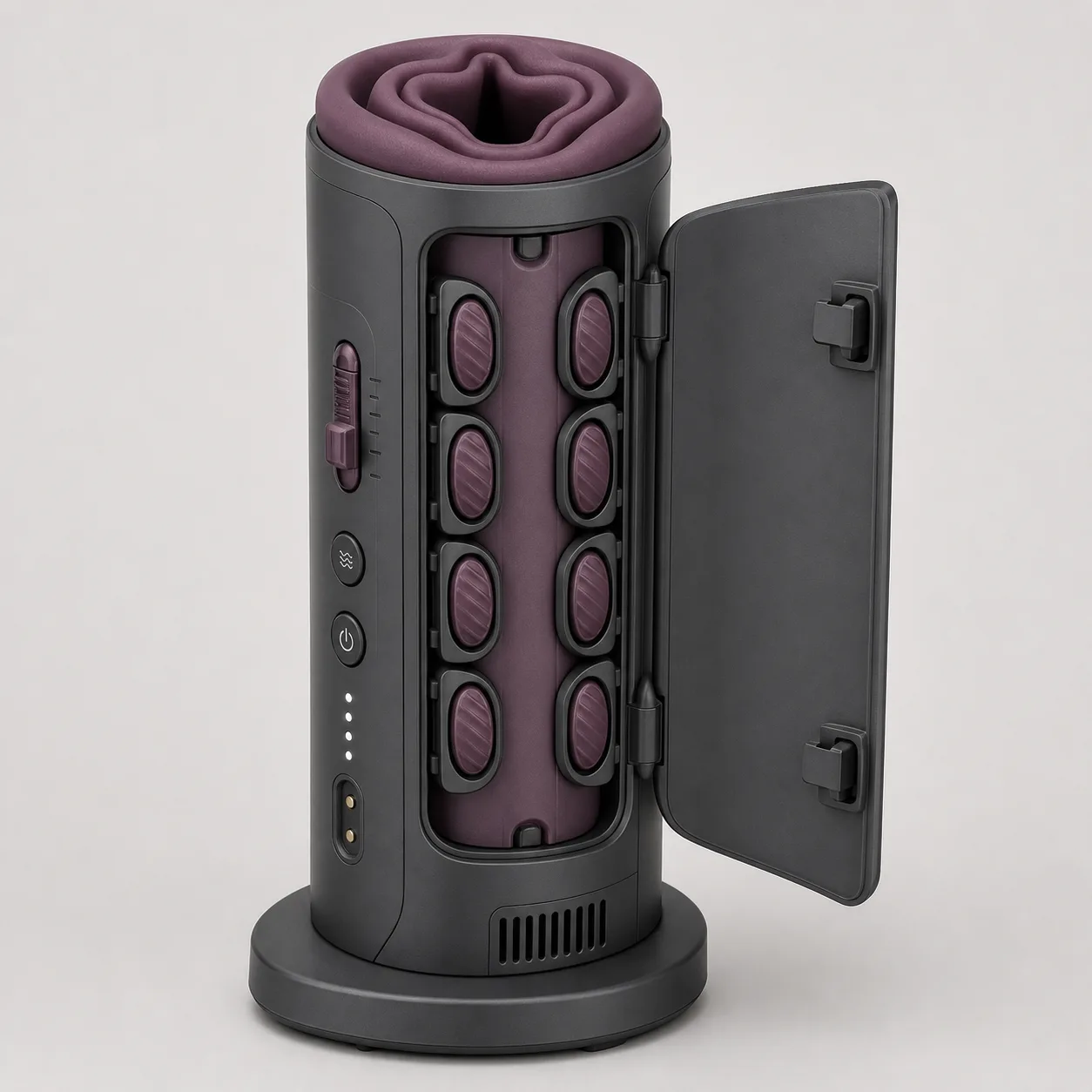
Eight-Paddle Dual-Rail Travelling-Wave Automatic Stroker with Service Door
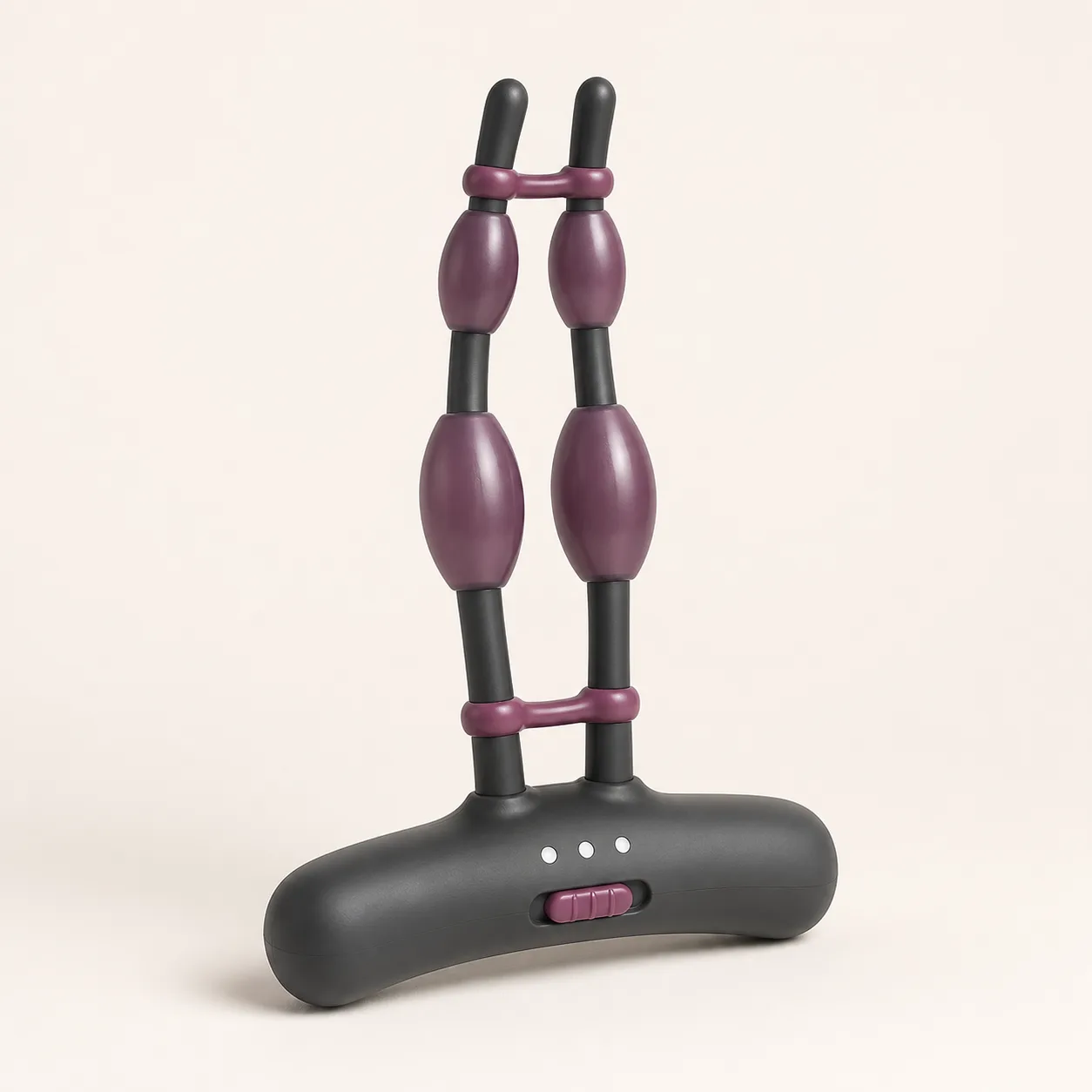
An upright automatic stroker concept with eight guarded rocker paddles in two rails, four-stop wave timing and an interlocked service door.
84,99 $
200 in stock
Generate a travelling wave through eight guarded paddles
This eight-paddle dual-rail automatic stroker concept positions exactly eight oval rocker paddles as two vertical rails of four outside an abstract removable liner. A side timing slider with four marked stops is intended to change their progression, while a hinged service door exposes the drive area for inspection.

The image does not prove travelling-wave motion, paddle excursion, pressure, dimensions, materials, interlocking, sealing, charging safety, sound level or production availability.
Inventory the complete eight-paddle drive train
Request an exploded bill of materials for liner, collar, paddles P1 through P8, face inserts, rocker pivots, guarded cradles, left and right rails, links, cams or actuators, frame, cylindrical shell, oval base, service door, hinge, two latches, interlock, timing slider, four detents, lock tab, two buttons, indicators, control board, cell, contacts, vent membrane, fasteners, pigments, lubricants and adhesives.
Link every part to drawing revision, tolerance, approved supplier batch and physical reference sample.
Measure enclosure base and door geometry
Record overall height, shell diameter, base axes, base flatness, door opening, hinge offset, latch spacing, liner projection, slider position, control reach, contact recess, vent area, mass and center of gravity.
Check frame squareness, shell roundness, door flushness and base stability at ambient condition and after defined thermal and humidity exposure.
Characterize the removable liner independently
Measure opening axes, wall thickness by zone, internal profile, closed-end depth, collar geometry, mass, hardness, compression recovery, tear behavior, friction and surface finish. Inspect seams, voids, thin regions, hard inclusions, tack change and pigment transfer.
Verify keyed orientation, insertion force, retention and extraction without contacting a paddle edge or stressing the collar.
Inspect every paddle face pivot and cradle
For P1 through P8, measure oval axes, crown, texture depth, face hardness, pivot play, rocker angle, guard height and full-circumference clearance. Examine retainers and cradles at rest, peak excursion and controlled preload.
Use articulated gauges to identify an exposed hard edge, pinch path, loose pivot or debris trap beyond the validated cleaning method.
Align both rails around the liner
Measure rail straightness, left-to-right spacing, paddle center pitch, stagger offset, actuator alignment and distance from each face to the unloaded liner. Repeat after door closure and under fixture preload.
Misalignment must not force one rail into continuous contact, bow the liner, overload a hinge side or allow a cradle to rub the service frame.
Measure individual excursion speed and force
Track all eight paddles with synchronized displacement sensors to record rocker angle, surface excursion, rise time, dwell, repetition rate, force, startup delay and coast-down. Repeat under several liner preloads and low-cell conditions.
A moving-wave claim requires distinct, repeatable traces for P1 through P8 rather than a global shell vibration.
Calibrate the four-stop timing slider and lock
Measure slider travel, detent force, hysteresis, command mapping and repeatability at all four marks. Approach every stop from both directions, engage the lock tab and apply bounded vibration and side force.
Confirm that a locked selection cannot drift and that a position between detents does not create an undefined actuator command.
Resolve wave direction phase and propagation speed
Use synchronized paddle tracking to identify direction, phase offset, propagation time and cycle frequency for each slider stop. Record startup, steady operation, mode change, stall recovery and shutdown.
Compare both rails for mirror symmetry, deliberate stagger and cumulative timing error across battery state, preload and temperature.
Map liner pressure and flow restriction
Use an instrumented compliant sleeve or segmented pressure fixture to map peak load, contact duration and pressure progression at every paddle station. Compare centered, offset and tilted placement under each approved mode.
Monitor liner collapse and pressure release so the sequence does not create uncontrolled occlusion, hard cradle contact or a persistent high-load zone.
Verify service door latches hinge and interlock
Measure hinge play, opening torque, latch engagement, door deflection and resistance to accidental release. Test both latches individually and together while the liner is installed and the drive frame is under bounded load.
The drive must remain disabled whenever the door is not fully secured, and the interlock must detect false latching, hinge distortion and an obstructed seal without relying on visual inspection alone.
Verify controls charging and predictable shutdown
Document every button action, indicator pattern, slider-lock sequence, charging polarity, specified lead, charger limit, cell protection, low-voltage behavior and charge-time claim. Interrupt power in every mode and timing stop and confirm a predictable off state.
Moisture and cleaning claims remain pending until the liner collar, door seam, hinge, latches, slider, controls, contacts and vent pass appropriate ingress and drying tests.
Log current runtime sound and temperature
Measure operating current, runtime, accessible temperature, actuator and board hot spots and A-weighted sound at a stated distance for every mode and representative timing stop. Repeat with maximum approved preload, one protected paddle restrained and low cell voltage.
Investigate current spikes, rocker impact, rail chatter, shell resonance, latch movement, asymmetric heat or intermittent indicators.
Challenge faults then cycle clean and inspect
In protected specimens, restrain each paddle in sequence, disconnect one rail, partially engage one latch and obstruct the door while monitoring drive response, pressure, current, heat, sound and shutdown. Stop before damage and quarantine unsafe samples.
Cycle operation, timing selection, locking, door access, liner removal, controlled preload, charging, defined cleaning, measured drying and storage. Recheck geometry, paddle motion, timing, pressure, rail alignment, latches, interlock, controls, contacts, surface condition and liner retention.
Build landed price after dual-rail proof
An Alibaba automatic-stroker page currently shows a motorized suction-category example at USD 30.00-32.00 with MOQ one. It is a benchmark only and does not confirm this eight-paddle drive, dual-rail wave control, service door or an approved supplier.
The procurement reference supports an EUR 84.99 planning price after allowing for China-origin freight, exact-model sourcing, liner and paddle metrology, eight-channel motion and force testing, wave-timing calibration, pressure mapping, door and interlock review, electrical, current, sound and heat tests, fault and cycle work, protective packing and discreet fulfillment. Exact quotation, MOQ, materials, battery, packed size, weight, freight, duty, tax, insurance, payment fees, certifications and delivery terms remain pending.
Frequently asked questions
Do all eight paddles move independently?
The concept intends individually timed rocker motion, but P1 through P8 require synchronized displacement and force traces.
What changes at the four slider stops?
They are intended to select different wave progressions; direction, phase, speed and repeatability need measured evidence.
Can the paddles pinch the liner?
Every pivot, cradle and guard gap needs articulated-gauge and pressure testing across excursion, preload, misalignment and wear.
Will the device run with the door open?
It should not; door and latch interlock behavior requires deliberate false-latch, obstruction and hinge-fault tests.
Is the complete device waterproof?
No sealing claim is confirmed; door, hinge, latches, slider, controls, contacts, vent and liner collar all need test evidence.
Which faults require retirement?
Torn liner, seized or loose paddles, pivot migration, rail contact, false latching, failed interlock, exposed wiring, abnormal heat, swelling or persistent residue.
Reviews
There are no reviews yet.