


Tri-Node Kneading Automatic Stroker
August 14, 2026
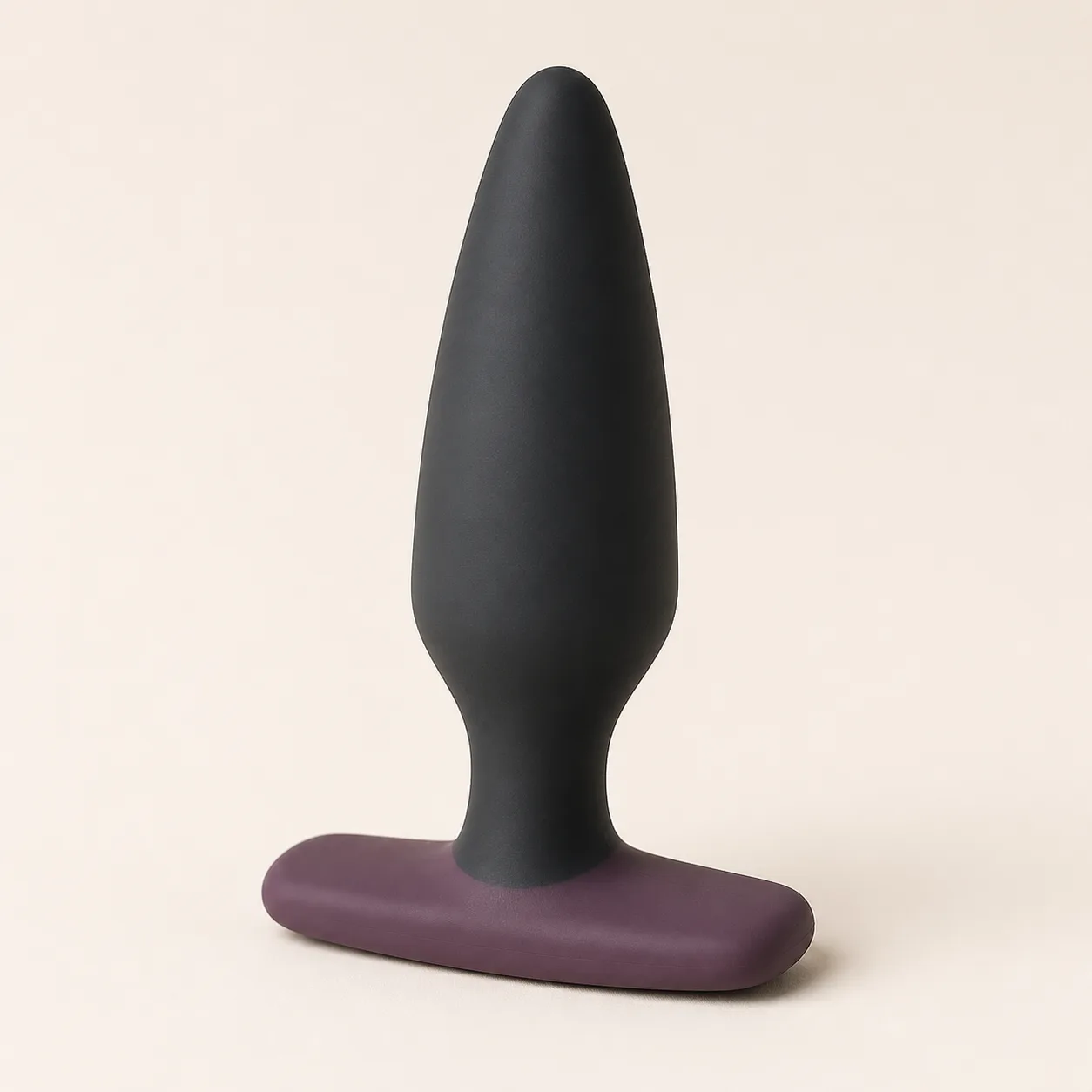
Three-Stage Teardrop Anal Plug Set with Wide Loop Bases
August 14, 2026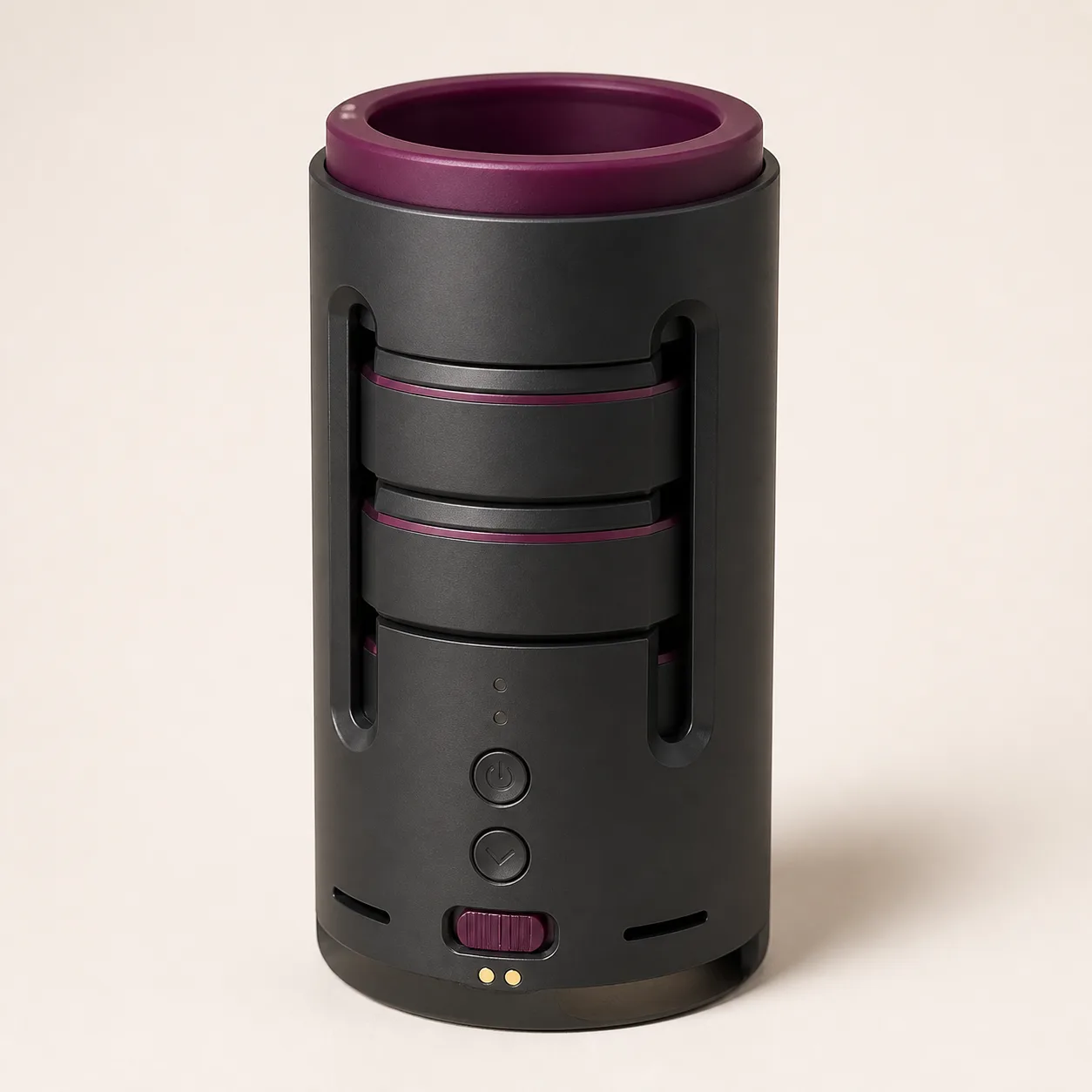
Three-Collar Axial-Shuttle Automatic Stroker with Open-End Liner
An automatic stroker concept with three external collars proposed to shuttle in sequence along twin rails around a stationary open-end liner.
66,99 $
200 in stock
Send a compression sequence along a stationary liner
This axial shuttle automatic stroker concept uses three broad external collars proposed to travel short distances along twin guide windows. Instead of carrying the whole liner through a thrust stroke, the collars would sequence around a fixed open-end liner to create a moving compression zone.

The image does not prove three independent drives, collar travel, liner compression, open lower passage, programs, forces, materials, sealing, runtime or supplier approval.
Inventory the collar-shuttle mechanism
Request an exploded drawing for the shell, open-end liner, top collar, lower retention feature, three shuttle collars, pressure shoes, two guide rails, carriage blocks, bushings, links, lead screws or belts, actuators, hard stops, guards, position sensors, frame, controller, buttons, indicators, emergency slider, vents, contacts, cell, conductors, seals, pigments, lubricants and adhesives.
Trace the reaction force from every collar through both rails into the internal frame.
Establish shell and liner baselines
Measure shell height, width and depth, top and bottom opening axes, liner length and wall profile, entry-collar axes, lower passage, rail spacing, collar station heights, control positions, vent area, contact spacing, mass and center of gravity.
Repeat with the liner installed, removed and reinstalled in every permitted orientation.
Map both guide rails and their guards
Record rail straightness, parallelism, profile, surface finish, runout, mounting alignment, hard-stop position and full guard coverage. Inspect at top, center and bottom under no load and with a standardized lateral fixture force.
A rail dent, spread, step or loose mount can skew one side of a collar and concentrate pressure.
Characterize each shuttle collar separately
For upper, middle and lower collars, measure height, internal profile, roundness, pressure-shoe geometry, carriage play, bushing drag, rail clearance, tilt, mass, balance and stop margin. Compare both left and right carriage interfaces.
Do not assume identical compression because the collars share an exterior shape.
Capture axial travel one collar at a time
Track vertical position, velocity, acceleration, dwell, reversal, overshoot and stop repeatability for every collar through every supported command. Repeat under free motion and calibrated compliant resistance.
Measure unintended movement of the other two collars and any liner migration during single-station tests.
Map the full traveling sequence
Record phase, spacing, overlap, direction and cycle time when two or three collars operate together. Compare downward, upward, alternating and paused states only where the controller actually supports them.
Identify collision margins and the response when one station lags or misses a position.
Measure compression pressure and shear
Use an instrumented compliant mandrel to map circumference, local pressure, axial shear, liner displacement, folding and heat at multiple depths. Relate every peak to the measured collar position and sequence phase.
Repeat with small axial and rotational fixture offsets so average pressure cannot hide a one-sided rail or shoe fault.
Verify that the liner remains fixed and open
Mark liner and entry collar, then measure axial drift, twist, creep, pull-through resistance, top retention, lower opening clearance and reinstall repeatability. Test sequence changes, compliant loads and immediate stops.
Both ends must remain practically open in every approved operating and removal state.
Probe collar rail and opening gaps
Inspect collar-to-shell, carriage-to-rail, guard-to-window, shoe-to-liner, hard-stop, seam, emergency-slider, vent and lower-opening clearances throughout travel, sequence reversals, liner changes and cleaning. Use articulated fixtures rather than fingers.
Guards must limit access while permitting inspection for wear, residue and drying.
Document controls and emergency stopping
Verify startup hold, level, sequence direction, pattern, pause, immediate stop, memory, lockout and indicator meanings. Measure emergency-slider force, stop latency, collar coast, neutral release and access under no load and compliant load.
Power loss, position disagreement or collar jam must leave a documented low-force extraction path.
Measure current sound and heat
Record current, acoustic output and temperature at all three collars, both rail sectors, carriage blocks, drives, liner, frame, shell, controls, vents, contacts and cell during free sequences, compliant load, reversals and a partly restricted vent.
Confirm cell chemistry, capacity, protection, charge input, polarity, charge time, runtime method, charging interlock and transport evidence.
Challenge jams and phase disagreement
Immobilize one collar, increase drag on one rail, offset the compliant load and inject a plausible position mismatch using protected fixtures. Record peak force, current, detection time, shutdown, residual collar force, neutral release, cool-down and restart logic.
Do not force a skewed collar or re-energize a cracked, grinding, derailed, hot or electrically damaged sample.
Cycle shuttles liner changes and cleaning
Run repeated supported sequences, direction changes, compliant loading, pauses, immediate stops, liner removal, retention engagement, charging, cleaning, measured drying and storage. At checkpoints repeat rail geometry, collar play, travel, phase, pressure, liner drift, gaps, sound, current and heat.
Validate cleaning beneath every collar, along both rails and guards, around carriage interfaces, controls, emergency slider, vents, contacts and the lower opening.
Build landed price after sequence proof
An Alibaba automatic male-masturbator listing currently shows an open-ended telescopic category example at USD 16.18-21.56 with MOQ one set. It is a powered-category benchmark only and does not confirm this three-collar axial shuttle, fixed liner or twin-rail sequence.
The procurement reference supports an EUR 66.99 planning price after allowing for China-origin freight, exact-model sourcing, teardown, rail and collar metrology, per-station travel capture, multi-collar phase analysis, pressure and shear maps, liner-retention and gap review, emergency stopping, controls, battery, heat and jam testing, combined shuttle and cleaning cycle life, material evidence, protective packing and discreet fulfillment. Exact quotation, MOQ, packed size, weight, freight, duty, tax, insurance, payment fees and delivery terms remain pending.
Frequently asked questions
Do the collars move instead of the liner?
That is the concept; indexed liner marks and collar coordinates must verify it under realistic loads.
Are all three collars driven independently?
Not established until teardown and single-station motion tests identify every actuator and linkage.
Can the collars collide?
Sequence spacing, overshoot, hard stops and missed-position behavior require direct measurement.
Does the liner twist during compression?
Angular and axial witness marks should be tracked through every supported sequence and reinstallation.
How are the hidden rails cleaned?
Only by a validated method that reaches both rail faces, carriage interfaces, guards and lower opening and confirms drying.
Which faults require retirement?
A skewed collar, rising carriage play, dented rail, torn liner, blocked opening, failed emergency slider, exposed conductor, swollen cell or abnormal heat.
Reviews
There are no reviews yet.