


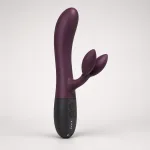
Twin-Petal Offset-Arm Rabbit Vibrator
August 14, 2026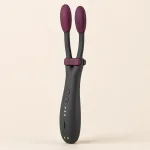
Three-Stop Spacing Twin-Fork Counter-Phase Vibrator
August 14, 2026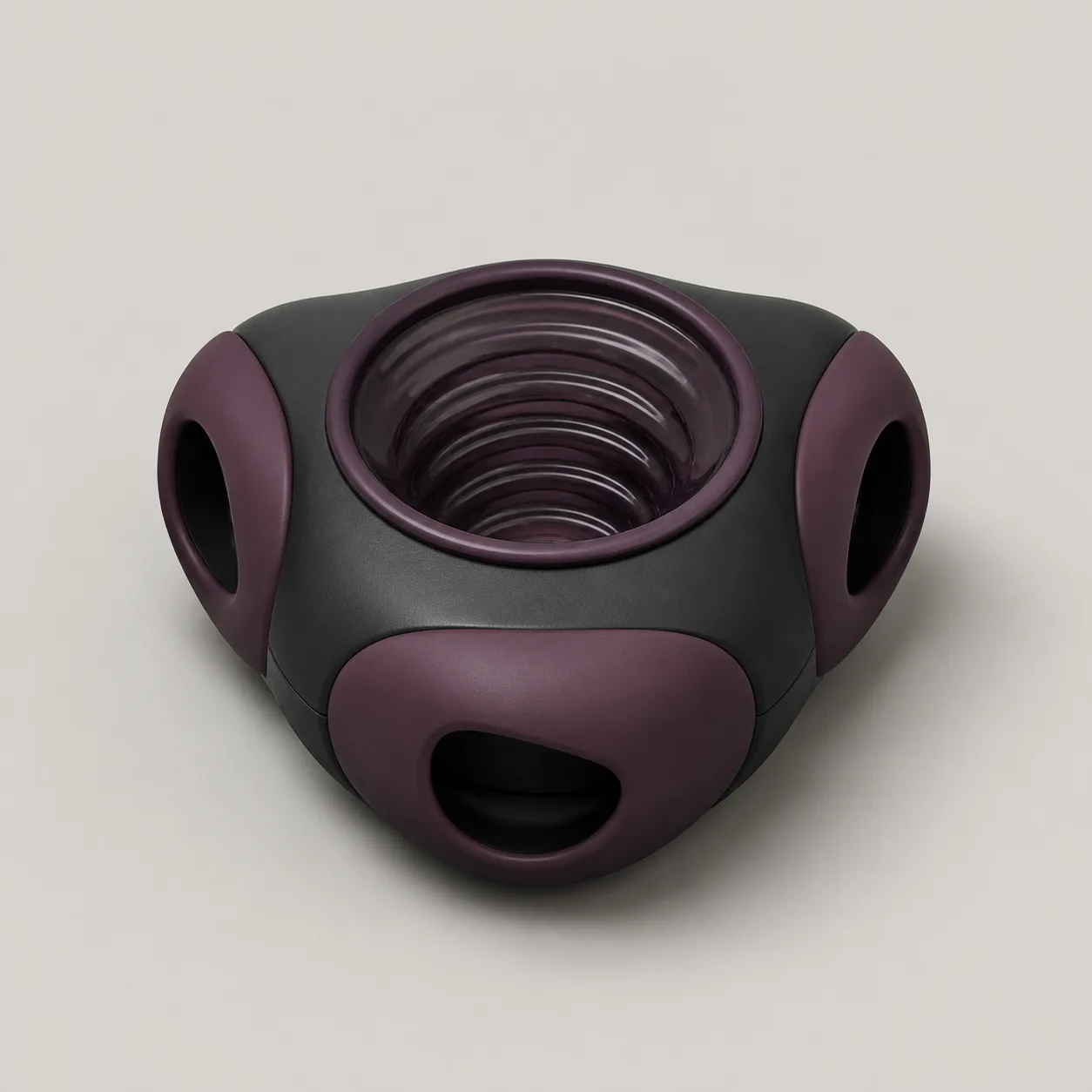
Tri-Lobe Squeeze-Puck Manual Stroker with Three Finger Windows and Open-End Ripple Liner
A compact non-powered manual stroker concept with one low charcoal tri-lobe body, exactly three plum squeeze zones, three teardrop finger windows and a removable open-end concentric-ripple liner.
29,99 $
200 in stock
Put a manual stroker into a low tri-lobe squeeze puck
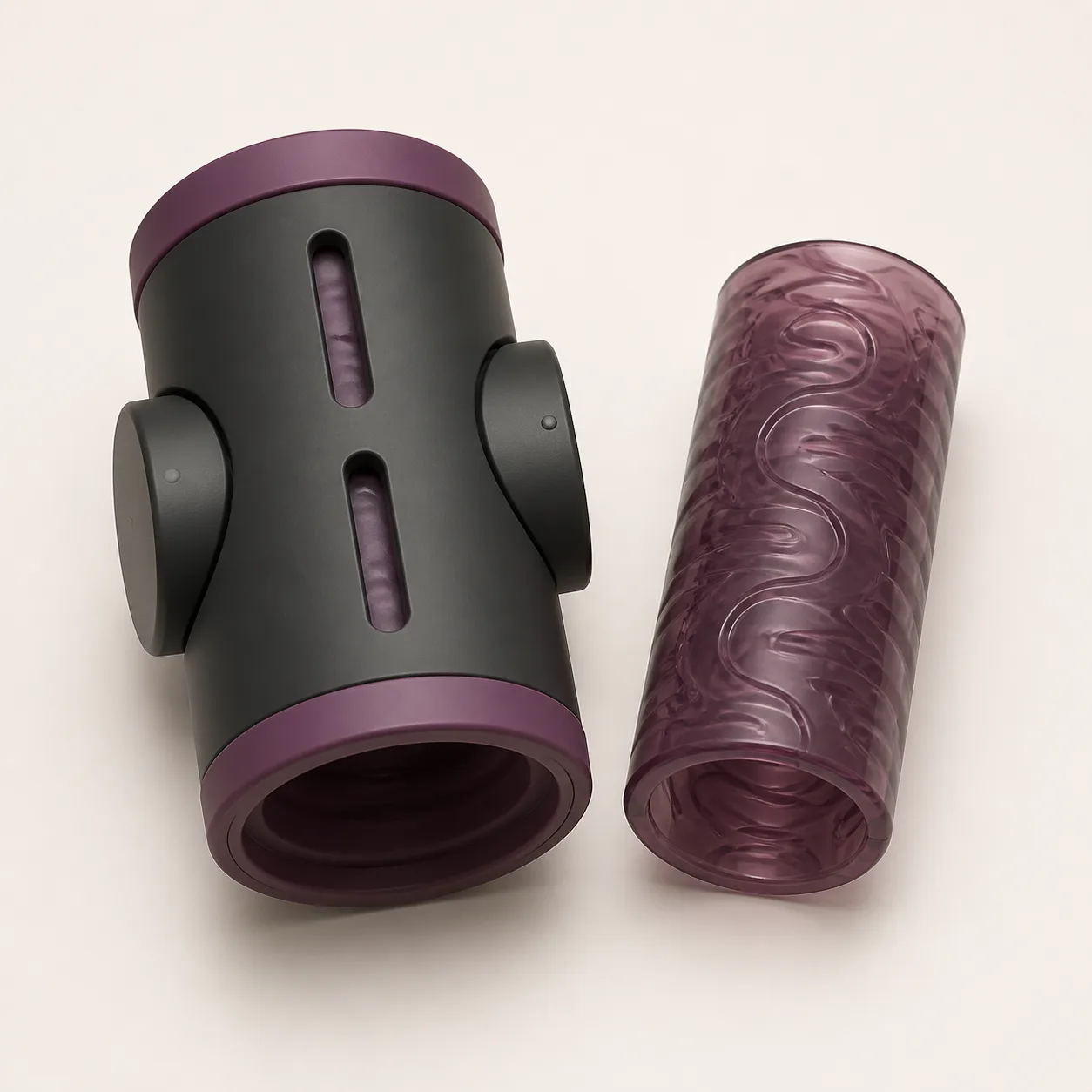
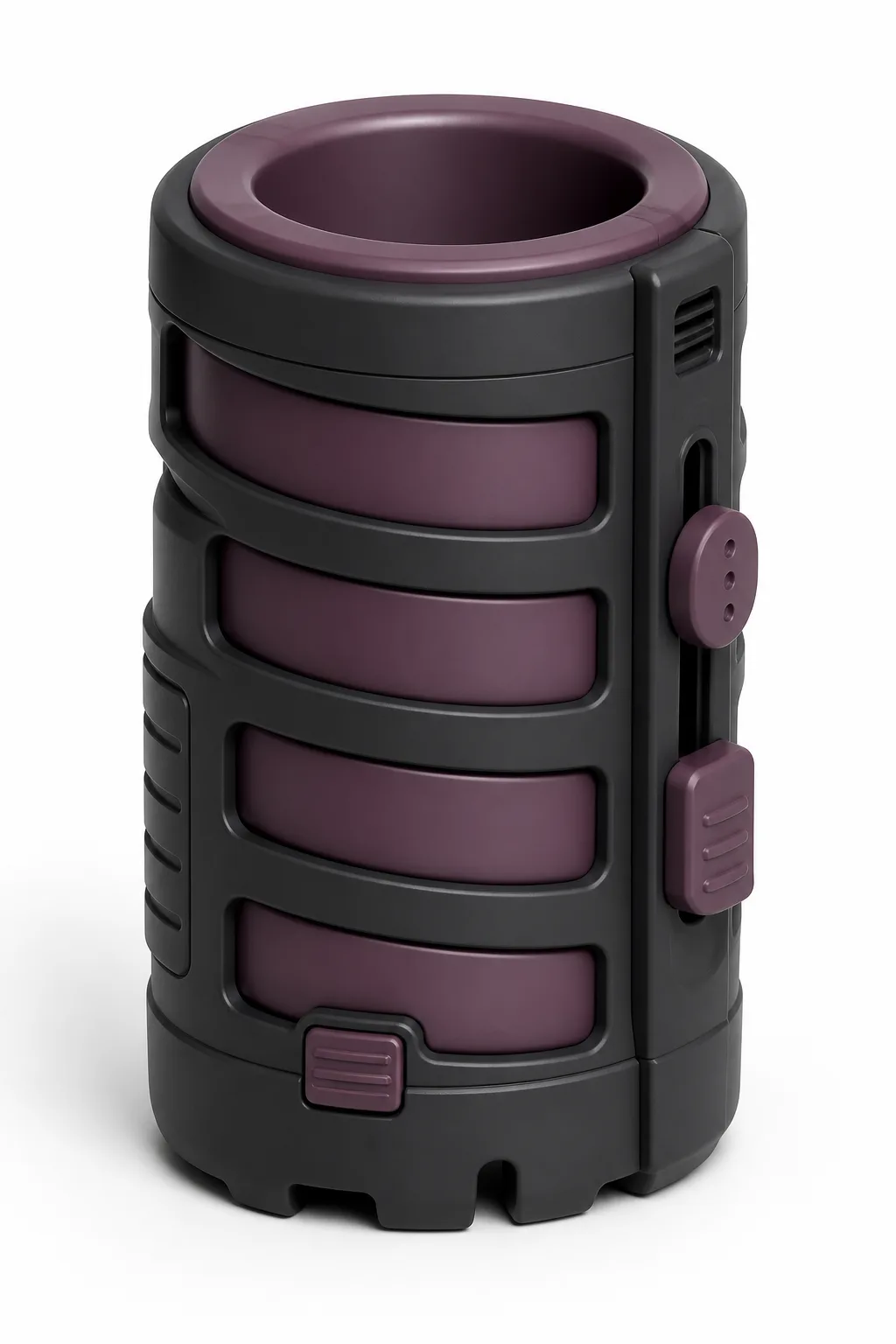
This tri-lobe squeeze-puck manual stroker concept replaces a long tube with one squat charcoal palm body. Exactly three smoky-plum grip lobes surround a circular open-end liner, giving each side of the product a clearly defined pressure point.

The rendering defines form only. Dimensions, materials, stretch, response, channel depth, liner retention and cleanability remain pending.
Keep the planned pack to one manual device
The proposed sales unit contains exactly one squeeze-puck stroker with its installed removable liner. No powered motor, vibration module, battery, cable, remote, pump, hose, storage case, lubricant or drying stand is included.
Packaging contents must be checked against an approved packing list before the product can move from preview to sale.
Balance the outer body around three broad lobes
Measure overall width, height, lobe radius, shell thickness and the distance between all three pressure zones. The body should sit flat without rocking while remaining compact enough for a range of hand spans.
The triangular plan view is rounded, not pointed. Edge radii and shell hardness require physical samples.
Open exactly three finger windows through the grip zones
Each lobe carries one teardrop-shaped window, producing three openings in total. Record opening length, width, wall radius and clearance, then test multiple finger positions for pinching, sharp seams and accidental contact with the liner.
The windows are grip features only; they must not expose rough shell edges or create inaccessible cleaning pockets.
Set the centre as a circular open-ended liner
Publish relaxed entry diameter, stretched entry diameter, channel length and exit diameter from approved samples. Confirm that the liner is open at both ends so washing and visual inspection can be performed without relying on a blind cavity.
Fit, pressure and usable stretch vary by anatomy and technique; verified measurement ranges are required before sale.
Map concentric ripples through the channel
Record ripple count, pitch, height, edge radius and change in diameter from entry to exit. Inspect mould parting lines and the deepest valleys under magnification, since thin flashing can affect comfort and cleaning.
The illustration shows repeated rings rather than a realistic anatomical texture. Final texture geometry must match the approved mould drawing.
Link each squeeze zone to a distinct pressure response
Compress each lobe separately and in pairs while measuring aperture deformation at several depths. A useful validation plan should report force versus displacement, recovery time and whether the shell or liner buckles before the intended pressure range.
No specific tightness level is promised because response depends on material hardness, wall thickness, hand force and sample tolerance.
Publish dimensions that explain the compact format
List overall width, overall height, puck thickness, product mass, entry diameter, channel length and exit diameter. Compare relaxed and extended measurements after conditioning so shoppers can distinguish this low palm puck from conventional long sleeves.
Any size claim remains provisional until production samples from multiple lots agree with the specified tolerance.
Lock the removable liner without trapping residue
Define the rim groove, retaining bead, alignment mark and removal force. The liner should seat evenly around the circular opening and resist rolling under controlled axial and lateral loads without requiring a hidden cavity that cannot be dried.
Inspect the interface after repeated removal cycles for tearing, stretch set, looseness and shell abrasion.
Verify shell liner rim and pigment independently
Request composition, hardness, plasticizer, odour, migration, restricted-substance and biocompatibility documentation appropriate to the intended contact for every soft and rigid component. Match reports to the exact colour and production lot.
Silicone, TPE, ABS, phthalate-free, latex-free, hypoallergenic and body-safe claims remain withheld without traceable evidence.
Validate cleaning through the fully open channel
Remove the liner only according to the approved instructions, wash every ripple and rim, rinse thoroughly and dry all surfaces before reassembly. Validate detergent, water temperature, soak time and drying method on finished samples.
Boiling, dishwashers, bleach, alcohol and sterilization claims remain excluded unless the exact materials and assembly pass those processes.
Test lubricant compatibility and friction build-up
Screen planned lubricants against the liner and pigments for swelling, tack, haze, colour transfer, mass change and loss of strength. Run controlled friction cycles with the approved amount rather than assuming that every formulation is compatible.
Stop use if drag increases, the surface becomes sticky, cracks appear or any component develops an odour or visible degradation.
Cycle lobes windows liner and rim as one system
Repeat squeeze, insertion, removal, liner extraction, washing and reassembly cycles at defined forces and temperatures. Inspect finger-window edges, lobe seams, rim retention, ripple walls and the shell base after scheduled intervals.
Durability, shelf life and replacement intervals remain pending a written protocol and pass-fail criteria.
Set conservative use and storage controls
Inspect the product before every session, use compatible lubrication, begin with light pressure and stop if discomfort, numbness, swelling, skin irritation, tearing or a trapped body part occurs. Keep the three finger windows away from jewellery and damaged nails.
Store the fully dry device away from heat, sunlight, lint, sharp objects and incompatible materials. Medical or therapeutic claims are not made.
Build the price from pocket-sleeve benchmarks and landed reserves
An Alibaba male masturbation sleeve page displayed a reusable mini sleeve at USD 1.49 to 1.68 with MOQ 20, a transparent manual cup sleeve at USD 1.61 to 1.88 with MOQ 1 and a suction-sleeve egg at USD 0.85 to 1.30 with MOQ 5. These are broad category examples, not quotations for this tri-lobe puck or approved suppliers.
The public procurement benchmark supports an EUR 29.99 planning price after provisional allowance for China-origin freight, custom tri-lobe shell tooling, three-window edge inspection, open-end ripple-liner samples, material and compatibility testing, discreet fulfilment and expected quality loss. Exact supplier, quote, MOQ, dimensions, materials, hardness, colours, packed weight, freight, duty, tax, certification, payment terms, lead time and production availability remain pending.
Frequently asked questions about the tri-lobe squeeze puck
Is this stroker powered?
No. The concept is entirely manual and the planned pack contains no motor, battery, cable or remote.
How many finger windows does it have?
Exactly three teardrop windows are proposed, one through each plum squeeze lobe.
Is the liner open at both ends?
Yes in the design concept, but channel dimensions and the final rim construction still need approved samples.
Can the liner be removed?
The concept uses a removable liner; extraction force, rim retention and repeated-cycle durability remain pending.
What material is it made from?
No shell or liner material has been confirmed, so silicone, TPE and ABS claims are withheld.
Which lubricants are compatible?
Only formulations that pass documented swelling, friction, pigment and strength tests will be listed as compatible.
Reviews
There are no reviews yet.