


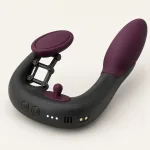
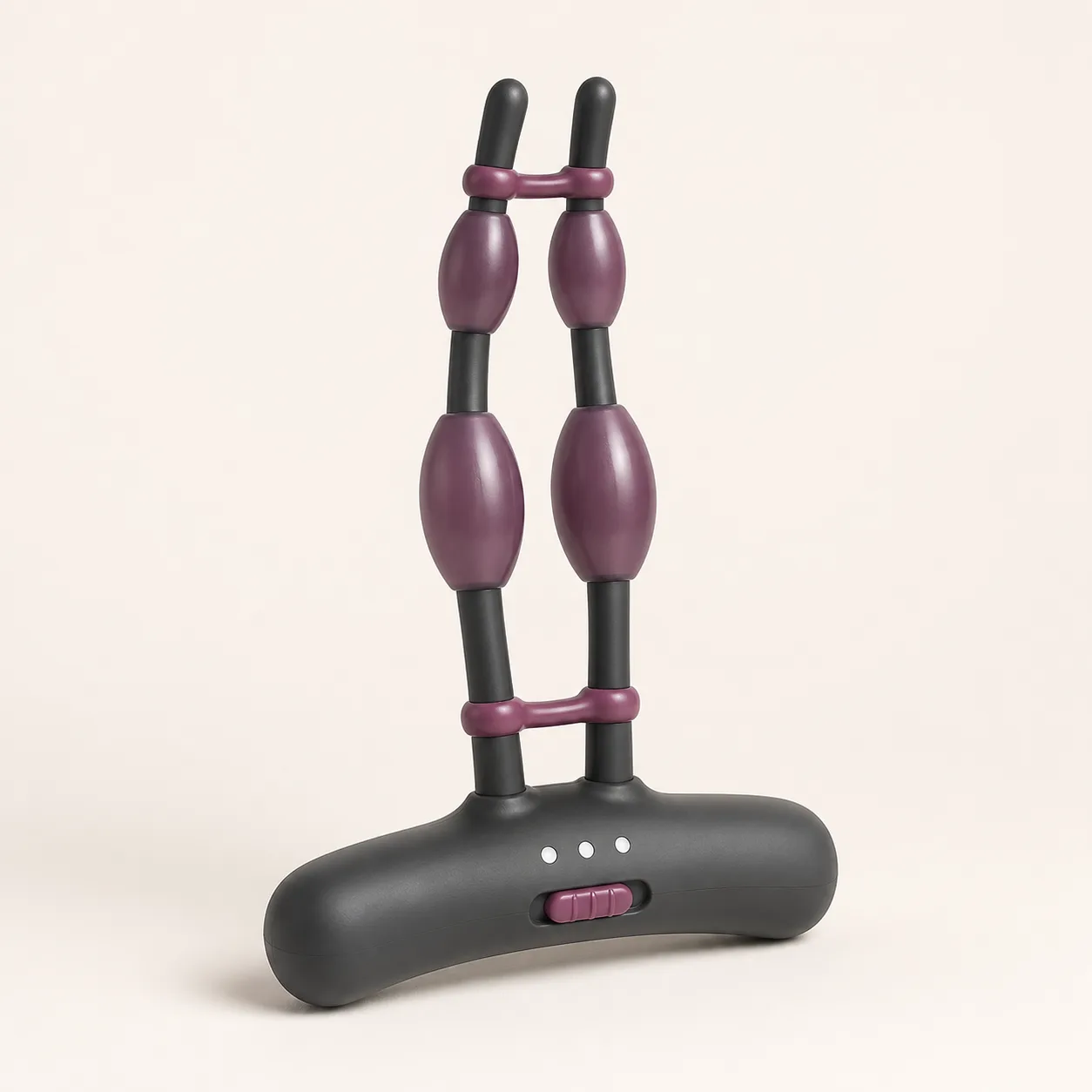
Three-Stop Parallel-Lift Couples Vibrator with Four-Bar Contact Pod
August 14, 2026
S-HANDE SHD-K010-2 Remote Rose Couples Ring
August 14, 2026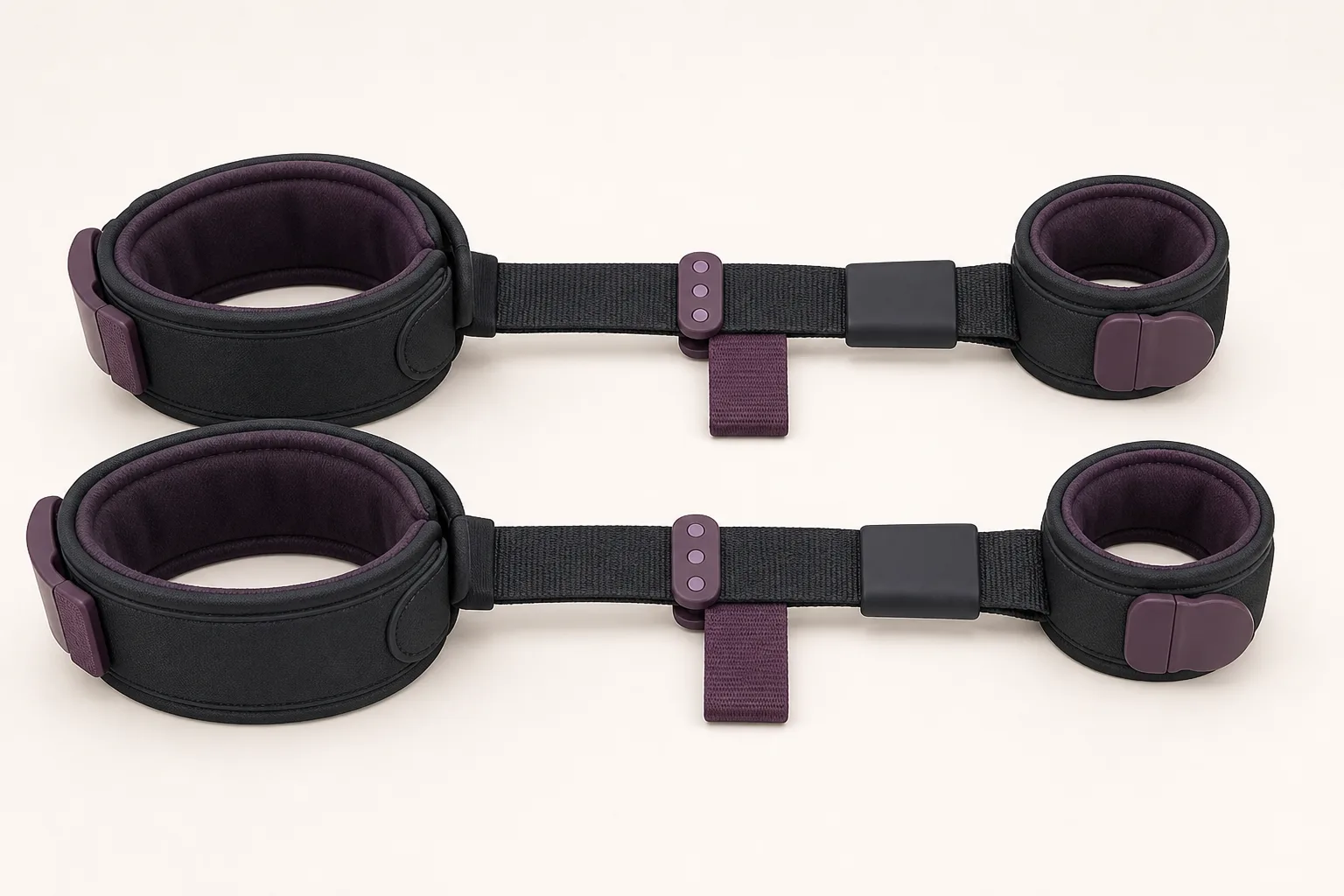
Twin-Module Three-Stop Wrist-to-Thigh Restraints with Guarded Bridge Sleeves
A matched BDSM restraint pair linking one broad thigh cuff to one smaller wrist cuff per module through a short three-stop bridge with guarded sleeve and emergency pull tab.
49,99 $
200 in stock
Link each wrist cuff to its own thigh cuff
This twin-module three-stop wrist-to-thigh restraint concept contains two mirrored modules. Each combines one broad padded thigh cuff, one smaller wrist cuff and a short adjustable bridge with a three-mark slider, guarded junction sleeve and separate emergency pull tab.

The image does not establish fit, spacing, force, material, load rating, care method, certification or manufacturing availability.
Inventory two complete mirrored modules
Require a serialized component list for left and right thigh shells, liners, padding, bindings, wrist shells, closure frames, straps, keepers, release tabs, bridge webbing, index sliders, detents, junction sleeves, reinforcement folds, stitching, coatings, pigments and adhesives.
Confirm whether any part is handed, replaceable or shared before accepting the pair as complete.
Measure thigh and wrist fit separately
Record flat length, padded length, usable circumference, width, edge thickness, overlap, strap reserve and closure position for every cuff. Map thigh cuffs on cylindrical and tapered fixtures and wrist cuffs on smaller reference fixtures.
Do not infer a body-size range from strap length; publish only measured settings that maintain padding coverage, closure capture and release access.
Inspect both cuff constructions
Check liner continuity, padding density and recovery, rolled edges, binding, closure recesses, strap routing and hard-point isolation. Compare left and right modules for shell contour, seam placement and closure alignment.
Reject exposed reinforcement, inward folds, abrasive edges, loose frames, migrating padding or surfaces that transfer color or persistent residue.
Calibrate each three-stop bridge
Measure cuff-to-cuff distance, slider travel, detent force, backlash and actual bridge length at all three positions approached from both directions. Repeat after bounded tension, damp conditioning, cleaning and storage.
An intermediate or false stop must be visually distinct; a sleeve must not hide incomplete engagement or interfere with inspection.
Verify closures and emergency pull tabs
Measure closing force, positive seating cues, strap slip, opening force, pull direction, travel and time to slack for all four cuffs and both bridge releases. Test dry, damp and gloved access in conservative fixtures.
Each release must remain reachable without moving another component, and adjustment tails must be unmistakable from emergency tabs.
Map pressure and circulation warning zones
Use pressure film around liner edges, closure frames, bridge roots and opposite sides at every accepted setting. Measure contact area, peak pressure, padding compression and recovery under low, time-bounded fixture loads.
During any supervised evaluation, stop immediately for pain, numbness, tingling, coldness, swelling or color change. Fit and exposure limits remain pending professional review and sample evidence.
Characterize movement and bridge slack
Measure how bridge length changes cuff rotation, edge lift, strap twist and slider loading through the intended range of motion on articulated fixtures. Challenge equal, one-sided and diagonal movements without simulating a fall or body-weight event.
Reject settings that pull a cuff onto an edge, bury a release, tighten progressively or allow a strap loop to capture adjacent hardware.
Trace stitching reinforcement and load paths
Document stitch pattern, thread, seam allowance, webbing fold, bar tacks and the complete path from each cuff shell through the bridge root and slider. Inspect hidden layers after conservative proof screening.
Measure seam movement, strap creep, slider migration and permanent distortion; no visible reinforcement should be treated as proof of a safe rating.
Screen gaps entanglement and false seating
Probe closure frames, keepers, slider entries, detents, sleeve ends, bridge folds and tab roots throughout adjustment. Record gaps that can catch skin, hair, fabric or a fingernail.
Challenge partial strap insertion, twisted webbing, doubled tails, off-axis slider entry and a sleeve positioned over an unseated detent. Every unsafe state needs an obvious cue and immediate release path.
Confirm materials and contact evidence
Request exact composition and supplier traceability for outer shells, liners, foams, webbing, thread, frames, sliders, sleeves, coatings, pigments and adhesives. Seek restricted-substance, skin-contact, corrosion and colorfastness evidence for the exact production lot.
Terms such as soft, leather-like or body-safe are not accepted as material identification or certification.
Validate cleaning drying and storage
Obtain a material-specific cleaning procedure and test cleaner compatibility, seam wetting, webbing absorption, pigment transfer, odor and measured drying time. Inspect beneath sleeves and inside folded bridge roots where moisture can remain.
Store fully dry with sliders released and bridges flat; recheck tack, stiffness, corrosion, mildew odor and false seating before reuse.
Keep loads within a non-suspension boundary
This concept is not for suspension, lifting, dragging, fall restraint, overhead anchoring, body-weight support, impact or unattended use. Any permitted tension must be established by fixture testing, documented by the exact supplier and kept below the verified limit.
Maintain continuous supervision, clear communication and immediate access to every release. Never use during sleep, intoxication, transport or where a sudden loss of balance can occur.
Cycle the pair and define retirement rules
Cycle fit changes, closure, three-stop adjustment, sleeve movement, bounded tension, emergency release, specified cleaning, drying and storage. Recheck geometry, pressure, release time, seam movement, webbing wear, detent force and pair symmetry at set intervals.
Retire the set for torn padding, lifted binding, frayed webbing, stretched bridge roots, cracked frames, slider drift, false latching, delayed release, exposed reinforcement, persistent residue or permanent distortion.
Build price from exact-pair evidence
An Alibaba thigh-cuff page showed an adjustable wrist-and-thigh restraint category example at USD 1.03-1.33 with MOQ fifteen. It is a benchmark only and does not confirm this paired three-stop bridge architecture, exact supplier or approval.
The procurement reference supports an EUR 49.99 planning price after allowing for China-origin freight, exact-pair sourcing, complete inventory, separate cuff fit maps, slider and release calibration, pressure, gap, reinforcement, load-boundary and cycle work, protective packing and discreet fulfillment. Exact quotation, MOQ, materials, packed size, weight, freight, duty, tax, insurance, payment fees, certifications and delivery terms remain pending.
Frequently asked questions
What do the three bridge positions mean?
They are visible concept states only; actual cuff spacing, detent tolerance and approved movement range require sample measurement.
Are the thigh and wrist cuffs interchangeable?
No interchangeability is assumed because their width, contour, fit and reinforcement paths differ.
Can the pair support body weight?
No. The proposed scope excludes suspension, lifting, falls, dragging, impact and body-weight support.
How quickly do the releases open?
Force, direction, travel and time to slack remain pending dry, damp, gloved and conservatively loaded testing.
What materials are used?
All shell, liner, padding, webbing, thread, hardware, coating, pigment and adhesive compositions require exact-lot evidence.
When should the set be retired?
Retire it for damaged padding, frayed webbing, seam movement, cracked closures, slider drift, false seating, delayed release, exposed reinforcement, residue or distortion.
Reviews
There are no reviews yet.